
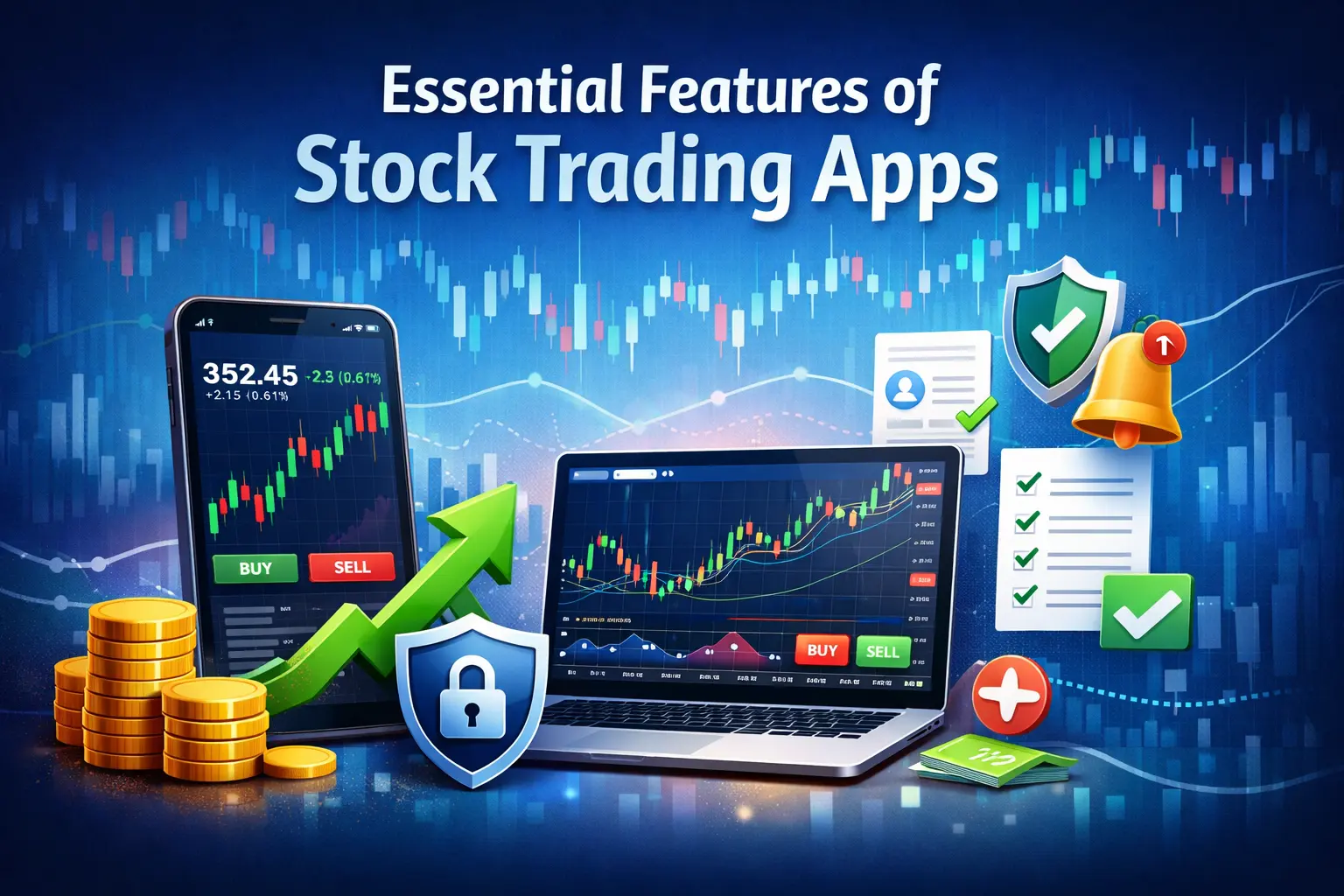
It’s really different now than it was when you had to contact merchants and trade on computers. People who trade these days want to be able to purchase, sell, and manage their assets immediately instantly on their phones. As mobile trading grows more popular, the quality of a stock trading software may greatly affect how much people trust it, how frequently they use it, and how long they retain it.
But when you design trading software, you can’t simply let users trade. It’s about creating a secure, simple, and powerful place that assists both novice and experienced traders. To achieve this, product owners need to know precisely which features a present stock trading app can’t do without.
Why Feature Selection Is Critical for Trading Apps
The stock trading market is highly competitive. Users have dozens of apps to choose from, and switching costs are relatively low. If an app feels slow, confusing, or unreliable, users won’t hesitate to leave. That’s why stock trading app development services must focus on functionality that directly improves usability, security, and trading efficiency from day one.
Feature selection is not simply a technical option; it is also a commercial strategy. People should be able to make choices, prevent difficulties, and trust the platform more easily using the app.
Building a Trading App with the Right Technical Expertise
You need to know a lot about fintech, how the legislation influences your job, and how to make sure your app can expand with your company in order to build a stock trading app. Companies like Jappware work on designing financial applications that are hard to use yet suit these criteria. If your partner knows how to integrate market data, build secure apps, and set up financial systems, they can help ensure that critical things are done well and that your business can flourish from the start.
User-Friendly Interface and Intuitive Navigation
The design is what people see initially. Even while trading applications have to deal with a lot of sophisticated data, they should be easy to use and understand. A UI that is imprecise or crowded may easily confuse users, particularly new ones.
An effective trading app provides crucial data, including market fluctuations, open options, and account value, in a clean and easy-to-read fashion. People should be able to navigate effortlessly between maps, watchlists, and order placement. A well-thought-out system makes people happy, helps them make decisions quickly, and produces fewer errors.
Real-Time Market Data and Price Updates
Accurate, real-time data is the backbone of any trading platform. Delayed quotes or inconsistent price updates can lead to missed opportunities or financial losses.
A high-quality trading app should provide:
- Live stock prices
- Real-time bid and ask spreads
- Market depth, where applicable
- Immediate reflection of executed trades
Behind the scenes, this requires reliable market data providers, efficient data streaming, and optimized backend performance. For users, it simply means confidence that the numbers they see are correct and current.
Advanced Charting and Technical Analysis Tools
Many traders believe that charts are critical, not just nice to have. A decent stock trading software should feature live charts that show multiple time periods, symbols, and sketching tools.
Moving averages, RSI, MACD, volume indicators, and trend lines are some of the characteristics that assist individuals look at price behaviour and making wise decisions. The ability to alter charts and store your preferred sets makes the tool much more handy, particularly if you use it a lot.
Secure and Flexible Order Execution
Placing trades must be fast, accurate, and transparent. Users expect instant confirmation that their order has been submitted and clear feedback on execution status.
A modern trading app should support:
- Market orders
- Limit orders
- Stop-loss and take-profit orders
- Order modification and cancellation
Security is just as important here. Orders must be transmitted securely, protected against tampering, and executed reliably even during periods of high market volatility.
Portfolio Management and Performance Tracking
People who put money into stocks want to know exactly how their money is performing. Tools for monitoring your portfolio should show you how much your assets are worth, how much you’ve made and lost, and how your assets are distributed across various investments.
A smart trading app should do more than simply display your basic figures. It should also tell you about changes that happen every day, how things have gone in the past, and patterns that endure for a long time. Users don’t need to utilize any other programs or files since visual reports, charts, and easy-to-read performance statistics make it simpler for them to understand how they’re performing.
Watchlists and Alerts
Watchlists enable consumers to keep an eye on equities they plan to acquire in the future. This tool is quite handy for purchasers who keep an eye on a number of different assets before they acquire.
Custom warnings make this functionality better. People should be able to configure alerts for changes in price, percentage, quantity, or news events. Letting users know about changes straight away provides them an incentive to keep using the app and helps them react swiftly to changes in the market, even when they aren’t using it.
Robust Security and Compliance Features
Security is non-negotiable in financial applications. A single breach can permanently damage a platform’s reputation.
Every stock trading app should include:
- Strong user authentication (including two-factor authentication)
- Data encryption for both storage and transmission
- Secure session management
- Protection against fraud and unauthorized access
In addition, compliance with financial regulations such as KYC (Know Your Customer) and AML (Anti-Money Laundering) is essential. These features not only protect users but also ensure the platform can operate legally in its target markets.
Educational Content and User Support
Some individuals are not skilled dealers. A lot of individuals utilize stock trading applications to get a taste of purchasing for the first time. User trust and memory may be considerably increased by providing them access to training materials.
In-app tutorials, explainers, market statistics, and easy financial suggestions help users make smarter decisions. These elements provide a welcoming environment that helps users want to use the service for a long time. They include rapid customer assistance via chat, email, or help centres.
Scalability and Performance Under Load
All of a sudden, there might be a lot of trading during large market occurrences. People will rapidly stop trusting an app that works most of the time but crashes when too many people use it.
It is highly crucial to have scalable server architecture, cloud infrastructure, and performance optimisation. The software has to be able to manage thousands, or possibly millions, of users at the same time without any difficulties. For the person using it, this basically means that it will operate when it has to.
Cross-Platform Consistency
People regularly switch between devices. A fluid experience across computing devices, laptops, and phones makes things simpler and creates confidence.
With cross-platform uniformity, data, settings, and preferences are automatically the same on all platforms. People who check their account on their phone or make a transaction on a PC should have the same and identical-looking experience.
Final Thoughts
A decent stock trading software should be able to do more than simply let you purchase and sell stocks. It utilises real data, is simple to use, has complex capabilities, and is extremely secure.
Choosing the correct features early on makes it possible for consumers to trust the product, follow the rules, and let it flourish in the future. With the proper technology partner and experienced planning, a trading app may evolve from a simple tool to a complicated financial system that customers rely on every day.