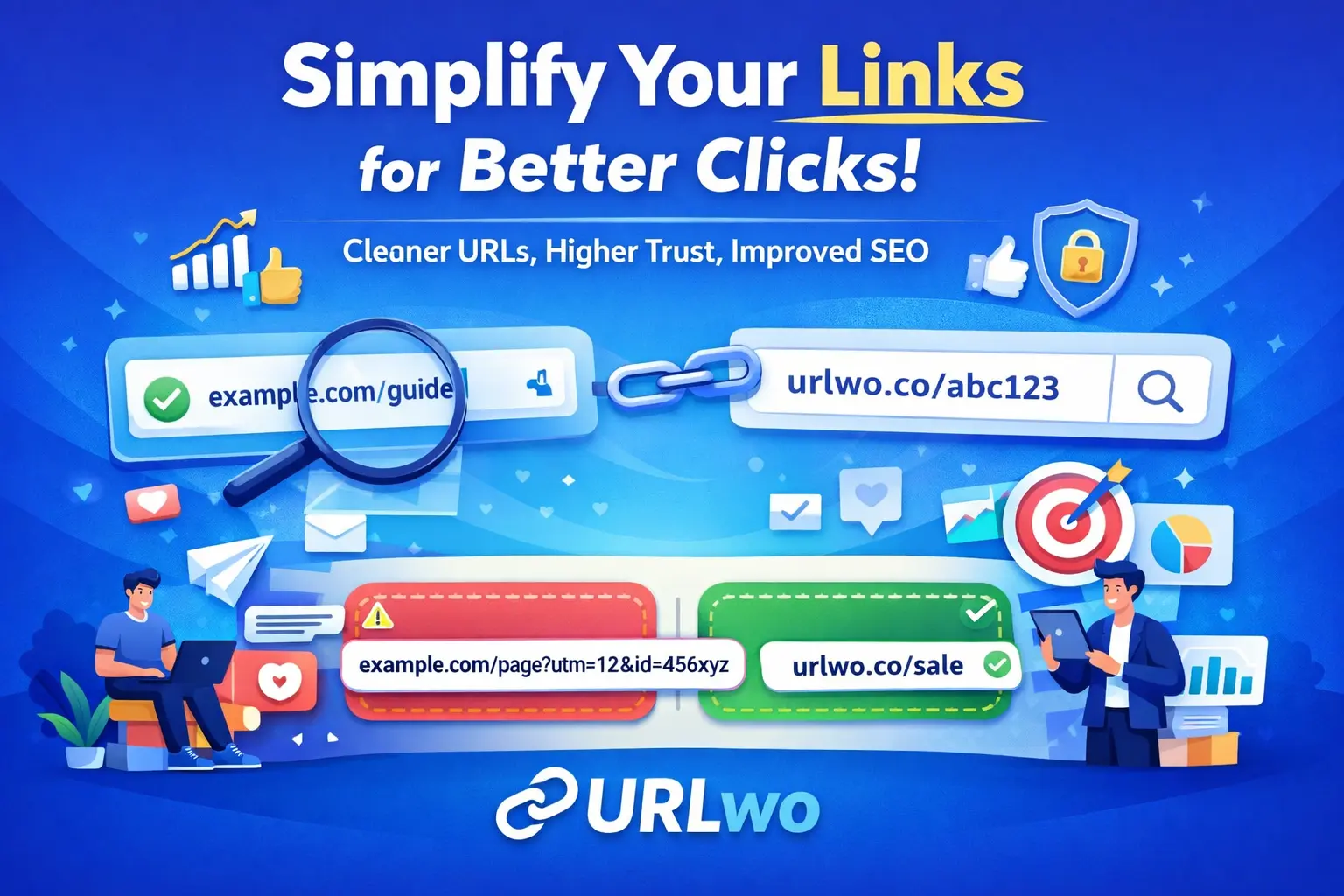
Web links are what the internet is based on. There is a URL for every page, blog post, product page, and file. URLs are not all the same.
There are clean and simple ones. Some are long, hard to read, and full of tracking parameters that make users feel confused and untrustworthy.
This is where URLwo comes in.
URLwo brings web linking into the modern era by making it easy to read and use. URLwo sees URLs as assets that users see and that affect engagement, experience, SEO, and how people think of a brand.
In the digital world, where trust is very important and attention is short, URLs need to be made easier to understand.
TL;DR
- URLwo’s main goal is to make web links easier to use by organizing and simplifying them.
- Cleaning up URLs makes them easier to read and better for users.
- Shortened links make it easier to share on multiple platforms.
- Long URLs create context, but they can make things less clear.
- URLs that are easier to understand lead to more trust and click-throughs.
- When URL structures are optimized, businesses get better branding, tracking, and SEO performance.
What Is URLwo?
URLwo makes web links easier to understand and shows them in a modern, user-friendly way. It breaks down long URLs into links that are simple, easy to read, share, and trust.
URLwo doesn’t see URLs as computer strings, but as parts of the user experience. The goal is to get rid of parameters that aren’t needed, clear up any confusion, and make web addresses that make sense and lead to clear destinations.
The best ways to use URLwo are in line with:
- Clean URL structuring
- Link simplification
- User-focused web design
- Strategic link management
The Anatomy of a URL
Learn how a normal URL is put together to understand why URLwo is important.
A typical URL is made up of several parts:
- Protocol
Describes the way that data is sent.
For instance, https://
- Domain Name
The address of the website.
Example: example.com
- Path
Names the exact page or resource.
Example: /blog/url-guide
- Query Parameters (Optional)
Used to keep track of, filter, or store session data.
Example: ?utm_source=twitter&id=245
This is what a full URL might look like when put together:
https://example.com/blog/url-guide?utm_source=twitter&id=245
URLs are long and hard to read because of query parameters and dynamic IDs, but they still do their job. Tracking tools and systems add parameters to URLs, making them more difficult to read.
URLwo tries to make this structure easier to understand by:
- Getting rid of parameters that aren’t needed when possible
- Using meaningful words instead of strings of random words
- Keeping things clear without breaking functionality
A clean URL like
example.com/url-guide
Easy to read, share, and trust without giving up its goal.
What Are URL Shorteners and How Do They Work?
With a tool called a URL shortener, you can shorten a long web address to one that fits on your screen better. When people click on the short link, it takes them back to the full URL.
How it works:
The process is simple:
- Someone makes a tool that shortens long URLs.
- A unique short code can be made with this tool.
- The short code is linked to the shortener’s domain.
- When people click on the short link, it takes them to the long URL.
For example:
Original URL:
https://example.com/blog/url-guide?utm_source=twitter&id=245
Shortened version:
The short link serves as a redirect to the full address behind the scenes.
Why Are Simplified URLs Important?
URLs that are easier to remember change how people access content. Reading ease, click-through rates, trust, and how people feel about a brand are all affected by them. In places online where a lot of people are, clear links make things easier to use and get people more involved.
Having long URLs makes people hesitant. Websites with clean URLs are more likely to be trusted.
- Improved User Experience
Readable URLs make it easy for people to see where a link takes them before they click on it.
Simplified URLs:
- Are simpler to read and understand
- Reduce cognitive load
- Improve navigation clarity
- Work better on mobile screens
- Are easier to remember and manually type
When users can quickly figure out what the link is about or where it leads, they can interact with it more quickly.
- Better Shareability
Short, well-organized URLs work better on all devices.
They:
- Keep your social media posts and emails looking better.
- In messaging apps, don’t use weird line breaks.
- Fit better in spaces with limited characters
- Do a good job with both print and digital materials
- Works perfectly with QR codes
It is more likely for people to copy, paste, and share shortened links.
- Trust & Perception
People are careful to click on links they don’t understand. It might look fishy if you have a lot of tracking parameters or long strings with funny characters in them.
Clean URLs:
- Appear more professional
- Increase perceived legitimacy
- Improve click-through rates
- Strengthen brand credibility
A URL that is easy to read lets you know that the site is safe and intended. Being clear helps people trust you when there is a lot of spam and phishing around.
Short URLs vs. Long URLs
Let’s quickly look at what makes short URLs different from long URLs.
| Aspect | Short URLs | Long URLs |
| Length | Compact and minimal | Often lengthy with multiple parameters |
| Readability | Easy to scan | Can be cluttered and hard to interpret |
| Shareability | Ideal for social media, SMS, print | May break in messages or look messy |
| SEO Value | Limited keyword visibility (unless branded) | Can include descriptive keywords |
| Trust Factor | May look suspicious if generic | More transparent about destination |
| Branding | Strong when using custom branded short domains | Naturally reinforces domain authority |
| Tracking & Analytics | Built-in tracking tools available | Requires separate analytics setup |
| Memorability | Easy to remember (if customized) | Harder to recall manually |
| Security Risks | Can hide malicious destinations | Destination is visible to users |
Why Marketers & Businesses Should Care?
It’s not just the technical stuff that URLs do; they also have a direct impact on branding, traffic, engagement, and sales. Link structure can be useful for businesses and marketers.
1. Higher Click-Through Rates (CTR)
URLs that are clean and easy to read are more likely to get clicked on. Long, hard-to-understand strings are less likely to get people to click on links that look clear and trustworthy.
2. Stronger Brand Identity
Structured URLs with your brand help people remember your business. When campaigns use the same link format over time, people get used to it and trust it more.
Example:
is stronger than:
3. Better Campaign Tracking
When URLs are shortened and made easier to use, they often come with built-in analytics that help marketers:
- Click volume
- Traffic sources
- Geographic data
- Device usage
- Conversion performance
So, decisions can be made based on facts, and work can be done better.
4. Improved SEO Structure
Search engines can tell what a page is about by looking at how its URL is structured. Keywords that are relevant to the page are easier to crawl and index when they are in clean slugs.
Example:
example.com/email-marketing-guide
is clearer than:
example.com/page?id=7823
5. Enhanced Cross-Channel Consistency
Websites, emails, social media, ads, print, and QR codes are all used for marketing these days. Simple URLs make sure that all of your interactions are consistent and professional.
6. Increased Trust in Campaign Links
Suspicious URLs make people less likely to click on email and paid ads. Clear links give people more confidence and less doubt.
Best Practices for Using Simplified URLs
Structure, not just shortening, makes URLs easier to use. People want clarity, consistency, and functionality.
1. Keep URLs Clean and Readable
- Use simple words that describe
- Leave out numbers and symbols that aren’t needed.
- When you can, get rid of query parameters that aren’t needed.
Example:
example.com/seo-guide
instead of:
example.com/index.php?id=8392&ref=campaign
2. Use Keywords Strategically
Keywords in URL slugs make them easier to understand and show up in search results. Make sure they are short and about the page.
Example:
example.com/social-media-strategy
3. Avoid Dynamic or Random Strings
Random IDs and session-based URLs make things harder to read and less trustworthy.
Avoid:
example.com/page?id=293847
Prefer:
example.com/pricing-plans
4. Maintain Consistent Structure
Set up your website’s URLs in a way that makes sense.
Example:
example.com/blog/topic-name
example.com/services/service-name
Being consistent makes indexing and navigation better.
5. Use Branded Short Links Whenever Needed
When you use social media and campaigns, don’t use generic domains. Instead, make your own. People still trust the brand and know what it stands for.
Example:
brand.link/sale
6. Limit URL Length But Do Not Losing Meaning
Short URLs are easier to understand. Cutting things down too much makes them less clear. Something is less useful when it’s longer. It’s important to stay balanced.
7. Make Sure of HTTPS Security
To be safe, you should always use protocols like https://. Users and search engines care more about links that are safe.
8. Always Monitor and Track Performance
Use analytics tools to measure:
- Click behavior
- Referral sources
- Conversion rates
You can’t just set up URL optimization once and be done with it.
Common Misconceptions Regarding URLs and Shortening
Numerous people are confused about how URLs work and how to make them shorter. More information helps businesses make better choices.
1. “Short URLs Are Always Better.”
There are times when longer words are better. When you take away the context, it’s harder to understand and trust what you’re reading. Wise structure is more important than extended length.
2. “Long URLs Hurt SEO.”
There are other things besides length that hurt SEO. There needs to be structure. URLs that are too short and don’t say anything work less well than ones that are well-organized and full of keywords.
Example of strong structure:
example.com/email-marketing-tips
Poor structure:
example.com/page?id=8923
3. “URL Shorteners Are Insecure.”
Short URLs can hide dangerous sites, but the tool is not dangerous. The risk can change if you use something in a different way. Platforms that you can trust and branded short links make trust worries go away.
4. “Users Don’t Notice URLs.”
Links are judged by users subconsciously, even if they don’t look at all of them. URLs that look sketchy don’t get as many clicks. People are more likely to trust you if your URLs are clear.
5. “You Only Need Short Links for Social Media.”
Simple URLs are useful for more than just Facebook. They improve marketing in print, email, QR codes, and person-to-person.
6. “URL Structure Doesn’t Impact Branding.”
URLs are a part of how a brand is known. Link text that stays the same and is easy to read on digital channels shows that the business is professional and reliable.
Conclusion
When it comes to performance, trust, branding, and the user experience, URLs matter. No matter how long or short your content is, the way your links are set up affects how people read and interact with it.
This URL wo shows how important it is for links to be clear, purposeful, and user-centered. It’s easier to read, share, and trust content when URLs are short. They also help with marketing. Strategically long URLs can help with SEO and add context if they are set up right.
The goal is not just to shorten links; it is to make them better.
URLs help build trust, get people to interact with your content, and make you easier to find when used as part of a business’s digital strategy.
The web is quick and gets people’s attention, so crystal clear language wins.
FAQs
1. What is URLwo?
URLwo makes it easier to manage web links. It makes URLs that are clean, easy to read, and useful to boost trust, usability, and speed.
2. Are short URLs better than long URLs?
If you set them up right, short URLs look better and are easier to share, but long URLs can give you more context and SEO value. The most important thing is clarity, not length.
3. Do simplified URLs improve SEO?
Of course. Search engines can tell what a page is about if its URLs are clean and clear. Putting relevant keywords in the URL slug can help search engines find and show your site.
4. Are URL shorteners safe to use?
Short URL tools that work on safe platforms are safe. On the other hand, generic shortened links can hide unsafe websites. Short links with a brand name make things easier to see and trust.
5. Why do businesses use shortened or structured URLs?
URLs that are easier to understand help businesses get more clicks, keep track of their campaigns, build their brand, and be more consistent with their marketing across all channels.
6. Does URL structure impact user trust?
Of course. It looks more professional and trustworthy when URLs are easy to read. Users may feel less confident and interested in links that are random or hard to understand.