Website owners need to prioritise on-page SEO because it serves as a vital factor that helps them improve their search engine rankings. Most people believe that SEO only requires backlinks and technical setup, but every website page needs proper optimisation to achieve search engine success.
On-page SEO refers to the process of optimising web pages, which results in higher search engine rankings and increased targeted visitor traffic. The process requires the enhancement of all page components, which include content headers, keywords, images, and the complete structure of the webpage.
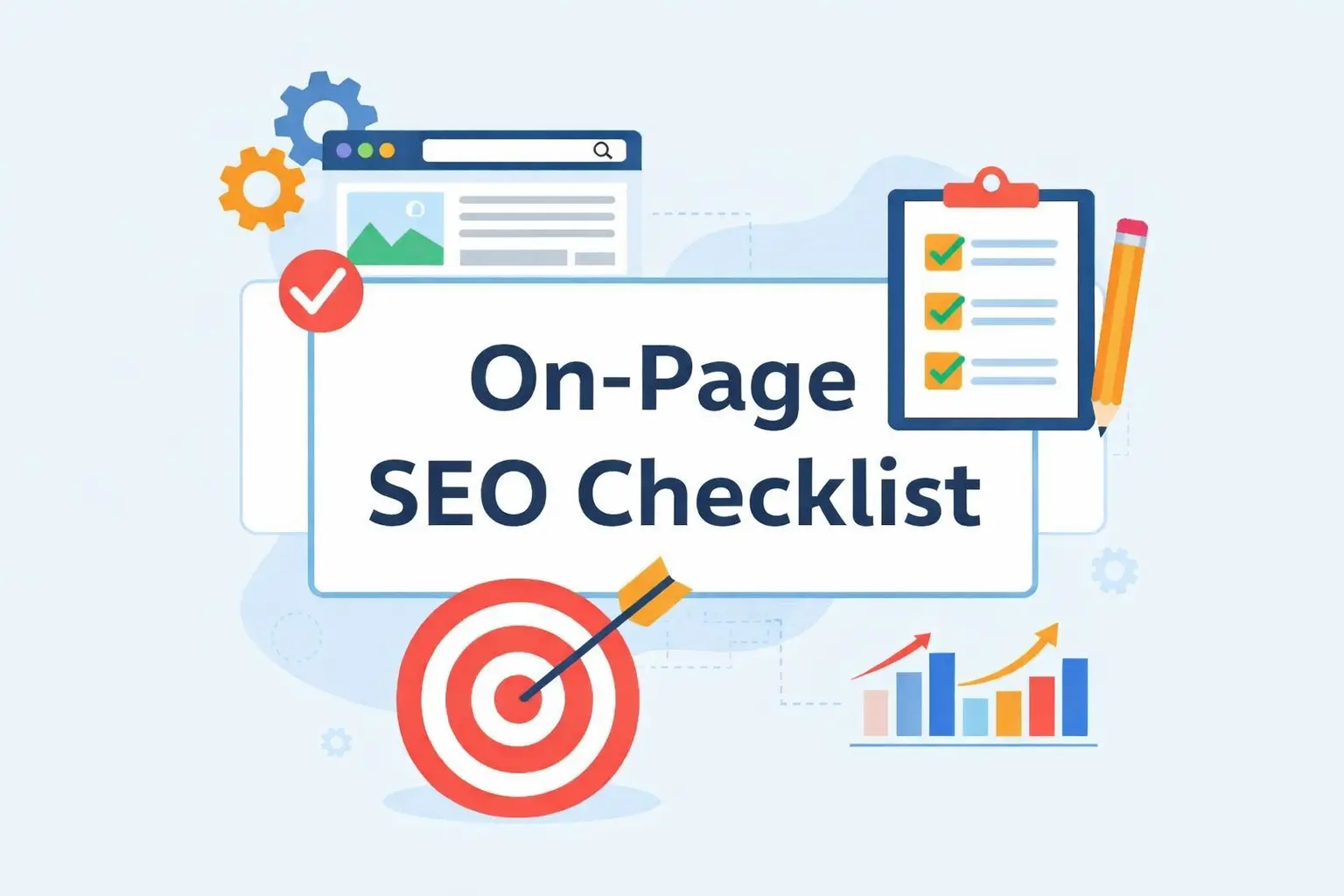
The absence of a specific procedure makes it difficult to handle all these elements. The structured SEO checklist serves as an essential tool because it helps users to organize their work. The system guarantees that all critical optimization tasks will be completed.
The 15-point on-page SEO checklist included in this write-up will help you improve your web page optimisation for better ranking and alpha-beta experience.
What is On-Page SEO
On-page optimization involves the manipulation of different page elements to improve the page’s search engine ranking.
These elements include:
- Page content
- Keywords
- Title tags
- Headings
- Images
- Internal links
- Page speed
On-page SEO serves as an independent optimization technique while off-page SEO assesses external website elements, which include backlinks, social media metrics, and brand mentions.
In simple terms:
- On-page SEO = Optimization inside your website
- Off-page SEO = Optimization outside your website
Both are great, but on-page SEO gives you direct control over how your pages will perform in search engines.
Why an SEO Checklist Matters
Many websites still ignore structured SEO practices when creating content.
Here are a few reasons why it’s important:
1. Maintains Consistency
Firewall devices are often considered the most prevalent network security devices, given that they have existed since networks first emerged.
2. Improves Search Visibility
Help search engines understand your content and rank for keywords by having pages optimized for them.
3. Enhances User Experience
Good on-page SEO also increases readability, navigation, and page performance, which makes your site retained by visitors for longer.
You may like to know: From SEO to GEO, AEO, AIO & LLMO: The New Era of Search Marketing
15 On-Page SEO Elements
Always title and create your content with these two elements in mind.
1. Keyword Placement
Your main keyword should appear in important locations such as the title, headings, introduction, and conclusion. The content needs this particular element to help search engines identify the page’s main subject.
2. Title Tag Optimization
The title tag is a strong ranking predictor. Be sure to embed your primary keyword in it within fewer than 60 characters.
3. Meta Description
A compelling meta description improves click-through rate (CTR). The content requires a length of 150 to 160 characters, which needs to include your target keyword in a natural way.
4. Header Tags (H1–H3)
Use header tags to structure your content.
- H1: Main title
- H2: Main sections
- H3: Subsections
This improves readability and SEO.
5. SEO-Friendly URL
Your page URL should be short, descriptive, and keyword-focused.
Example:
example.com/on-page-seo-checklist
Avoid long or confusing URLs.
6. Internal Linking
In addition to one aspect, also facilitating users of search engines to better surf the website helps keep visitors engaged.
7. Image Optimization
Images should be optimised by:
- Compressing file size
- Using descriptive file names
- Adding alt text
This improves both SEO and page speed.
8. Content Quality
The publishing service encloses high-quality content. Content should cultivate information, innovation, and value for readers.
Search engines prioritize content that provides real value.
9. Keyword Variations
By using related keywords and synonyms instead of keyword reiteration, this can render topics much more thoroughly to be understood by search engines.
10. Mobile Friendliness
Most users access websites through their mobile devices, which requires your website to have a mobile-responsive design. Mobile-friendly pages rank better in search results.
11. Page Speed
Fast-loading pages provide a better user experience. You can improve page speed by:
- Compressing images
- Using caching
- Minimizing scripts
12. Schema Markup
Schema makes it possible for search engines to get a much better read of your content, possibly bringing rich snippets to search results.
13. Content Formatting
Proper formatting improves readability. Use:
- Bullet points
- Short paragraphs
- Subheadings
This makes your content easier to scan.
14. External References
Linking to reputable external sources boosts credibility and adds value for the reader.
15. Content Freshness
Updating content regularly ensures that the information remains up-to-date and accurate, which results in better ranking opportunities over time.
You may like to know: Top website audit tools (2026)
Common On-Page SEO Mistakes
Even experienced website owners sometimes make SEO mistakes that hurt rankings.
Keyword Stuffing
The repeated overuse of keywords can lead to unnatural content, which may get search engines to penalise the page.
Duplicate Titles
Each page has to have a unique title tag. Duplicating them will confuse search engines, therefore severely impairing the ranking potential.
Thin Content
Pages with less content will not load well. Accurately recommend providing well-detailed and informative content.
Conclusion
Your website gains better search engine visibility through on-page SEO. The direct elements of your web pages need optimisation because it helps search engines understand your content better, while users can navigate your site more easily.
Your published pages will achieve correct optimisation through the 15-point on-page SEO checklist, which guarantees complete optimisation. The combination of keyword placement, content quality, page speed, and internal linking results in improved rankings, together with enhanced user experience.
The uniform application of these predilections will lead your website to achieve increased organic traffic, together with permanent SEO success.

Harsh Mistri is a Digital Marketing Executive with over 8 years of experience in SEO, online marketing, and growth strategies. He is passionate about exploring the evolving digital landscape and enjoys writing about technology, SEO, and digital marketing.