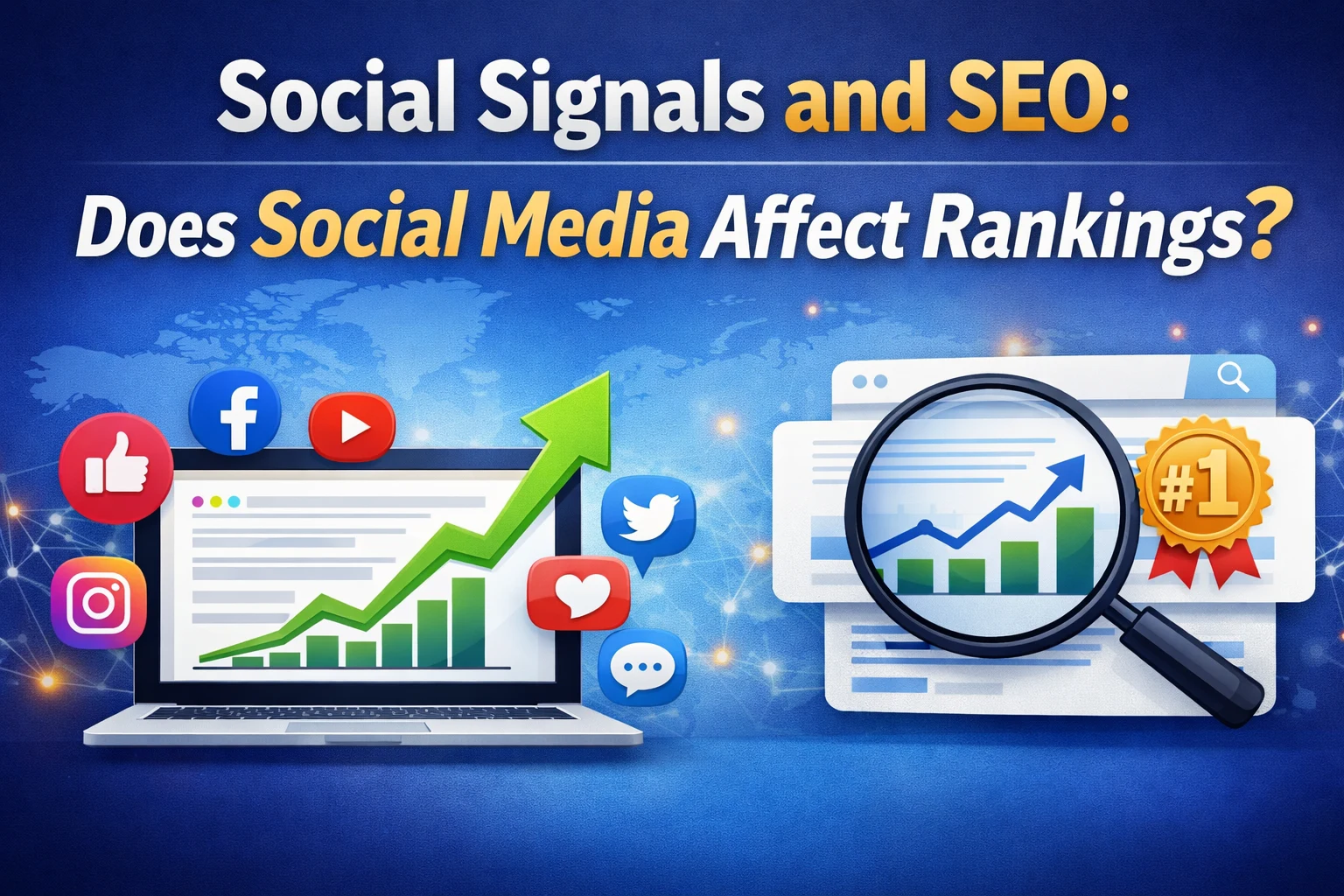
Marketers frequently investigate whether social media platforms have a direct effect on search engine rankings. People believe that when a post becomes viral on Facebook, Instagram or Twitter, it will immediately improve a website’s ranking on Google. The situation appears attractive, yet it contains more complex elements. Social signals SEO doesn’t work as a direct ranking factor in Google’s algorithm.
The social media impact on SEO shows actual effects which can be measured through indirect benefits that include website traffic, backlinks, brand recognition, and user engagement metrics. The article investigates whether does social media affect Google rankings while showing businesses how to use social media for their off-page SEO efforts.
What Are Social Signals?
Social signals are likes, comments, shares, retweets, and all forms of engagement given to content on social media platforms. The signals show how much users value a piece of content which they actually use. Users on Facebook show their approval by liking and sharing content while Twitter users can retweet and mention posts, and LinkedIn users can share and comment on posts, and Instagram users can like, comment, and save content, and Pinterest users can pin posts.
Google has confirmed that social signals do not directly affect search rankings yet these signals still function as vital components which drive how social media helps SEO through improved visibility and content distribution.
Are Social Signals a Ranking Factor?
Some marketers think do social signals affect SEO on a website’s ranking on search engines. Google has confirmed that social metrics such as shares, likes, and comments do not serve as direct ranking factors. Social signals impact SEO through three different ways they improve content discoverability, help generate link building, and boost brand awareness and authority. A viral social post does not ensure top rankings but it creates pathways which boost traffic and enhance search results and strengthen off-page SEO activities.
How Social Media Indirectly Impacts SEO
SEO benefits from social media only obliquely, improved by traffic hikes, backlinks, branding, and user participation.
1. Traffic
Social media platforms generate referral traffic to your website through their content sharing. Search engines use high-quality traffic as an indicator which shows your content has worth. The LinkedIn post which receives thousands of clicks creates lower bounce rates while it boosts user interaction on the page which serves as essential SEO performance indicators.
2. Backlinks
Social media provides its best SEO advantage through its ability to create link building to websites. When content reaches wide sharing, bloggers and industry sites show increased likelihood to create links to that content. Backlinks function as an essential component of off-page SEO while social media platforms assist in promoting content that acquires these links.
3. Brand Signals
Social media platforms amplify both brand visibility and brand authority. The content which you provide should be valuable and consistent because this will lead users to search for your brand directly. The branded search activity which users perform increases your website’s domain authority, which creates benefits for your search engine optimization efforts. How social media helps SEO by establishing your brand as a trusted authority on the internet.
4. Engagement
The active participation of users on Twitter Instagram and LinkedIn through their comments, shares and discussions shows that content holds value. The interactions with content which users generate create visibility results that lead to content sharing and natural link building opportunities.
You may like to know : From SEO to GEO, AEO, AIO & LLMO: The New Era of Search Marketing
Case Studies / Examples
Brands that excel in converting social media to SEO include:
- HubSpot: Widely shared blog posts on LinkedIn and Twitter generate backlinks, improving off-page SEO.
- Moz: Active social engagement drives referral traffic and boosts search visibility.
- Neil Patel: Social media promotion leads to high traffic and organic backlinks, demonstrating the indirect effect of social signals SEO.
The examples demonstrate that social metrics do not function as ranking factors yet their generated traffic and links together with brand authority create search performance improvements which show social media impact on SEO results.
Strategy to Use Social Media for SEO
To make the most of social media impact on SEO, consider these strategies:
- Consistent Content Sharing: The process requires bloggers, video producers and infographic designers to produce content which will help boost their online presence.
- Engagement First: The system needs to motivate users to comment, share and participate in discussions which will extend content reach while creating opportunities for link building.
- Influencer Collaboration: We create partnerships with industry influencers who help us reach more people while they provide links to our content.
- Optimize Profiles: The social media accounts must link to your website while using appropriate keywords to enhance their search engine optimization.
- Monitor Metrics: The system needs to track shares, likes and referral traffic to determine which content effective for off-page SEO purposes.
All such strategies are demonstrative of how social media helps SEO, extending content reach or bolstering overall online authority.
You may like to read : On Page SEO Vs off Page SEO – 2026
Tools & Tracking
It is quite basic to track social signals and their SEO impact. There are tools that are useful.
- SEMrush: Tracks referral traffic and backlinks from social shares.
- BuzzSumo: Identifies top-shared content and influential users.
- Hootsuite / Buffer: Schedules content and tracks engagement.
- Ahrefs: Monitors backlinks generated from social promotion and link building campaigns.
The tools enable measurement of social signal SEO benefits, which cannot be directly observed while tracking social media impact on SEO throughout different time periods.
Conclusion
Social media signals SEO efforts but they do not serve as a ranking factor for Google. The social media platforms Facebook, LinkedIn, Twitter and Instagram serve as tools which generate website traffic, create link building, enhance brand recognition and produce user interaction which function as essential components of improve Domain Authority . Your SEO results will improve when you use social media because it increases your content visibility, generates backlinks and builds your website’s domain strength. The process of understanding does social media affect Google rankings shows that social media creates long-term SEO benefits which help businesses.
FAQs
Q1: Does social media improve Google rankings?
Social media doesn’t play a direct role in boosting your rankings. It can help increase your traffic along with several other benefits, namely backlinks and brand signals.
Q2: Which social signals matter for SEO?
SEO through visibility and backlinks is indirectly supported by shares, likes, comments, and the like.
Q3: How can social media help off-page SEO?
To promote content, generate traffic and foster natural backlinks.
Q4: Do more followers improve SEO?
It’s not just the following that affects search rankings, but also engaged followers that amplify search visibility.
Q5: Which platforms are best for SEO impact?
LinkedIn, Twitter, Facebook, and Instagram are some wonderful places for quality links and heavy traffic.

I’m Kishan Rana, an SEO professional and digital marketing specialist with over 8 years of hands-on experience in search engine optimization, organic growth strategies, and online visibility enhancement. I’m passionate about analyzing search algorithms, exploring ranking strategies, and helping businesses build sustainable traffic through data-driven SEO practices. Through Mashupmind, I share practical insights, industry trends, and actionable techniques designed to help brands grow smarter in the digital landscape.