
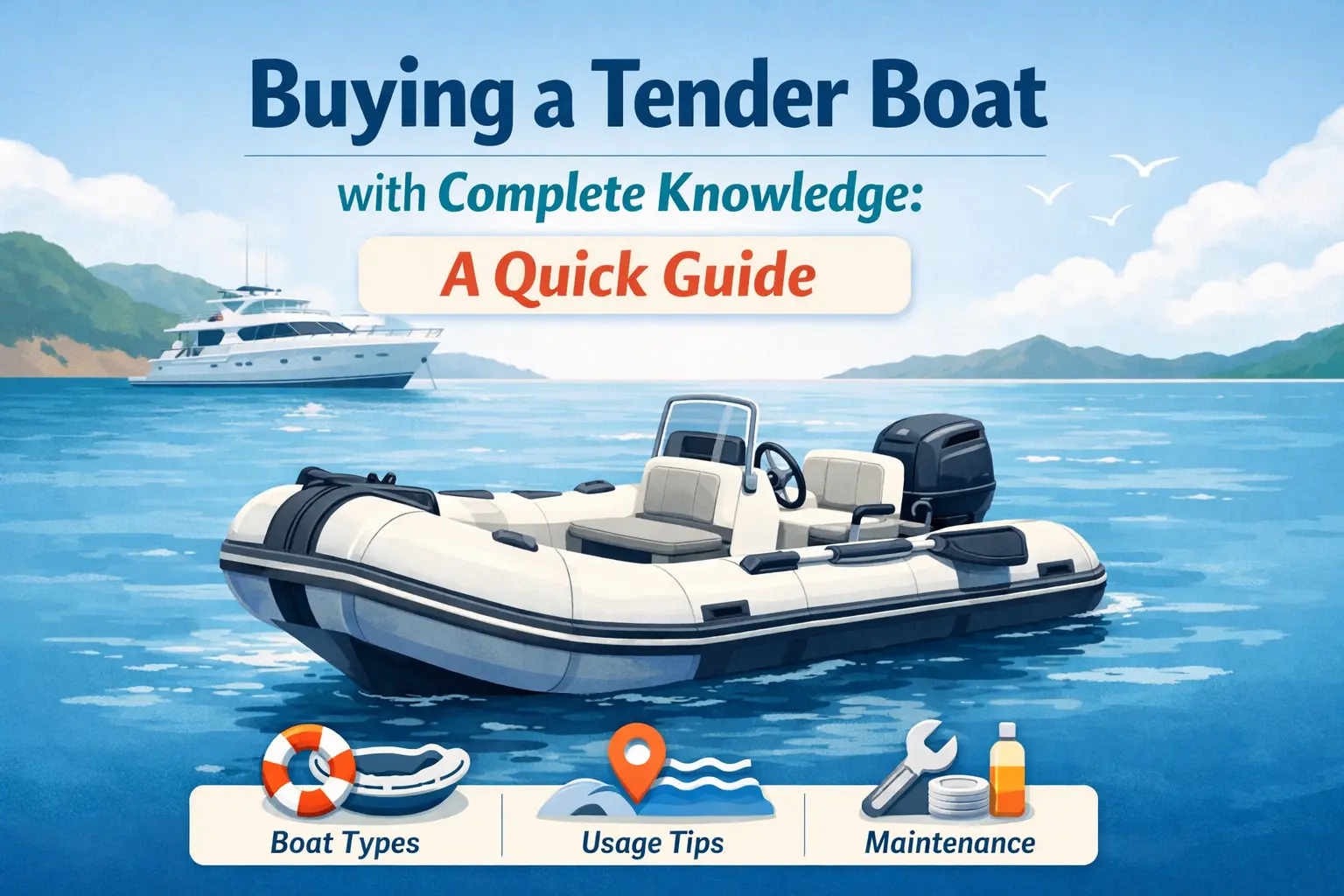
Tender boats are small vessels that accompany larger ships or yachts to transport people and supplies from the primary vessel to shore, or vice versa. Because of their compact profile, they are easy to maneuver and can navigate shallow water or narrow spaces where larger ships and yachts cannot reach. You may wonder about safety. You will be glad to know that even small boating vessels like these generally offer smooth rides. They can carry loads effectively for their size.
Nowadays, water sports enthusiasts and leisure travelers often add these types of vessels to their recreational gear collections. For them, tenders have become an attractive option due to their comfortable seating and ease of storage. Whether they want to go scuba diving, fishing, or surfing, these smaller secondary boats promise to make their water excursions more enjoyable. Should you also have one? First, learn more about it and then decide.
Tender boat types
A boat tender can be available in inflatable, folding, and rigid-hulled styles. Rigid-hulled tenders take up a lot of space, so you can either tow them or hang them on a davit rack. Either way, you have to work harder. Today, modern versions are accessible. You can fold and store them. Unfortunately, they may develop leaks or lack desirable sturdiness. An ideal alternative is inflatable tender boats. These are designed specifically for small-scale operations and recreational purposes. They also require less storage space. You can deflate and pack them in a safe corner of your larger vessel, then inflate and assemble them quickly. It’s just that these boats are meant for shorter voyages and calmer sea conditions. If you pick the right inflatable design, your recreational water trips will become more enjoyable.
Things to consider when choosing tender boats
Whether you use it as a secondary vessel or as a standalone option, certain factors must be considered. Why do you need a tender boat — for transportation or recreational use? Based on this, you can prioritize seating capacity, comfort, speed, and other characteristics that best serve your core purpose. If you plan to add it to your mothership, you may have certain aesthetic expectations. At the same time, the small boat must be compatible with your larger vessel. Analyzing the type of water conditions you frequently encounter is also crucial. Do you navigate shallow or deep waters? Is the seawater rough or calm where you intend to go? Finally, your budget may come into play.
For options, you can visit furthercustoms.com. Many online stores sell high-end tenders for boating enthusiasts. However, buying a good option is not everything. You should also care for it. Make sure you regularly inspect its condition. The motor and hull should be properly checked. After each use, the vessel should be thoroughly rinsed to remove saltwater, sand, and debris. You should take it out once every year for proper cleaning. At the same time, healthy usage practices should be adopted. Avoid exceeding the boat’s weight capacity for everyone’s safety.
Some people confuse tender boats with lifesaving boats. Tender boats are mainly used for recreational purposes, while lifesaving boats are used in emergencies. It is your personal decision whether to have a tender boat.

I’m Kishan Rana, an SEO professional and digital marketing specialist with over 8 years of hands-on experience in search engine optimization, organic growth strategies, and online visibility enhancement. I’m passionate about analyzing search algorithms, exploring ranking strategies, and helping businesses build sustainable traffic through data-driven SEO practices. Through Mashupmind, I share practical insights, industry trends, and actionable techniques designed to help brands grow smarter in the digital landscape.