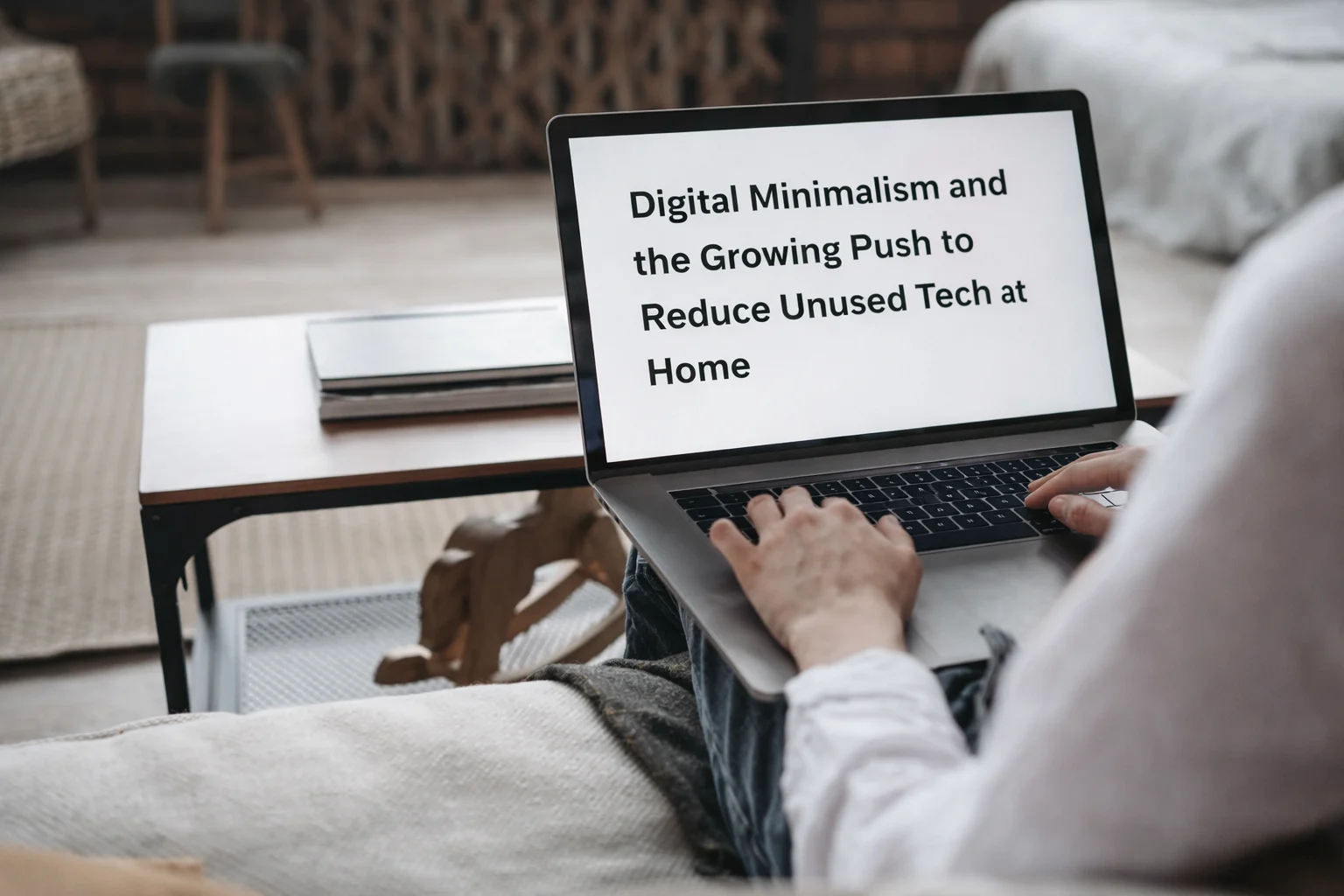
Unused technology slips into homes through upgrades, replacements, and temporary solutions that become permanent by accident. One device replaces another, and the older one stays nearby “just in case.” As such, shelves and drawers begin holding tools that no longer participate in daily life, even though they remain physically present.
Digital minimalism grows out of noticing this quiet buildup. It invites people to look at how technology actually shows up in their routines, not how it once did or might someday. Reducing unused tech becomes less about cleaning and more about clarity. People become fixated on creating a home where technology supports life without demanding unnecessary attention.
Reassessing Rarely Used Devices
The first step often feels observational. People start noticing which devices stay powered off for weeks or months. A laptop that gets opened only during rare moments. A tablet that never leaves its case. This awareness usually arrives during everyday moments, such as searching for space or organizing a drawer, rather than during a planned decluttering session.
Once awareness sets in, questions naturally follow. People begin wondering what role each device actually plays. For example, having more than one or two laptops compels people to consider selling them. Practical thoughts emerge, making one wonder: where can I sell my laptop, not as a goal in itself, but as part of deciding what makes sense long term. The reassessment becomes an exercise in alignment, matching technology to current habits instead of old intentions.
Old Hardware as Ongoing Responsibility
Unused hardware does not disappear simply because it sits idle. It occupies space, requires safe storage, and carries data that still needs protection. Cables and accessories remain attached to it, creating small pockets of disorder that spread over time. Even unused devices demand attention in subtle ways.
Seeing old hardware as a responsibility changes how people relate to it. The device becomes something that needs managing rather than something that offers security. Digital minimalism encourages acknowledging this responsibility honestly.
Clarifying Tools That Truly Matter
Removing unused devices creates space for clarity to emerge. With fewer options available, the tools that remain take on clearer roles. Work devices feel more focused. Creative tools feel more intentional. Communication becomes simpler when fewer platforms compete for attention.
People stop juggling devices that overlap in function. Technology begins serving specific purposes rather than existing as a collection of possibilities. Digital minimalism supports this clarity by narrowing the field and allowing useful tools to stand on their own.
You may like to know : How AI-Driven Marketing Is Replacing Traditional Growth Funnels in 2026
Intentional Ownership Over Accumulation
Intentional ownership begins with asking why a device belongs in the home. The question shifts from “might I need this” to “do I use this?” This change alters how technology enters and exits daily life. Ownership becomes thoughtful rather than automatic.
This mindset reshapes future decisions as well. New devices are chosen with clearer expectations. Existing tools are used more fully. Accumulation slows because each addition requires purpose. Digital minimalism supports a relationship with technology that feels deliberate and grounded.
Recognizing Functional Obsolescence
Digital decluttering often reveals how quickly technology ages out of relevance. Devices may still operate, yet no longer support current systems, software, or habits. This realization tends to surface during hands-on review rather than abstract thinking.
Recognizing functional obsolescence helps people let go without guilt. Technology is understood as time-bound, shaped by changing needs and tools. Digital minimalism frames this awareness as practical rather than sentimental. The focus returns to maintaining a set of devices that fit present-day life.
Focus and Fewer Digital Distractions
Unused tech does not stay silent just because it is turned off. Old devices still carry accounts, notifications, update prompts, and mental associations. Even when tucked away, they linger as background noise. Digital minimalism brings awareness to how these dormant tools quietly compete for attention without adding value.
Reducing device count changes that dynamic. Fewer devices mean fewer places to check, fewer systems to manage, and fewer decisions layered into everyday life. Focus improves because attention no longer splinters across unused tools. Technology begins supporting concentration instead of fragmenting it.
Delayed Adoption of Simpler Workflows
Holding onto outdated devices can slow adaptation to newer workflows. Old systems encourage old habits, even when simpler options exist. People often maintain compatibility with devices they rarely use, shaping how they work around limitations that no longer need to exist.
Letting go of unused tech clears the path for more streamlined processes. Workflows adjust more easily when technology reflects current needs. Digital minimalism supports progress by removing friction tied to legacy devices.
Separating Work and Personal Technology
Unused devices often blur the line between work and personal life. An old laptop becomes a backup work machine. A retired tablet still holds professional apps. Such overlaps quietly extend work presence into personal space.
Releasing unused tech helps restore boundaries. Work tools stay associated with work. Personal devices regain their own identity. Digital minimalism supports this separation by limiting cross-purpose devices. Boundaries feel clearer when technology aligns with specific roles.
Hidden Costs of Unused Tech
Unused devices carry costs beyond their purchase price. Storage space disappears slowly. Drawers fill with accessories. Time gets spent organizing cables and remembering what belongs to which device. These costs accumulate quietly.
Digital minimalism exposes these hidden expenses. Once unused tech is removed, space opens up, and maintenance demands shrink. Fewer accessories mean fewer things to track.
Reevaluating Technology’s Role in Daily Life
Unused tech often signals something deeper than clutter. It reflects habits formed during different stages of life. Devices remain because they once mattered, not because they still do. Digital minimalism treats this realization as an opportunity rather than a problem.
Reevaluation modifies the relationship with technology. People begin asking how devices support daily life now. Technology becomes responsive rather than aspirational. Digital minimalism encourages regular reflection, helping technology remain aligned with evolving needs.
Digital minimalism reshapes how people relate to the technology they own. By reducing unused devices, homes gain clarity, focus, and intention. The process encourages thoughtful ownership and supports habits that feel current and purposeful. This way, technology becomes a quieter, more effective presence in daily life rather than a collection of postponed decisions.

I’m Kishan Rana, an SEO professional and digital marketing specialist with over 8 years of hands-on experience in search engine optimization, organic growth strategies, and online visibility enhancement. I’m passionate about analyzing search algorithms, exploring ranking strategies, and helping businesses build sustainable traffic through data-driven SEO practices. Through Mashupmind, I share practical insights, industry trends, and actionable techniques designed to help brands grow smarter in the digital landscape.