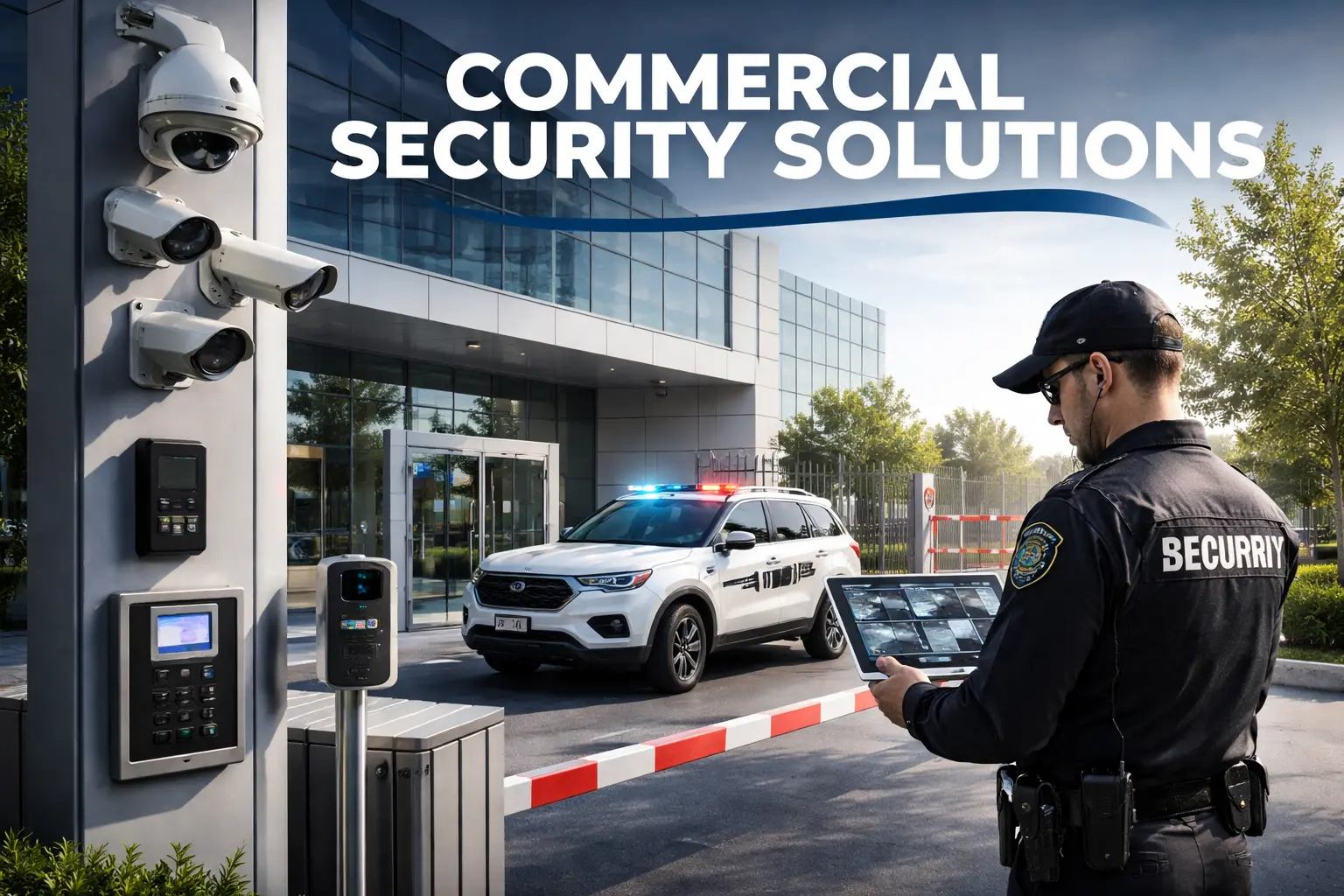
Most commercial buildings have surveillance cameras, alarms, and access control, but these systems often operate independently. Siloed security poses risks that become apparent only when an incident occurs. For example, an intrusion alarm may go off while the footage on the camera system is delayed. Access logs may indicate a door was opened after hours, but that information is not automatically checked to determine if a valid credential was used or the door was forced open. Integrated commercial security solutions integrate all aspects of security (access control, CCTV, intrusion detection, visitor management) to form a complete operational picture and eliminate these vulnerabilities.
From reactive to predictive
The old model of security used to be forensic. An event occurs, you look back at the recording, and create a report. This approach is becoming less and less sufficient for businesses that face tangible responsibility for what occurs in their space.
The new “everything connected” systems alter the entire philosophy. Artificial intelligence in video cameras does more than videotape. It sends up red flags at exceptions. A person standing by a “no admittance” entrance for more than 30 seconds is flagged. A door unhitched at 3 am sends an alert, long before someone steps through. The goal is not to capture a breach but to monitor the conditions that can lead up to one.
That is a “security system” rather than a “security ecosystem”. One stores the evidence, the other supplies the intelligence.
Operational efficiency is the underrated benefit
Security directors tend to sell integration on safety grounds, which is correct. But the operational case is just as strong, and it’s often what gets budget approved.
Centralizing security data onto a single platform means facility managers are not stuck jumping between three different dashboards trying to piece together what actually happened during an incident. With remote monitoring through mobile and cloud applications, a security lead can respond to an alert or authorize contractor access without needing to be physically on-site. Automated visitor management takes care of the old paper sign-in sheet and the phone call to reception, cutting out steps that slow everything down.
The breadth and depth of data that can be collected for security purposes in the modern day has a variety of applications that bolsters it’s value beyond it’s primary purpose. Access to things like occupancy patterns and access frequency taken from access scanners or camera systems can help to feed facilities planning. This can be used for things like HR decisions which improve the operation of the workplace and inadvertently improve security without relying solely on incident reports.
Choosing a provider that can handle complexity
Connecting legacy hardware to modern IoT devices, integrating biometric authentication with existing access control systems, and protecting the entire solution against cyber-physical risks demand serious engineering skills. Hence, the choice of providers is crucial. A company supplying cameras is not the same as a company designing and implementing cyber protections. AG Security Group delivers commercial site security systems that go beyond the readily available products that require the detailed assessment and planning to safely knit older and new systems together.
Ask: Does the solution’s architecture support secure expansion? How does the product fit within a hybrid environment of new and existing sites? What are the newly created cyber risks associated with the networked solution? If a provider can provide you with satisfactory in-depth responses, they are worth engaging further. If not, their offer is likely a cookie-cutter one.
The ROI case is stronger than most expect
The upfront cost of a fully integrated system is higher than buying components separately. That’s real, and it shouldn’t be glossed over. But the comparison point is wrong.
The real cost of siloed security includes contract guarding hours that integration reduces, false alarm response fees that multiply when systems aren’t calibrated together, and administrative overhead from managing separate vendor relationships and software subscriptions. It also includes the harder-to-quantify cost of a security incident that a connected system might have caught – and that a disconnected one didn’t.
One of the stronger arguments in favour of a more comprehensive security system is the level of scalability offered. This is especially key for modern, technologically based companies that experience high levels of growth and expansion. Having an integrated all-in-one solution means that any new business locations can immediately be incorporated into the security framework. Existing training data for AI systems or planning decisions can be applied appropriately on day one without any hesitation. Instead of needing to start from scratch with each new business premises, the security solutions chosen grow with the business.
Where is this heading
The businesses treating security as a compliance checkbox – something to satisfy duty of care requirements and nothing more – are operating on borrowed time. The threat environment is more complex, the regulatory expectations are rising, and the gap between what siloed systems can do and what integrated ones can do is widening every year.
The shift isn’t about buying better hardware. It’s about building something that actually works as a system – one that generates real-time intelligence, scales without friction, and protects both the physical space and the data that runs through it.

I’m Kishan Rana, an SEO professional and digital marketing specialist with over 8 years of hands-on experience in search engine optimization, organic growth strategies, and online visibility enhancement. I’m passionate about analyzing search algorithms, exploring ranking strategies, and helping businesses build sustainable traffic through data-driven SEO practices. Through Mashupmind, I share practical insights, industry trends, and actionable techniques designed to help brands grow smarter in the digital landscape.