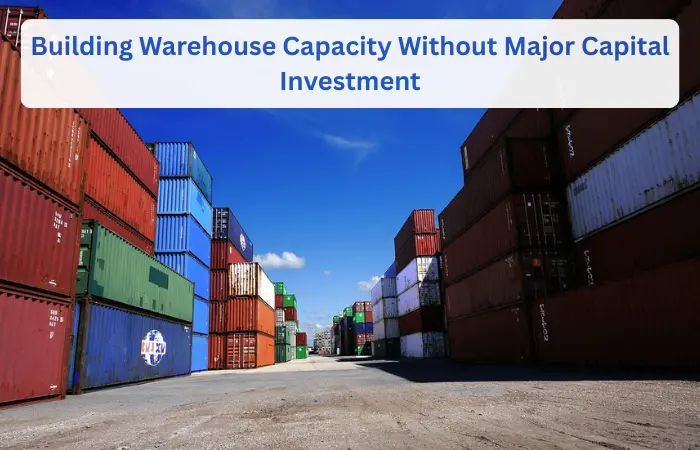
As with most businesses, there are various ways that a business can build capacity within the warehouse that they operate without the need for such a major investment. There are multiple options, such as through equipment hire arrangements or by making changes to the way in which they organize their warehouse.
Rethinking Equipment Access
Usually, when a warehouse considers increasing their capacity, it might look at purchasing additional equipment to be able to facilitate the additional activity. Instead, a better option might be to look towards equipment hire arrangements, as these types of arrangements allow the warehouse to increase their capabilities without any significant capital investment.
For example, using equipment hire services like melbourne forklift hire can provide businesses with access to capacity without the upfront investment. During peak times of the year, warehouses do not need to invest in purchasing enough forklifts to handle all of their products. However, during periods where product demand is high, they can simply source additional equipment from specialists. This means that businesses can get access to increased capacity without having to worry about equipment purchases.
Optimizing Layout and Flow
Another way that warehouses can improve capacity is by optimizing their layout and flow. As mentioned previously, some warehouses do not use all of their physical space. However, by simply reorganizing the storage space within their warehouse, warehouses might gain the capacity to manage more products without the need for additional equipment.
In particular, vertical space is often not used as efficiently as it could be; racking systems allow businesses to store more products in the same amount of floor space. However, they do require equipment that can reach higher levels. The increase in capacity, therefore, should be able to accommodate the costs required for equipment that allows the warehouse to access these products.
Additionally, changing how products flow through a system can increase capacity if the product moves more efficiently through a system. For example, cross-docking allows products to move directly from delivery into the shipping process. By doing this, there is decreased storage time (and storage capacity required) for these products.
Extending Operating Hours
While many warehouses might operate only one shift per day, extended operating hours create opportunities to process more products through each available warehouse without increasing its physical size or equipment base. At the most basic level, increasing operating hours or adding additional shifts means that warehouses can accomplish more with the same resources during that time.
However, much of this also depends upon what type of equipment the warehouses own. The same operating system can only be done in so many shifts before equipment wear and maintenance issues arise. Therefore, if warehouses need additional shifts but cannot increase their current operating hours because of these issues, they may want to consider hiring additional equipment that can supplement some of their owned equipment.
Technology That Multiplies Capacity
Another factor that can multiply warehouse capacity is investing in technology that allows them to do more with less space and fewer workers. For example, warehouse management systems and barcode scanning eliminate much of the manual record-keeping processes that take up time during warehouse processes.
By improving efficiency and reducing time spent on certain activities related to warehouse operations, warehouses can process more and increase capacity without necessarily having to increase their physical size or the number of workers they employ.
Efficient Inventory Management
The way that warehouses choose to manage their inventory also impacts capacity. By improving certain aspects of how businesses manage inventory — such as implementing just-in-time inventory management practices — businesses can increase their efficiency.
Just-in-time inventory management allows suppliers to fill orders instead of warehouses holding stock for longer periods. Therefore, suppliers manage inventory instead of warehouses, meaning that warehouses do not require as much storage capacity as they otherwise might.
Additionally, by reducing excess inventory or managing stock better (if suppliers still manage inventory), even more storage capacity might open up for warehouses so that they can focus on managing the remaining products instead of worrying about unnecessary stock that clogs their space up.
Outsourcing Peak Demand
One problem with inventory management is that many businesses have particular times of the year when products experience peak demand. To keep up with this peak demand, businesses have two options — either build additional capacity internally or outsource that capacity.
For example, if businesses know that they are going to produce a certain percentage of sales during peak demand periods, it might make more sense for them to maintain sufficient infrastructure for this demand and outsource the rest instead of trying to maintain such capacity for an extended period.
Also Read: Top 9 B2B Digital Marketing Strategies for 2026
Temporary Employment and Staff Flexibility
The number of staff who work for a company directly affects its level of operational capacity as well. As such, by employing temporary workers during periods where demand increases beyond typical production rates, businesses can increase the capacity of warehouse operations without drastically increasing their permanent labor force.
Furthermore, while it is possible to hire temporary staff to cover everything one needs during peak demand periods, more efficient companies will likely have better training programs and employ flexible staff that are already multi-skilled rather than single-skilled individuals. This makes for better operations since workers might be able to manage a variety of activities as opposed to needing specialized individuals for everything.
Incremental Additions of Equipment
One final way that businesses can build warehouse capacity without replacing all of their current equipment is just by adding certain pieces that are needed — even if only one or two units per piece.
If a warehouse has only 20 forklifts but could efficiently operate with 21 or 22 units instead, adding one or two (or more) allows them to improve their operations and throughput without needing to invest in too many resources relative to what is required. Changes should still be considered concerning demand and current production levels at all times, but incremental additions will likely make more sense than wholesale replacements for an organization.
Making Smart Capacity Decisions
As demonstrated above, companies have many ways they can increase capacity without relying on large capital investments. Instead, they might focus on flexibility regarding staff and equipment while also considering operational changes that will lead to greater efficiency when processing products or increasing throughput overall.
Overall, increased operational efficiency will lead to increased capacity due to companies producing more than ever before by doing more with what they already have inside warehouses.

I’m Kishan Rana, an SEO professional and digital marketing specialist with over 8 years of hands-on experience in search engine optimization, organic growth strategies, and online visibility enhancement. I’m passionate about analyzing search algorithms, exploring ranking strategies, and helping businesses build sustainable traffic through data-driven SEO practices. Through Mashupmind, I share practical insights, industry trends, and actionable techniques designed to help brands grow smarter in the digital landscape.