SaaS platforms have several points of network entry that determine user and system access to services. These vulnerabilities are web applications, API, administration interfaces, and background sync channels. All routes possess their risk profiles and traffic patterns. Between speed and scale, access points to the public are susceptible to scans and abuse. Internal entry points are more controlled and predictable, but they fail in situations where rules remain ambiguous. Access structure is clear, and it shows who has access to what, where, and with what task. Early document teams minimize the risk of outage, decrease support tickets, and maintain access logic as products increase.
Purpose of Controlled VPN Access in SaaS Systems
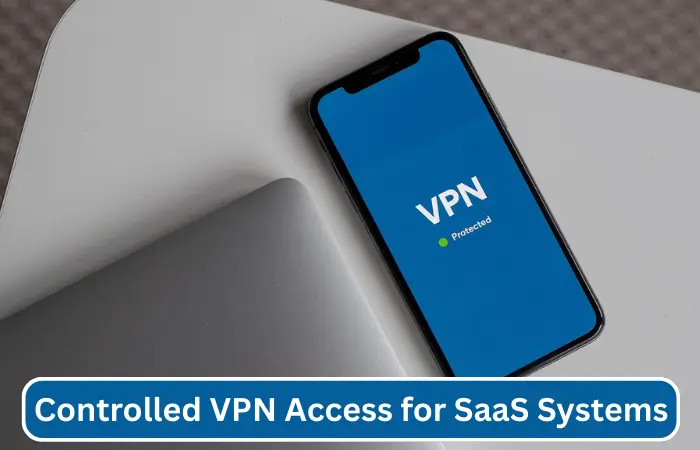
There is controlled VPN access, which determines how SaaS systems accept private traffic based on set policies and not on open trust. It is not a restriction so as to restrict, but to be clear. Teams do not experience shadow paths and silent failures when access rules remain transparent.
Key purposes include:
- Limit access: internal tools are only accessed by authorized users and systems.
- Context setting: role-based access, device-based access, and network-based access.
- Minimize noise: traffic congestion cuts down warning calls and false alarms.
- Support scale: new users do not have to work manually and have the same rules.
In reality, groups enforce these rules on the network boundary before traffic reaches applications or data stores. This design eliminates risk, enhances uptime, and accelerates audits. The consequences of SaaS companies that do not take control include account abuse, spiky support, and slow response to incidents. A clear access purpose can also assist the product leaders to clarify constraints to clients and coordinate the policy of access to service plans and pricing levels.
VPN Access Control and User Identity
VPN access control associates the user identity with precise system access. Identity in SaaS systems does not imply a login only. It incorporates the role, team, region, and state of a device. The systems act predictively when these signals are used in the control of access. In real SaaS operations, vpn access often sits between identity providers and internal services. With role-based access control, a user signs into the system and is only granted access to approved paths. This eliminates role drift, where the previous rights remain operational with changes in teams. Audits are also supported with strong identity-based access. The logs can record who accessed what service, to which network, and at what length of time.
This position saves hours during incident review. Experience has shown that teams that do not follow identity rules use shared accounts or flat access. That option accelerates premature installation, but will hurt in the future. Support teams are no longer tracked. The engineers are afraid of being broken, and this is why they are reluctant to restrict access. Guidelines regarding identity are clear and depend on VPN access, eliminating guesswork. Each user knows their scope. Every system has faith in the rule and not the individual.
VPN Access and SaaS Data Flow
SaaS data flow is based on the traffic mechanisms between users and applications, as well as backend services. The movement is manipulated through controlled VPN access, which sets definite pathways rather than letting traffic flow through open public routes. By internal traffic being kept behind VPN access by teams, random delays, packet loss, and unexpected load during peak usage are minimized.
In the actual SaaS setup, it is typical to tunnel admin interfaces, internal API, and monitoring utilities over VPN access with public-facing characteristics remaining exposed. This division maintains internal work and a quick customer experience. It also assists engineers in tracing faster, as traffic has predetermined paths. This structure will enhance uptime and reduce the recovery period in cases of incidents over time as systems increase and data flow becomes sophisticated.
VPN Access Rules for Distributed SaaS Teams
Distributed teams also create access issues that do not occur when offices are only used. Employees operate across networks, geographical locations, and devices, and this heightens the chances of errors and confusion in access. This setup is made orderly through VPN access rules that tie access rights to roles, locations, and authorized devices. With well-maintained rules, new employees have the right access on the first day, and role changes do not leave behind the old permissions.
In reality, unstructured teams tend to use common links or informal trust to get access to the VPN without a defined and set-in-stone rule, but it operates well until something goes awry. Clarity minimizes mistakes, eases the audit process, and aids compliance requirements. In the case of SaaS products serving regulated clients, it is also a source of trust and reduces the time taken in security reviews.
Future Role of Controlled VPN Access in SaaS
SaaS infrastructure will remain central to controlled VPN access due to growing complexity in the platforms. The current SaaS products are based on microservices, external tools, and offshore teams, which elevate the access paths. VPN access offers a stable control layer that will not slow down development. The trend is towards closer integration between identity and device assessments and access policies, with VPN access serving as a logic gate instead of a tunnel. Early planning teams cannot fix things in a hurry later, create less downtime, and retain reliable control as their systems and customer base continue to grow.

I’m Kishan Rana, an SEO professional and digital marketing specialist with over 8 years of hands-on experience in search engine optimization, organic growth strategies, and online visibility enhancement. I’m passionate about analyzing search algorithms, exploring ranking strategies, and helping businesses build sustainable traffic through data-driven SEO practices. Through Mashupmind, I share practical insights, industry trends, and actionable techniques designed to help brands grow smarter in the digital landscape.