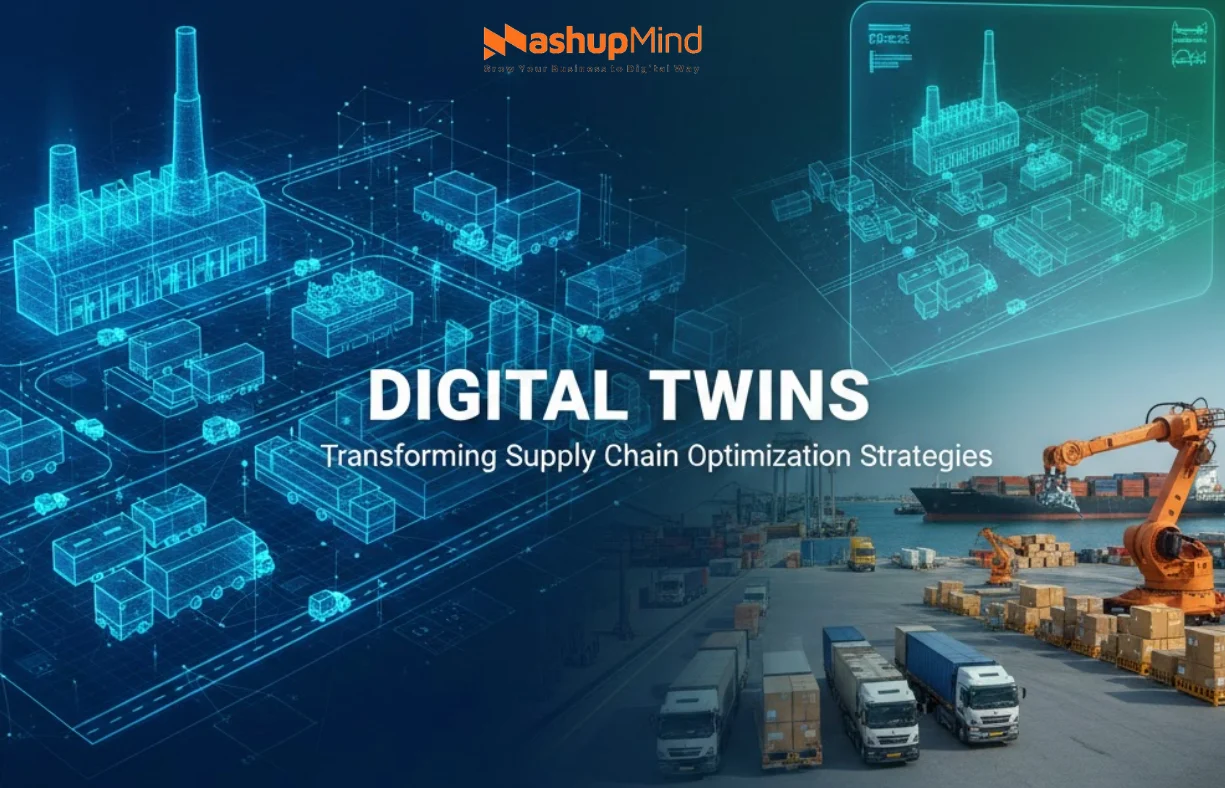
In the era when supply chains spanned continents, logistics still relied heavily on offline spreadsheets, manual interventions and isolated systems. Today, a transformation is underway: digital replicas of entire supply networks allow for continuous monitoring, simulation and optimisation. As a software development partner, when you explore Supply Chain Software Development Services you recognise that the value lies not merely in building dashboards, but in constructing a living mirror of the real world.
In this mirror, physical flows become code-enabled, sensors feed models, and business logic meets machine learning. While many experts focus on digital twins for factory operations or product design, relatively fewer examine the deeper implications for supply chain strategy—how these virtual twins shift optimisation from manual reaction to self-learning adaptation. This article explores five seldom-discussed ways digital twins are fundamentally altering supply chain optimisation strategies, particularly for organisations that build and integrate software for logistics ecosystems.
By referencing industry research and fresh insights (including the work by IntelliTrans on “5 Ways Digital Twins Help Companies Optimize Their Supply Chains”), we go beyond the generic benefits to probe unique angles: how software architects must rethink data models, how collaboration surfaces as a software layer, and how risk, sustainability and IoT feedback converge in the digital twin era.
Whether you’re building the next-generation control tower, integrating sensor networks or developing real-time optimisation modules, the paradigm of a digital twin shifts the value proposition: not just reducing cost, but enabling constant evolution. Let’s dive into how.
Understanding Digital Twins in the Context of Supply Chain Software
To effect change, one must first clarify terms. A digital twin is more than a simulation or static model: it is a dynamic, connected software object mirroring a physical system or process in real time. In the supply chain context, that means the twin might represent an entire distribution network—warehouses, transport flows, inventory, supplier nodes—and ingest live data for continuous feedback.
From a software-development standpoint, the architecture of a supply-chain twin comprises several key layers:
Data ingestion and modelling:
Sensors, RFID, ERP/TMS systems feed structured/unstructured data into pipelines for normalisation and storage.
Core twin model:
A digital replica combining physical entities (assets, routes, stocks) with process logic (flow rules, constraints, triggers).
Analytics and simulation engine:
Embedded algorithms (machine learning, optimisation, what-if modelling) that operate on the twin to surface insights and recommendations.
Visualisation and integration layer:
Dashboards, APIs, and digital twins as service modules that integrate into broader enterprise systems (WMS, TMS, ERP).
Feedback loop:
Changes in the physical supply chain (e.g., a delayed supplier, a failed shipment) feed back into the twin, adjusting parameters and updating future decision-making.
What distinguishes a digital twin from traditional simulation? It is the continuous connection, the feedback loop, the possibility of live adaptation, and the software integration that enables this. For software teams, this means that building a twin isn’t a one-off module—it is an ongoing platform that must scale, evolve and integrate with existing systems.
Few articles sensibly address how digital-twin software demands a mindset shift amongst developers—from “build once” to “update continuously”, from “static model” to “living system”. In supply chains, such systems become strategic assets. As one research note from the MIT Centre for Transportation & Logistics highlights: “digital twins — virtual replicas of physical entities and their interactions — consist of a combination of multiple enabling technologies” and underpin decision-making rather than simply modelling. For those designing supply-chain software, embracing the digital twin means architecting platforms that can ingest noisy real-world data, manage evolving models, support simulations, and feed operational controls. Ready? Let’s explore the five transformative ways this plays out.
Read : The Hidden Complexity of Regulated Industry Hiring
Way 1: Enabling Predictive and Self-Optimising Supply Networks
The first advantage digital twins bring is predictive and self-optimising behaviour across the network—not just reactive dashboards, but proactive decision systems. In conventional supply chains, operations teams monitor KPIs and respond post-factum to delays or inventory issues. With a digital twin, software can simulate future states, propose corrective action, and even trigger automated real-world changes.
Consider a scenario where the twin simulates a supplier delay in a key component due to weather disruption. Because it is integrated with live input (weather, shipping ETA, supplier status) the model can project downstream inventory repercussions, suggest rerouting alternative shipments, recommend temporary buffer increases in alternate warehouses, and update shipping schedules—all before the actual disruption hits. This capability is well articulated in the IntelliTrans article: “By anticipating these scenarios and developing alternate strategies … digital twins can help companies recreate shipping, trucking … and last-mile deliveries.”
From a development perspective, enabling this requires building self-optimising loops: rule-engines, ML models trained on historical disruption response, and orchestration layers that feed decisions back into operational systems. The twin becomes a decision engine as much as a mirror. Software frameworks here might supply capabilities such as:
- Automated what-if modelling (scenario simulation across inventory, transport, and warehouse operations)
- Adaptive policy generation (e.g., reorder thresholds that shift dynamically)
- Real-time re-optimisation of flows (redirect shipments, adjust allocation)
- Feedback integration (real outcome feeds into model training for next iteration)
The often-untapped insight here is that digital twins allow supply chain software to converge with decision-support systems, evolving into prescriptive systems rather than descriptive ones. For developers, the challenge is not only modelling complexity but wiring decision-points into the live supply chain. Thus, your architecture must support simulation modules, decision-logic modules, and action-execution modules—all built into a unified digital twin fabric. The ROI? Early adopters show improvements in on-time delivery, labour cost reductions and responsiveness improvements.
Way 2: Enhancing Collaboration Through Shared Virtual Environments
The second transformational effect lies in collaboration. Traditional supply chains suffer from siloed data, fragmented partner visibility and disjointed systems. A digital twin changes this by offering a shared virtual environment across stakeholders—suppliers, carriers, warehouses, distribution centres, and internal operations—all collaborating in the same mirrored space.
In practice, the twin becomes a common reference model: each stakeholder plugs into the same virtual map of the supply network, views live-state and scenario outcomes, and co-plans changes in real time. For example, a carrier may see a dock’s projected congestion via the twin, collaborate with the warehouse to adjust arrival time, and feed changes back into the master model—reducing idle time, diesel usage and driver waiting. From the IntelliTrans white-paper: simulating “different yard and dock configurations… increases efficiency and decreases the idle time for truckers.”
For software development professionals, the implications are significant:
- The twin must support multi-tenant access, role-based views, and stakeholder-specific dashboards
- Data governance becomes paramount: partners must trust the twins’ data, commit to live updates, and share APIs
- Version-controlled simulation environments: partners can test what-if scenarios (e.g., a new carrier route) without disrupting live operations
- Collaborative workflow modules: notifications, shared annotations, joint scenario planning tools embedded within the twin
This collaborative layer is seldom emphasised in typical discussions. Yet building it makes the twin not just a vendor tool but an ecosystem enabler—transforming the supply-chain software from isolated modules to a collective digital network. One seldom-explored insight: the twin’s collaborative domain may itself become a service line—software partners can offer a shared logistics-ecosystem twin for consortia of carriers and shippers. Building for this means designing for standardised data exchange, partner onboarding flows, and shared simulation consoles.
Find here : Understanding the GMAT: Gateway to Global Business Schools
Way 3: Integrating IoT Data for Continuous Operational Feedback
While simulation and collaboration are compelling, the third major benefit of digital twins is their ability to continuously ingest IoT and operational data—turning the original static model into a living feedback system. In supply chains, this means sensors on trucks, RFID on pallets, smart shelves in warehouses, environmental sensors (temperature, humidity) in storage, and telematics across the network.
The twin ingests this data in near real-time, aligns it with process logic, and updates the digital replica accordingly. The result: the twin knows what’s happening now, what could happen next, and can adjust its state continuously. The MIT article emphasises this enabling layer: “digital twins are a combination of multiple enabling technologies, such as sensors, cloud computing, AI and advanced analytics, simulation, visualisation…”
From a development perspective, integrating IoT data feeds into supply-chain twin software introduces new architectural demands:
- High-throughput data pipelines and ingestion frameworks (e.g., event streaming)
- Data quality, latency and synchronisation concerns—physical events must align with digital logic
- Edge-to-cloud integration: some logic may run near the sensor (e.g., in trucks), others in the cloud twin
- Change propagation: when a physical event triggers a change (e.g., refrigerated container temp breach), how does the twin react and propagate recommendations to teams downstream?
In a seldom-considered insight: software developers must plan for “digital twin drift”—the divergence between the digital model and the physical system over time. Without continuous feedback and calibration, the twin risks are being outdated and thus misleading. Thus, the integration of IoT data is as much about ongoing maintenance as initial build.
Moreover, this feedback loop enables hybrid operational-strategic optimisation: for example, real-time shelving data from warehouse IoT can trigger simulation re-runs, which adjust inbound schedule for the next shift. This continuous convergence of live data + simulation + optimisation is where digital twins move beyond static systems into dynamic operations. For software teams building this, the real value lies in choreographing those loops.
Way 4: Accelerating Sustainability and Resource Efficiency
A fourth dimension of change is less frequently emphasised but increasingly important: sustainability and resource efficiency. Many supply-chain discussions focus purely on cost and speed, but digital twins unlock modelling for carbon reduction, waste minimisation, and circular-economy logistics. The IntelliTrans piece highlights this: a twin “could help determine when stock levels in warehouses seem sufficient … and recommend using ocean transportation for freight scheduled to be delivered by air,” thereby reducing cost and environmental impact. To securely track these optimizations and ensure transparency across supply chains, many organizations choose to partner with a blockchain development company that can strengthen data integrity and sustainability initiatives.
This trend opens up new opportunities for software developers: designing twin modules that estimate environmental footprint, simulate alternative resource-usage strategies, and drive ESG optimisation alongside supply-chain metrics. Some perspectives:
- Twin dashboards now might include carbon-emission predictions, container-utilisation efficiency, packaging waste,and energy consumption of warehousing.
- Simulation modules might test green-routing (e.g., slower but less-carbon shipping), energy-aware warehousing (e.g., adjusting HVAC or lighting schedules), and circular-loop logistics (return flows, reuse of packaging, supplier-coordinated reuse).
- Reporting modules feed ESG compliance frameworks and regulators—a twin becomes the operational layer for visible sustainability.
From a software architecture standpoint, this means adding modelling engines that go beyond cost/time metrics and incorporate environmental variables. It means having data sources for energy use, emissions factors, materials reuse, and being able to embed sustainability trade-offs in optimisation logic. Many software vendors stop at cost/time optimisation; the twin paradigm opens up a new dimension of resource-intelligent logistics.
Further, as regulations tighten (e.g., carbon-tax regimes, extended producer responsibility) companies will demand twin models that can simulate regulatory scenarios and help them optimise under constraints. For a software development partner, offering a digital twin platform that supports both traditional supply-chain KPIs and emerging sustainability KPIs is a differentiator—one seldom covered in mainstream articles.
Read : How to Optimize Spotify Metadata for Discovery
Way 5: Redefining Risk Management and Resilience Planning
The fifth and arguably most strategic way digital twins are disrupting supply-chain optimisation is through radical improvement in risk management and resilience. The pandemic and subsequent disruptions made clear that traditional linear supply-chain planning is inadequate. With digital twins, organisations can simulate cascading failures, model interdependencies, and build resilience strategies proactively rather than reactively.
For example, a twin might simulate the impact of a port closure, a supplier bankruptcy, or a regional labour strike and trace how delays propagate through manufacturing, warehousing and last-mile delivery. According to McKinsey analysis, digital twins help companies “simulate various scenarios and compute thousands of what-if outcomes… optimise across competing priorities and complex constraints.”
From a software perspective:
- The twin must embed risk-modelling engines: fault-tree analysis, probabilistic simulation, and dependency graphs of supply-chain nodes.
- The software must support interactive scenario planning by operators: “What happens if Supplier X goes offline for 2 weeks?” then, see ripple effects and recommended mitigations.
- Integration with alerting and orchestration: when an event triggers in the physical supply chain (e.g., a weather event), the twin suggests and executes contingency flows (alternate carrier, increased safety stock, reroute).
- The twin becomes the orchestration hub for resilience: linking data-flows, analytics, decision-outputs and execution.
A seldom-addressed nuance: as software developers build this, they must consider the system risk of the twin itself—data, model correctness, cascading failures from incorrect simulations. The twin must be trusted, audited, and governed. For software professionals who often deal with optimisation modules, this means designing for explainability, scenario-validation, and governance frameworks.
Thus, digital twins change risk management from checklist and buffer-stock strategies to dynamic, simulated, and optimised resilience planning. For organisations offering supply-chain software, embedding twin capabilities for resilience becomes a strategic offering.
The Software Backbone: Building and Integrating Digital Twin Platforms
At this point, we’ve covered what digital twins do—but the underlying software architecture is the hidden engine powering those capabilities. This section dives into the backbone: how to build and integrate digital twin platforms for modern supply chains. Below is a comparison table of the major components, their description and typical development considerations.
| Component | Description | Software Considerations |
| Data ingestion & storage | Collects sensor data, ERP/TMS data, external feeds (weather, alerts) | High-throughput pipelines, data cleaning, schema evolution |
| Digital‐model engine | The core twin model representing physical assets, flows & processes | Modular, maintainable model, version control, simulation hooks |
| Analytics & optimisation layer | Simulation, ML/AI, what-if modelling engines | Scalable compute, low-latency, model governance, explainability |
| Integration & orchestration API layer | Connects twin to enterprise systems (WMS, TMS, dashboards) | API design, microservices, event-driven architecture, security |
| Visualisation & collaboration UI | Dashboards, scenario planners, stakeholder portals | UX for multiple user roles, multi-tenant access, scenario sharing |
| Feedback loop & execution layer | Monitors physical twin, applies recommended actions, logs results | Real-time monitoring, event triggers, audit trails, fallback mechanisms |
From a software development standpoint, building the backbone means considering the twin as a platform, not just a module. Several challenges are less discussed but critical:
Model drift and versioning:
As supply chains evolve (e.g., new routes, regulations, carriers), the twins’ logic must evolve. Developers must build version control, model rollback, and auditability.
Data-governance and trust:
The twin depends on multiple data-sources—some external partners, some internal. Software must include data lineage, consent management, validation layers.
Interoperability:
Supply-chain ecosystems include many legacy systems—ERP, TMS, WMS, IoT gateways. The twin software must integrate with these via APIs, adapters, and message brokers.
Scalability and performance:
Supply chains are global, and data volumes are large. Architecture must support horizontal scaling, event streaming, and real-time analytics.
- Security and resilience of the twin itself: Because the twin may execute actions (e.g., reroute shipments), software must include authorisation, simulation safeguards, and rollback controls.
- Agile development and continuous deployment: Given the twin evolves, software teams should adopt agile and DevOps practices, continuous delivery, monitoring and updates.
By treating the digital twin as a software platform with service-oriented architecture, microservices, event streaming, and real-time dashboards, developers position supply-chain systems to adapt rather than just to report. The twin becomes not just a reflection of the physical chain, but a control plane for logistics operations. This perspective is often overlooked in standard treatment of digital twins—yet for software engineering teams, this is where the business value becomes scalable.
Strategic Implications for Supply Chain Leaders and Software Developers
When a supply chain evolves into a network of digital twins, the implication is not only technical—it’s strategic. For supply-chain leaders (COOs, CIOs) and software-development teams alike, the shift raises several strategic imperatives:
- From project-based to platform-based mindset: Rather than purchasing point solutions, organisations must invest in twin ecosystems that scale, evolve and integrate across network nodes. Software developers need to adopt a long-term platform view, iterating over modules and use-cases.
- Data as a strategic asset: The twin depends on data quality, timeliness and completeness. Organisations must treat data architecture, governance, and quality as strategic imperatives, not afterthoughts. For developers, this means building services for data cataloguing, lineage, and access.
- Cross-functional teams and skillsets: Digital twins sit at the intersection of software engineering, data science, domain logistics, and operations. One seldom-mentioned insight is that software teams must be co-located or tightly integrated with business domain experts (logistics, procurement, carriers). Without this alignment, twin modelling fails.
- Change-management and culture: A twin changes how decisions are made—less intuition-driven, more simulation- and data-driven. Organisations need culture shifts, training, and new governance structures to exploit this. Developers supporting twin platforms may need to embed audit/logging functions and user analytics to track adoption.
- Governance and risk frameworks: Because twins may trigger actions or optimise flows, strategic oversight is required. Software developers must build audit capabilities, scenario approval workflows, and governance dashboards to allow leaders to monitor twin-driven decisions.
From the standpoint of a software development company serving logistics clients, this strategic shift is an opportunity: to deliver not just systems, but strategic platforms that embed intelligence, collaboration and resilience into the supply chain. Being able to articulate this value—digital twin not as novelty, but as a competitive advantage—helps position software services higher up the value chain.
Beyond Optimisation: The Future of Cognitive Supply Chains
Looking ahead, the fifth generation of supply-chain software will move beyond optimisation to cognition. The digital twin will evolve into a cognitive supply-chain twin: one that not only simulates and optimises, but learns, negotiates, adapts and anticipates future states autonomously.
Emerging research (e.g., graph-based twin frameworks, hybrid deep-learning models for disruption detection) show how future supply-chain twins may model relationships, predict disruptions, and recommend not just single responses, but behavioural strategies across networks. In this future state:
- The twin continuously learns from physical operations and refines its model parameters, even autonomously initiating new simulation modules when new patterns emerge.
- The twin becomes a negotiation agent across suppliers and carriers—proposing contract adjustments, alternative flows, and dynamically balancing cost, risk and sustainability.
- The twin supports multi-objective optimisation at network-scale: balancing cost, service level, carbon footprint, and resilience simultaneously—not sequentially.
- The twin surfaces prescriptive insights directly into automation stacks—such as auto-rerouting, dynamic pricing of logistics, real-time inventory reallocation—blurring the line between planning and execution.
For software developers, preparing for this future means designing systems that are modular, AI-native, event-driven, and capable of evolving. It means treating the digital twin not as a monolithic product but as a continuous innovation platform. Supply-chain software services that enable this cognitive layer will distinguish themselves in the logistics marketplace.
In sum, digital twins have moved beyond proof-of-concept—they are now the central nervous system of the modern supply chain. And for software development organisations, the opportunity is clear: to architect, build, integrate and evolve these twin platforms as strategic, value-driving systems.

I’m Kishan Rana, an SEO professional and digital marketing specialist with over 8 years of hands-on experience in search engine optimization, organic growth strategies, and online visibility enhancement. I’m passionate about analyzing search algorithms, exploring ranking strategies, and helping businesses build sustainable traffic through data-driven SEO practices. Through Mashupmind, I share practical insights, industry trends, and actionable techniques designed to help brands grow smarter in the digital landscape.