SEO has been the key to online exposure for more than 20 years. To rank on Google’s first page, brands invest heavily in On-Page SEO, backlinks, and technical fixes.
But people’s looks are changing quickly.
People today depend more on AI answers, chat interfaces, and generative summaries than on clicking blue links. Google’s AI Overviews now provide quick descriptions at the top of results, changing how people find things.
Because of this change, standard optimization is no longer enough. No longer can marketers focus solely on rankings; they need to prepare for AI-driven exposure as well.
This is the new search ecosystem.
What Is Traditional SEO? (Quick Recap with All Techniques)
The primary aim of traditional SEO is to boost a site’s visibility in the search engine results pages (SERPs). The objective is not complex: get a better position and generate search traffic.
Basic Principles of Traditional SEO:
- On-Page SEO: This refers to the relevance of the text, headings, keywords, meta tags, and internal links to make them easier to read.
- Off-Page SEO: This focuses on acquiring backlinks, brand mentions, and other digital PR signals from third-party sources to build credibility.
- Technical SEO: Ensures your site is crawled and indexed correctly by search engines. Some of the factors that make up this list include speed, mobile friendliness, structured data, and clean design.
This system served us very well for many years. However, this time it is the AI-driven search that is altering the game.
What is GEO (Generative Engine Optimization)?
Generative Engine Optimization, or GEO, is the refinement of material to ensure it is included in the AI’s responses. GEO is not a rank-focused process like regular SEO is. AI systems prefer to make references or summarize sources they are assured they can trust.
Key Focus Areas of GEO:
- Clearness of content and accuracy of facts.
- Firm expertise over the topic.
- Organized computer-readable information.
- Reliable outside mentions
Research indicates that AI search engines are increasingly likely to provide answers rather than links. This causes brands to reconsider the exposure process. In other words, GEO is being quoted by AI.
You may like to know: On Page SEO vs. Off Page SEO – 2026
What Is AEO (Answer Engine Optimization)?
Optimization Answer engine optimization, or AEO, is the practice of enhancing a material in such a way that it appears as direct answers. Consider:
- Featured snippets
- Voice search responses
- AI summary boxes
- Knowledge panels
AEO is mainly concerned with question-based content, whereas On Page SEO is more focused on answering questions.
What AEO Prioritizes:
- Question and answer format that is easy to read
- Markup for structured data
- Short definitions
- FAQ optimization
AEO helps brands benefit from zero-click searches as search becomes more conversational.
What Is LLMO (Large Language Model Optimization)?
The new LLMO method is to make material work better with large language models like ChatGPT, Gemini, and Claude. In the usual sense, these methods don’t rank pages in order. Instead, they respond based on patterns, signs from authorities, and data from training.
Core Principles of LLMO:
- Entity-based authority
- Consistent brand mentions
- High-trust content sources
- Semantic depth
Studies show that AI tools are rapidly changing the trends in organic traffic, and growth is expected to remain strong through 2026. LLMO is still changing, but it’s quickly becoming essential for finding things.
What Is AIO (AI Optimization)?
AI Optimization (AIO) is the process of improving your website, content, and online presence so AI systems can easily understand, trust, and recommend your brand. AIO prepares your material for AI-driven discovery with tools like ChatGPT and Google AI Overviews, while traditional SEO is mostly about search rankings.
What AIO Focuses On:
- AI-readable content structure
- Strong semantic clarity
- Consistent brand signals
- Cross-platform visibility
In simple terms, AIO ensures that your content can be searched and used in AI-generated answers. Many people think it’s the next step forward for digital efficiency in a world where AI-first search rules.
AIO is like a link between the old way of optimizing searches and the new way of intelligent finding.
Find here : Top website audit tools (2026)
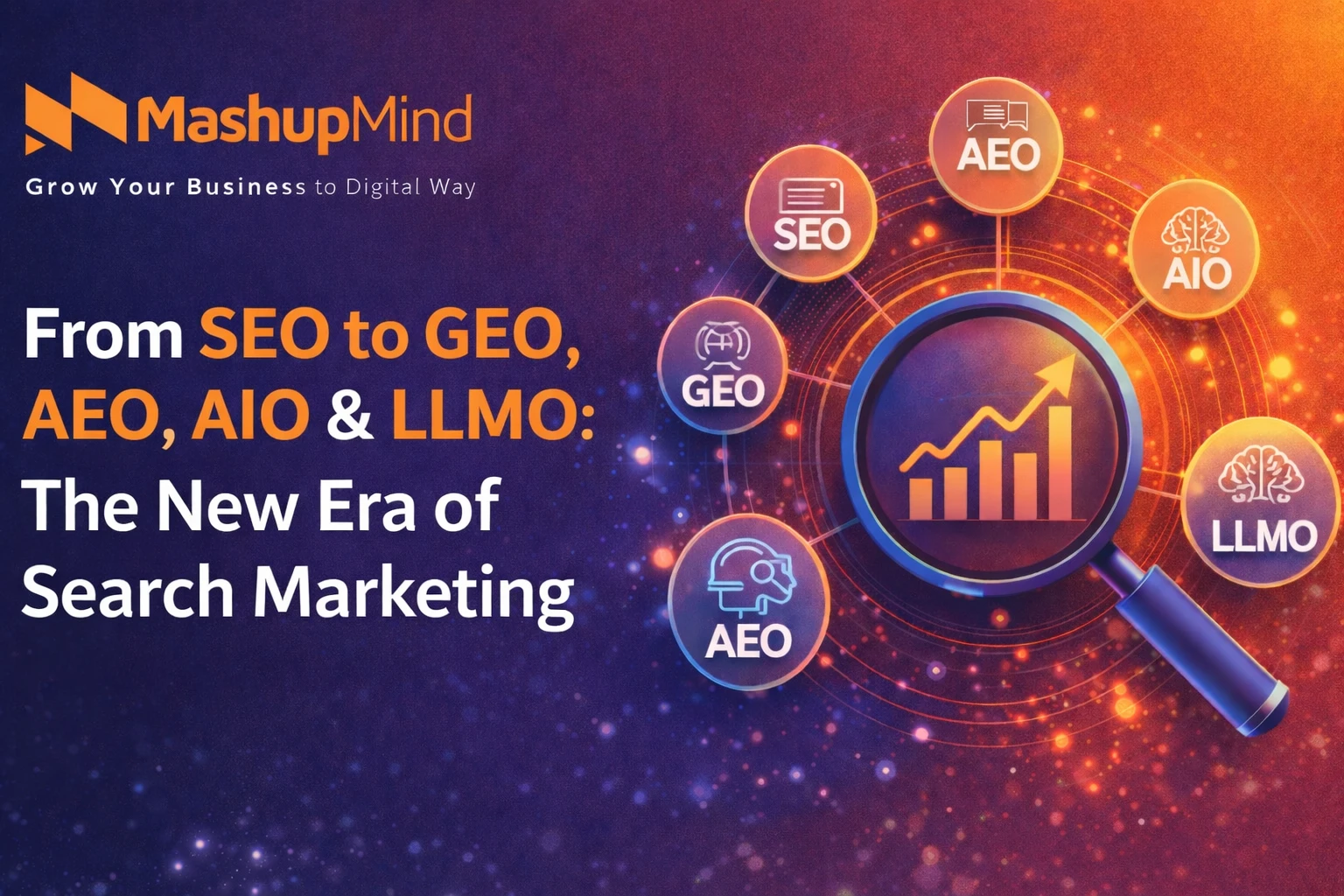
SEO vs GEO vs AEO vs LLMO VS AIO – Key Differences
There are no longer just two ways to look. Keyword research (SEO) is what makes websites visible online. Newer models like GEO, AEO, LLMO, and AIO examine how AI systems find and present information. To target a different discovery layer, each model needs to understand the changes. Let us make it clear:
Traditional SEO: Ranking in Search Engines
SEO works best with old-school search engines like Google and Bing. Its main goal is to boost ranks in SERPs and get more organic clicks.
On-Page SEO, Off-Page SEO, and Technical SEO are all essential. Search engines use these signals to crawl websites more effectively, index them, and rank them.
SEO is the answer to the question “How do I rank higher?”
But rankings don’t guarantee visibility on their own in an AI-based search environment.
GEO: Visibility Inside AI-Generated Responses
Generative Engine Optimization, or GEO, tries to get your content cited or combined in replies made by AI.
GEO doesn’t just focus on keywords when optimizing; it also considers subject authority, credibility, and structured depth. When AI engines summarize, they like to use sources they know they can trust.
In other words, SEO wants people to click on blue links, while GEO wants people to talk about your site on AI.
Consider GEO as making your website better so that AI can quote it and not just search engines can store it.
AEO: Winning Direct Answers
As a search engine, AEO (Answer Engine Optimization) is somewhere in the middle. Its goal is to make information show up in:
- Snips of interest
- The results of voice search
- AI question marks
- Some people also want results
AEO is different from broad SEO in that it focuses on a short, question-driven structure. It gives more weight to structured, conversational material that directly meets user needs. AEO is about controlling the answer box, while SEO is about how pages rank.
LLMO: Being Understood by Language Models
LLMO (Large Language Model Optimization) takes things one step further.
It examines how large language models understand your business, entities, and expertise. Instead of using standard ranking signals, these systems respond based on what they understand.
Not only is visibility important, but so is correct representation in AI conversations. Some critical areas of focus are:
- Entity clarity
- Semantic depth
- Brand authority
- Consistent mentions
LLMO ensures that AI tools accurately reflect your brand when they generate answers.
AIO: The Unified AI Optimization Layer
The most general structure is AIO (AI Optimization). It’s like an umbrella plan that brings together:
- SEO fundamentals
- GEO authority building
- AEO answer structuring
- LLMO entity optimization
Some professionals say that SEO is the engine, GEO is the analysis layer, AEO is the delivery system, and AIO is the framework for strategy. In real life, AIO makes sure you are always visible across all AI-driven discovery channels.
Read : SEO vs. SMO : A Complete Guide to Boosting Online Visibility
How Google SGE, ChatGPT & AI Search Are Changing Discovery
Answers are replacing links in search. To help users find information more quickly, Google’s AI Overviews now summarize answers directly in search results. At the same time:
- ChatGPT is going to be a search engine
- We are seeing more conversational search.
- Zero-click behavior is getting worse.
Artificial intelligence (AI) search systems can use multiple subqueries to build an answer, which increases the amount of data collected.
This changes user trips significantly. Instead of:
Search → Click → Read
Users now often do:
Ask → Get answer → Leave
That is the disruption marketers must address.
How Brands Must Adapt in 2026 and Beyond
This change from human-driven discovery to AI-driven discovery is now real. Virtually half of all consumers already use AI-powered search, and brands that aren’t ready could see a 20–50% drop in organic business. Brands need to change how they do digital marketing if they want to stay noticeable.
- First, stop thinking only about keywords. Strong SEO is still essential, but success now relies on being an expert in the subject, being trustworthy, and creating structured content that AI systems can easily understand. Density is not as good as depth.
- Second, spread signs of trust across the web. AI tools draw heavily on information from external sources, not just your website. Off-page SEO, internet PR, expert mentions, and keeping your brand consistent are all more important than ever.
- Third, make sure the material is answer-friendly. The layout of brand pages should include clear headings, frequently asked questions, and short explanations. This improves both On-Page SEO and answer engine exposure.
- Fourth, invest in infrastructure ready for AI. Strong Technical SEO, fast sites, and clean code all contribute to the speed and accuracy of machine comprehension.
- Lastly, change the way you think about measurements. It’s no longer enough just to have rankings. Keep an eye on AI citations, conversational mentions, and your presence in new search interfaces for local rank.
After 2026, the brands that do the best will not be the ones that give up on SEO, but the ones that smartly adapt it to the age of AI.
The Future of Organic Traffic
Organic traffic is about to go through a change. You can already see some significant trends:
- More searches with no clicks
- More descriptions of AI
- More discovery through talk
- More search habits across platforms
More and more research shows that AI systems already affect a large share of organic traffic and will continue to grow rapidly through 2026.
But this doesn’t mean that organic search is dead. And it means that organic search is changing. More and more traffic will come from:
- Citations for AI
- Referrals in conversation
- Information shows up
- Discovering in multiple ways
Smart marketers will keep an eye on both rankings and exposure.
You may like to read : How Much Time Does It Take To Get First Ranking On Google
Action Plan for Marketers
AI is really driving discovery, and it’s happening faster. Summaries and answer engines powered by AI are already changing how people click in many searches. Marketers need to make an organized plan for the change right now.
Step 1: Audit Your Current Visibility
The first thing you should do is look at your current traffic and results. Find pages that aren’t getting enough traffic. There are now AI Overviews in many useful searches, which often lowers organic CTR.
This will help you decide what to do next.
Step 2: Strengthen Your SEO Foundation
Don’t forget the basics. Even now, strong On-Page SEO and Technical SEO are still important for AI exposure, since most AI citations come from strong organic pages.
Fix crawling issues, improve the information, and speed up the site.
Step 3: Build Authority, Not Just Pages
Focus on the depth of the topic instead of just a few themes. Set up content groups, bylines for experts, and regular publishing. AI systems are increasingly favoring authoritative domains over thin material.
Step 4: Structure Content for Answers
Use the answer-first style. Utilize clear titles, Frequently Asked Questions (FAQs), short definitions, and schema markup. This makes it easier for answer engines and AI reports to find the correct answers.
Step 5: Expand Beyond Traditional Search
Invest in digital PR to build your brand’s reputation and increase brand mentions. A lot of the time, big language models use more than just scores to figure out what words mean.
Step 6: Track AI Visibility Metrics
Start keeping an eye on AI citations, share of voice, and comments in conversations. AI search traffic is growing quickly and changing how people find things.
To sum up, keep your SEO strong and add GEO, AEO, and LLMO on top of it. It will be the early adopters who rule the AI search age.
FAQ’s
Is SEO, the old way, still meaningful in 2026?
Yes, standard SEO is still the most important thing for ranking well online. But people’s looks are changing very quickly. To stay strong in today’s search landscape, brands need to incorporate AI-focused strategies such as GEO, AEO, and LLMO into their core optimization efforts.
What’s the main difference between GEO and SEO?
Traditional SEO is all about achieving higher rankings and more clicks in search results. On the other hand, GEO aims to place material in a way that AI systems can use to cite, summarize, or link to it in the answers they generate. With this change, statements made by AI will be more visible, rather than links.
Should I change my SEO plan with AIO?
No, AIO is not a substitute. It’s an improvement. Strong On-Page SEO and Technical SEO remain the building blocks AI systems use. The goal is to add AI optimization to your approach without sacrificing tried-and-true search basics.
Will AI search make fewer people visit websites?
Most of the time, yes. Studies show that when AI summaries appear, people click traditional results less often. In some studies, click-through rates dropped from 15% to 8%. Citations and conversational finding, on the other hand, are two new ways that AI makes things more visible.
What should marketers focus on first in this new age of search?
Marketers should start by improving the basics of SEO, such as content quality and site performance. After that, they should use AEO, GEO, and LLMO strategies together to ensure their brand appears in voice results, AI replies, and conversational search.

I’m Kishan Rana, an SEO professional and digital marketing specialist with over 8 years of hands-on experience in search engine optimization, organic growth strategies, and online visibility enhancement. I’m passionate about analyzing search algorithms, exploring ranking strategies, and helping businesses build sustainable traffic through data-driven SEO practices. Through Mashupmind, I share practical insights, industry trends, and actionable techniques designed to help brands grow smarter in the digital landscape.