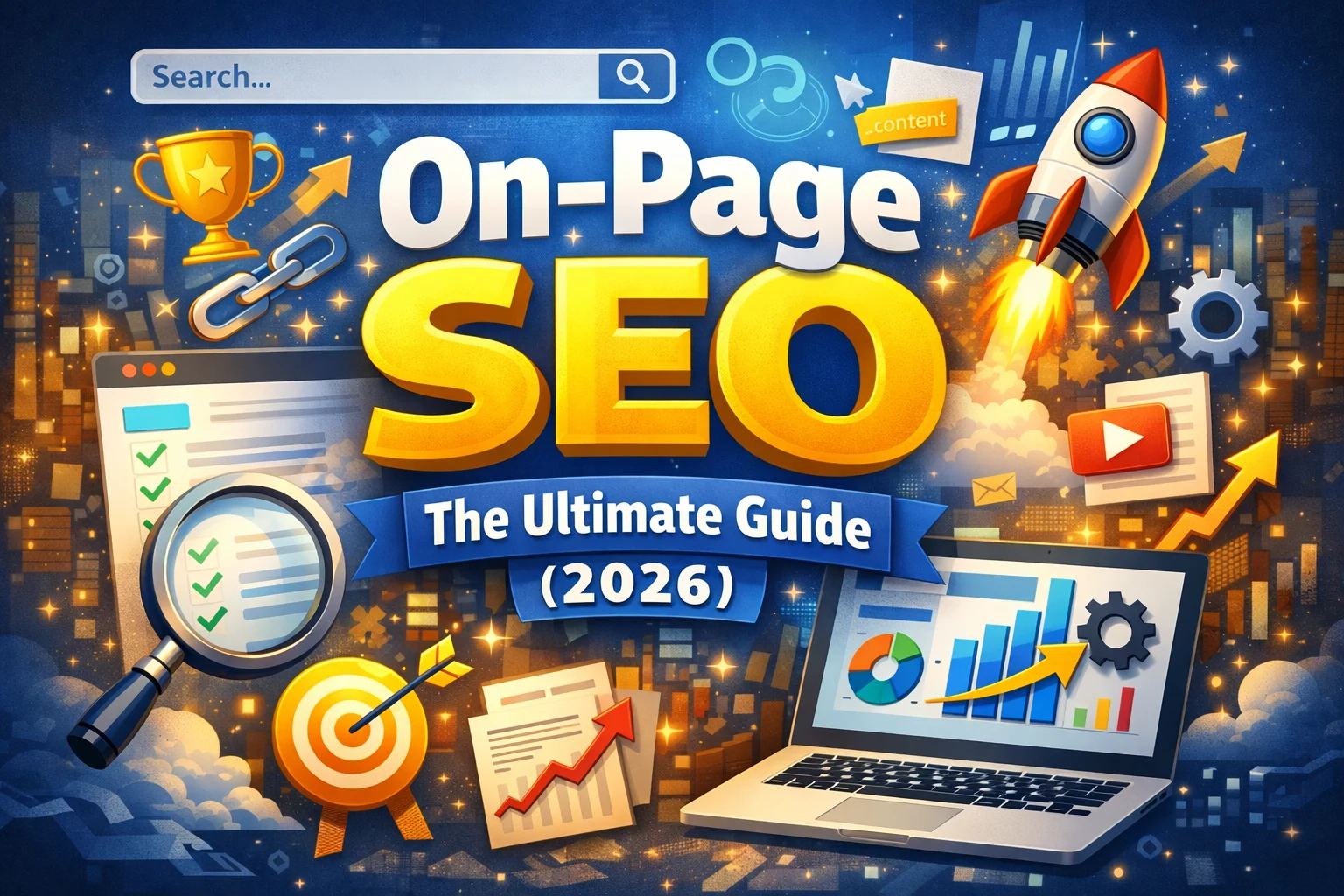
On-Page SEO refers to the process of improving specific web pages, which helps them achieve better search engine rankings and draw in more suitable visitors. On-Page SEO establishes control over website elements because it does not depend on external references like off-page SEO, which needs backlinks and outside validation. Your website controls these elements through its content, HTML tags, image files, URL structure, and internal hyperlink system.
On-Page SEO reached its peak value in 2026 because search engines have become more advanced, and AI tools can now determine user intent, and websites strive to deliver both relevant content and valuable information to their users. Without effective On-Page SEO implementation, high-quality content will not achieve ranking success.
Your page optimisation efforts will boost your site’s visibility while making it easier for users to navigate and increasing their interaction with your content and conversion rates. Your website contains multiple opportunities that On-Page SEO transforms into fully operational assets at their highest performance level.
What is On-Page SEO?
On-Page SEO refers to all the steps you take to optimize elements on your website that influence search engine rankings. The elements that need optimization include visible content, meta tags, headings, URLs, images, and internal links. Off-page SEO exists as a separate practice that analyses external elements such as backlinks, social media shares, and brand references.
The main goal of On-Page SEO is to help search engines understand what your page is about and assess whether it satisfies user intent. The correct keywords and headings, internal links, and images used to optimise a blog post show Google that the content is valid and trustworthy.
Users gain advantages from On-Page SEO. A well-structured page enables users to read, navigate, and interact with content more easily. The system decreases bounce rates while increasing visitor engagement and improving customer conversion rates.
The practice of On-Page SEO protects your website from search engine algorithms while fulfilling user requirements, which establishes it as a vital component of digital marketing methods.
Why On-Page SEO Matters in 2026
Search engines now use relevance, user intent, and user experience as their main criteria for search results in 2026. The present search engines require more than basic keyword optimization. Google and other search engines now consider factors such as page speed, mobile-friendliness, structured data, and content depth.
On-Page SEO ensures that your website meets these expectations. The website improves its speed, search engine rankings, and user experience through proper page optimisation. The website will lose its visitors, online presence, and potential customers because it does not implement On-Page SEO.
Your overall SEO results improve because On-Page SEO works together with your off-page SEO methods. It serves as the essential element that enables businesses to achieve digital growth in their current competitive environment.
On-Page SEO Checklist – 15 Essential Elements
A conducive SEO strategy comprises several crucial elements:
The process of finding search terms your audience uses requires you to conduct keyword research.
Create a new title for your image submission, which will generate more user interactions.
Write a summary that presents convincing reasons for users to visit your website.
The content requires H1, H2, and H3 tags to create its structural framework.
URLs need to maintain a clean appearance while showing readable content that contains essential keywords.
Website internal links enable users to navigate the site more effectively.
Building credibility through external links requires connections to trustworthy sources.
The process of image optimization requires informative file names, alt text, and image compression.
The writer must develop content that provides valuable information and keeps readers interested while maintaining original work.
The use of keywords should happen in a natural way without exceeding their expected frequency.
The solution needs to make all web pages suitable for use on mobile devices.
The process of page speed optimization improves user experience through faster website loading times, which results in higher search engine rankings.
The addition of structured data through schema markup improves the visibility of search results.
The system tracks three metrics, which include time spent on page, bounce rate and user interactions.
The implementation process requires you to answer common questions while creating content that targets specific long-tail keywords.
The checklist functions as a structured guide that helps you optimise your webpage through its assessment process. The elements of the system work together to create better visibility for users and improved search engine rankings.
Keyword Research
All On-Page SEO techniques need their base structure from keyword research. The process needs to discover which terms your target audience uses for their active searches. The correct keywords will generate website traffic while increasing conversion rates and shaping content development.
Google Keyword Planner, Ahrefs, and SEMrush function as tools that help users discover keywords that attract many visitors while facing minimal competition. Users who search with long-tail keywords that contain more specific details achieve higher conversion rates because these keywords match their intent.
After you select your keywords, you should use them throughout your content, headings, URLs, and meta tags in a natural way. The practice of keyword stuffing should be avoided because it creates negative effects on both website rankings and content comprehension. Keyword research requires ongoing work because you need to update your keyword strategy to maintain content relevance until 2026.
Title Tag & Meta Description
The title tag functions as the first element that users see in search results, thus establishing its value as an On-Page SEO element. A title should have a range between 50 and 60 characters because it needs to contain your main keyword. An effective title creates suspense, which leads to increased user engagement through better click-through performance.
The meta description provides a brief overview of your page content, which contains 150 to 160 characters. The content should provide value, while the target keyword should appear throughout the text. User behavior that meta descriptions create affects search engine optimisation because they do not impact rankings.
All website pages require unique title tags and meta descriptions, which must be maintained throughout their content. Search engines will impose penalties on websites that display identical content throughout their pages. Users gain understanding about your webpage content through appealing titles and descriptions, which leads to higher user interaction and increased website visits.
Header Tags
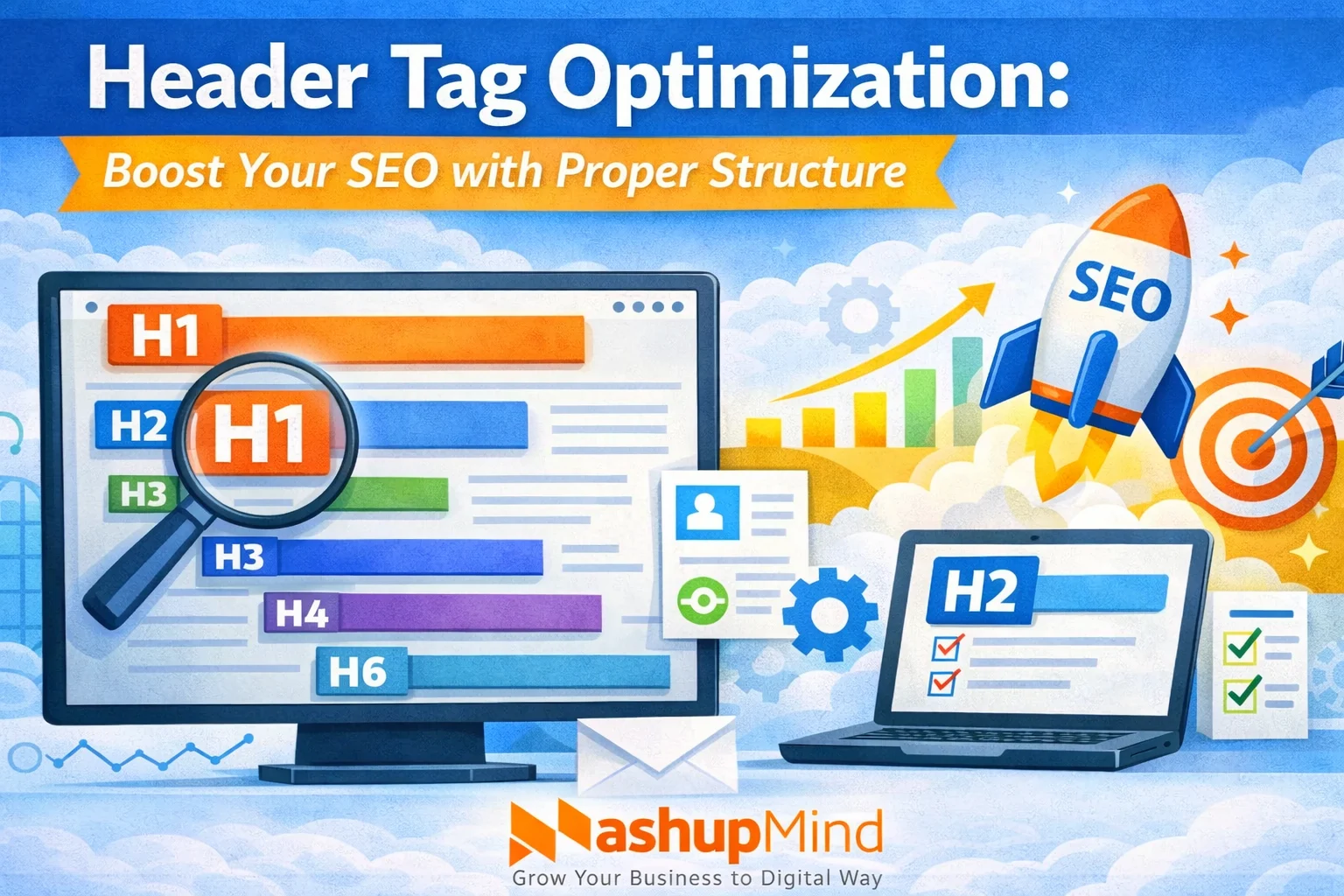
Header tags lend structure to your content and greatly aid users and search engines in understanding it.
- H1: The main page title, usually containing the primary keyword.
- H2: Subheadings that divide content into sections.
- H3: Additional subsections or details under H2.
Correct header usage raises reading comprehension because headers enable search engines to recognise content organisation. The content connection shows through header usage when writers use natural patterns to include keywords within their headings. User engagement begins with the article structure, which causes users to stay on the page and produces improved On-Page SEO results.
Internal Linking
The process of internal linking establishes connections between different pages of your website. The system uses link authority distribution to assist users in discovering related content while improving their navigation experience on the website. The site requires users to employ anchor text which describes the linked page in specific detail.
The phrase “click here” should be replaced with “learn more about On-Page SEO techniques.” The process of internal linking assists search engines in finding new website pages, which ensures their proper indexing and ranking procedures.
Websites use their internal linking systems to create better user experiences that lead to higher page authority because visitors stay on their site longer, which Google considers an important factor for On-Page SEO success.
Image Optimization
Images serve two purposes because they help users interact with websites while they support On-Page SEO. The process of image optimization results in faster page loading times, enhanced accessibility and improved content comprehension for search engines.
Users should create file names that use descriptive terms which contain relevant keywords, and they should write alt text that explains every image while using keywords naturally.
The process of image compression enables users to decrease file size while maintaining original quality, and WebP offers a modern loading solution. The year 2026 will see AI image recognition and visual search become more important. Properly optimised images improve user experience and search visibility, which makes them essential for On-Page SEO.
SEO-Friendly Content
The initial component that establishes On-Page SEO begins with its content. High-quality content delivers answers to user inquiries while providing valuable information that maintains visitor interest. Writers must produce original content through SEO content, which requires them to write structured articles that deliver informative material.
Short paragraphs and bullet points, together with subheadings, create a better reading experience. The content requires distribution of main and secondary keywords throughout the text while keeping their natural usage limits intact. Organizations need to update their content because it needs to stay relevant and show their most current information.
Search engines prioritise pages that satisfy user intent, so engaging content improves rankings. Well-optimised content reduces bounce rates while it extends visitor time on site and boosts conversion rates, which makes it essential for On-Page SEO.
Keyword Density
Your training utilizes information that exists up to the month of October in the year 2023. The term keyword density describes the ratio between your primary keyword’s occurrence and the total content length. Your page needs specific density levels because search engines and readers require proper word usage to establish its relevance.
Your main keywords should appear between 1 and 2 percent which reflects their natural usage pattern throughout your writing. The writer should create content which achieves proper flow between sentences through the use of synonyms and related terms that improve meaning connections.
Keywords should be strategically placed throughout all sections, which include headings, subheadings, meta tags and the introduction section. The correct implementation of keywords boosts both readability and On-Page SEO capabilities, which results in better search engine ranking for your website.
Frequently Asked Questions (FAQs)
Why is On-Page SEO important?
On-Page SEO enables search engines to comprehend your content while confirming that it meets users’ search needs. The correct optimization process leads to better search engine rankings, which results in more website visitors, improved user experiences and higher conversion rates.
What is the difference between On-Page and Off-Page SEO?
On-Page SEO deals with factors you control on your website such as content and meta tags, while Off-Page SEO focuses on external signals including backlinks, social shares and brand mentions.
How do I choose the right keywords for On-Page SEO?
Use tools like Google Keyword Planner, Ahrefs, and SEMrush to find keywords with good search volume and lower competition. Long-tail keywords that match user intent perform better.
How many keywords should I use on a page?
Avoid keyword stuffing. A natural keyword density around 1–2% works best while using variations and synonyms naturally within the content.
Does On-Page SEO affect page speed?
Yes. Images, scripts and HTML structure affect page speed. Optimizing images, minimizing code and enabling caching can improve loading times.
Are FAQs useful for On-Page SEO?
Yes. FAQ sections answer common questions, target long-tail keywords and increase the chances of appearing in rich snippets and voice search results.
Conclusion
The essential foundation that supports website success in 2026 is established through On-Page SEO. The proper optimization process will boost website rankings while generating more visitors and enhancing user satisfaction, which results in increased conversion rates. Your page performance will reach maximum potential through your complete dedication to producing high-quality content and following current SEO practices.
You need to start your website optimization work today. The process requires you to implement keyword research and create titles and headers, internal links, image optimization, and FAQs. The process of making small improvements will result in better visibility, which will drive up user engagement and lead to permanent success. Your website needs immediate updates because these changes will enhance On-Page SEO and give you an advantage over your digital market competitors.

Harsh Mistri is a Digital Marketing Executive with over 8 years of experience in SEO, online marketing, and growth strategies. He is passionate about exploring the evolving digital landscape and enjoys writing about technology, SEO, and digital marketing.