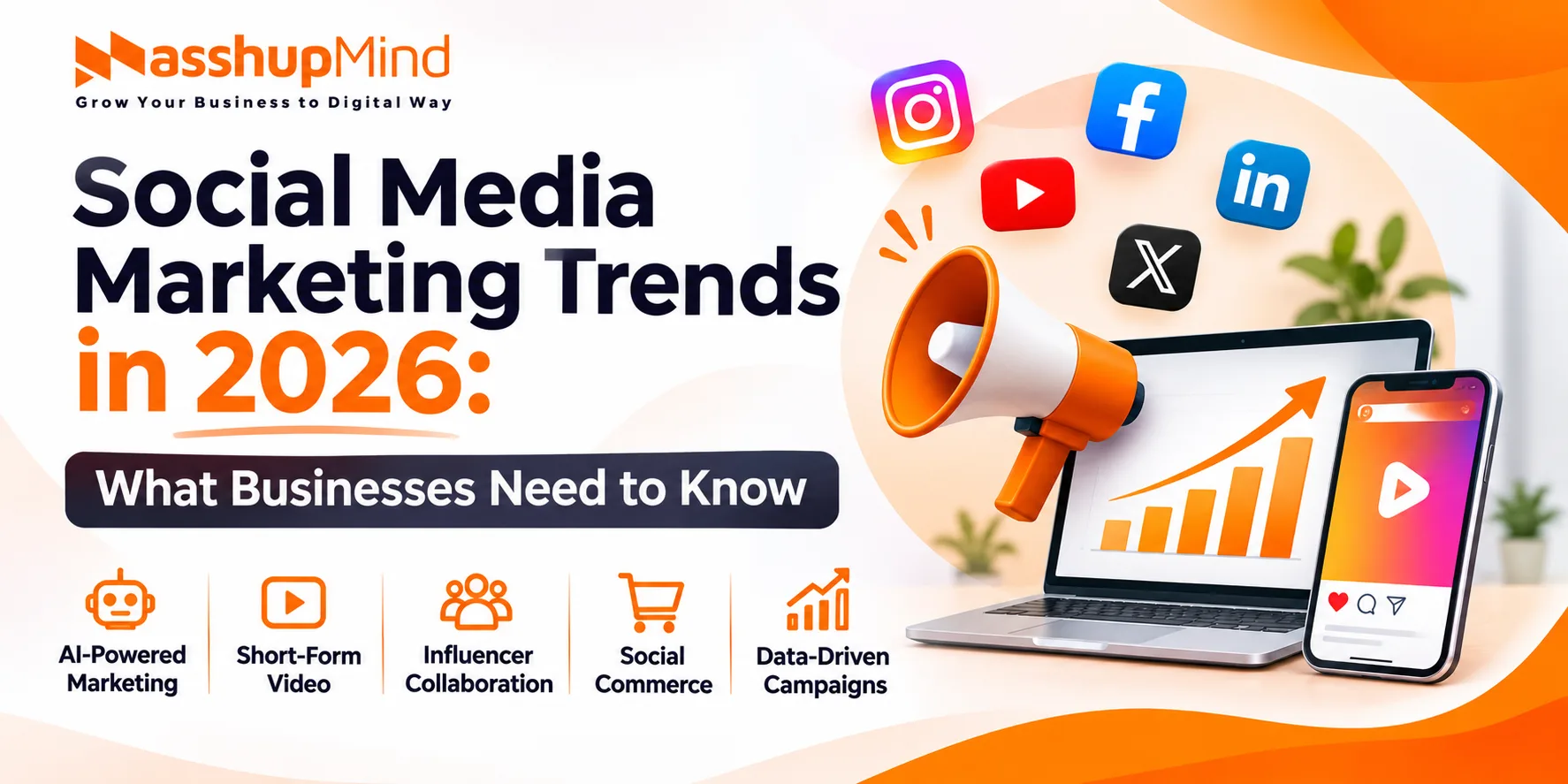
Social media marketing in 2026 is no longer just about posting attractive images, gaining followers, or running occasional advertisements. It has become a powerful business growth channel where brands connect with customers, build trust, generate qualified leads, and drive measurable sales.
With artificial intelligence transforming content creation, short-form videos influencing purchasing decisions, and social media platforms becoming powerful search and shopping destinations, businesses must rethink their digital marketing strategies to stay competitive.
Today, customers discover products through Instagram Reels, watch reviews on YouTube, explore recommendations from influencers, interact with brands through WhatsApp, and make purchasing decisions based on authentic online experiences.
According to HubSpot’s 2026 Social Media Marketing Report, 94% of surveyed social media marketers use AI in their workflows, while 77% believe authenticity matters more than high production value. These findings highlight a major shift toward efficient, human-centered, and audience-focused marketing.
For businesses, the message is clear: social media success in 2026 depends on creating valuable content, understanding customer behavior, using the right technology, and building genuine relationships with audiences.
In this comprehensive guide, we will explore the biggest social media marketing trends in 2026, their impact on businesses, practical strategies to implement them, and how professional social media marketing services can help brands increase visibility, engagement, leads, and sales.
What Is Social Media Marketing in 2026?
Social media marketing (SMM) is the process of using platforms such as Facebook, Instagram, LinkedIn, YouTube, Pinterest, and other social networks to promote products, services, and brands.
It involves creating valuable content, engaging with audiences, running paid advertising campaigns, collaborating with influencers, and analyzing performance to achieve business objectives.
In 2026, social media marketing includes several interconnected activities:
- Organic social media management.
- Short-form video and Reels marketing.
- AI-assisted content creation.
- Influencer and creator collaborations.
- Social media search optimization.
- Paid social media advertising.
- Social commerce and product discovery.
- Community building and engagement.
- Social listening and customer support.
- Lead generation and conversion optimization.
- Data analytics and campaign performance tracking.
Unlike traditional social media marketing, which often focused heavily on follower growth, modern strategies prioritize meaningful engagement, brand visibility, customer experience, and measurable business outcomes.
Why Social Media Marketing Is Important for Businesses in 2026
Consumers increasingly use social platforms for more than entertainment. They discover businesses, compare products, research services, read reviews, and communicate directly with brands. This creates opportunities for businesses of every size.
1. Increase Brand Awareness
Social media helps businesses introduce their products and services to relevant audiences through organic content, paid campaigns, and creator partnerships.
2. Build Customer Trust
Authentic content, customer testimonials, product demonstrations, and transparent communication can help establish credibility.
3. Generate Qualified Leads
Platforms such as Facebook, Instagram, and LinkedIn offer opportunities to attract potential customers through advertisements, direct messages, lead forms, and website traffic.
4. Improve Customer Engagement
Businesses can communicate directly with audiences through comments, messages, polls, stories, and community discussions.
5. Support Product Sales
Social media content can influence purchasing decisions by demonstrating product benefits, addressing customer concerns, and directing users toward purchasing channels.
6. Understand Customer Behavior
Engagement analytics, customer feedback, and social listening help businesses identify audience interests, preferences, and emerging market opportunities.
Top 15 Social Media Marketing Trends in 2026
Let us explore the trends shaping social media marketing and how businesses can use them effectively.
1. AI-Powered Social Media Marketing Is Transforming Content Creation
Artificial intelligence is one of the most influential developments in digital marketing. AI-powered tools help businesses streamline content planning, generate ideas, analyze customer behavior, and improve campaign efficiency.
How AI Is Used in Social Media Marketing
Businesses can use AI for:
- Generating social media content ideas.
- Writing captions and advertising copy.
- Creating content calendars.
- Analyzing audience engagement.
- Developing video scripts.
- Generating creative concepts.
- Supporting customer service workflows.
- Identifying content performance patterns.
- Personalizing marketing messages.
- Summarizing campaign reports.
Popular AI Tools for Social Media Marketing
| Tool | Common Use |
|---|---|
| ChatGPT | Content ideas, captions, strategy and scripts |
| Canva | Social media graphics and creative production |
| Adobe Express | Content creation and editing |
| Meta Advantage+ | AI-assisted advertising optimization |
| Hootsuite | Social scheduling and analytics |
| Buffer | Content scheduling and performance monitoring |
| Sprout Social | Social analytics, listening and management |
How Businesses Can Use This Trend
A small business can use AI to create a monthly content plan, draft Instagram captions, prepare video scripts, and analyze campaign performance. However, AI-generated content should always be reviewed for accuracy, originality, brand consistency, and relevance.
Key takeaway: Use AI to improve productivity, but retain human creativity and authentic brand communication.
2. Short-Form Video Marketing Continues to Dominate
Short-form video remains one of the most important social media content formats in 2026. Instagram Reels, YouTube Shorts, and Facebook Reels help brands communicate messages quickly through engaging visual content. HubSpot’s 2026 research identifies short-form video as a leading content format for usage, investment, and reported marketing ROI.
Why Short-Form Videos Work
Short-form videos can:
- Capture attention quickly.
- Demonstrate products visually.
- Explain services in simple language.
- Encourage sharing and engagement.
- Introduce brands to new audiences.
- Support product discovery.
- Drive traffic and customer inquiries.
Short-Form Video Content Ideas
Businesses can create:
- Product demonstrations.
- Behind-the-scenes videos.
- Customer testimonials.
- Educational tips.
- Before-and-after transformations.
- Frequently asked questions.
- Industry insights.
- Employee introductions.
- Product comparisons.
- Customer problem-solving videos.
Example
A digital marketing agency can publish a 30-second Reel explaining three common mistakes businesses make when running Facebook Ads. The video provides immediate value while introducing the agency’s expertise.
Best Practices for Reels in 2026
- Start with a compelling opening hook.
- Focus on one main message.
- Use readable subtitles.
- Create vertical, mobile-friendly videos.
- Include a relevant call to action.
- Test different video lengths.
- Track watch time, shares, saves, and conversions.
Key takeaway: Businesses should prioritize valuable, engaging videos rather than producing content solely to follow trends.
3. Social Media SEO Is Becoming Essential
Social media platforms increasingly function as search and discovery engines. Users search Instagram, YouTube, LinkedIn, and other platforms for products, tutorials, reviews, recommendations, and local businesses. This makes social media SEO an important part of modern marketing strategies.
What Is Social Media SEO?
Social media SEO is the process of optimizing social profiles and content to improve visibility within social platform searches and, where eligible, external search engines.
Social Media SEO Strategies
- Include relevant keywords in profile descriptions.
- Optimize social media usernames and business categories.
- Use descriptive captions.
- Add keywords naturally to video titles.
- Include relevant hashtags.
- Use accurate image alt text.
- Add descriptive subtitles to videos.
- Create content answering common customer questions.
- Maintain consistent business information.
- Publish location-relevant content.
Example
A business offering SEO services in Ahmedabad can create Instagram content targeting topics such as:
- SEO Agency in Ahmedabad.
- Local SEO Tips.
- Google Business Profile Optimization.
- SEO Mistakes to Avoid.
- How to Improve Google Rankings.
These topics help align social content with relevant audience searches.
Key takeaway: Treat social media content as searchable information, not just temporary feed posts.
4. Authentic Content and User-Generated Content Are Building Trust
Consumers increasingly value relatable, useful, and credible brand content. Highly polished advertisements are not always more effective than genuine product experiences or customer stories.
What Is User-Generated Content?
User-generated content (UGC) includes content created by customers, users, or creators featuring a brand’s products or services. Examples include:
- Customer reviews.
- Product unboxing videos.
- Testimonials.
- Real product demonstrations.
- Customer experience videos.
- Before-and-after content.
- Social media mentions.
Benefits of UGC Marketing
UGC can help businesses:
- Build credibility.
- Demonstrate real product usage.
- Increase audience engagement.
- Reduce dependence on traditional promotional content.
- Support purchasing decisions.
- Develop stronger customer relationships.
Example
An electronics accessories brand can encourage customers to share videos demonstrating how they use a laptop stand, USB hub, or charging adapter. With permission, the brand can feature selected customer content in its social media campaigns.
Key takeaway: Authentic experiences can make marketing messages more relatable and persuasive.
5. Influencer Marketing Is Becoming More Performance-Focused
Influencer marketing continues to evolve beyond celebrity endorsements and follower counts. Businesses increasingly evaluate influencers based on audience relevance, content quality, credibility, and measurable campaign performance.
Influencer Marketing Trends in 2026
- Greater interest in nano and micro-influencers.
- Long-term creator partnerships.
- Niche-specific influencer collaborations.
- Creator-generated advertising content.
- Affiliate and discount-code campaigns.
- Performance-based campaign measurement.
- Local influencer partnerships.
Types of Influencers
| Influencer Type | Approximate Followers |
|---|---|
| Nano Influencer | 1K–10K |
| Micro Influencer | 10K–100K |
| Macro Influencer | 100K–1M |
| Mega Influencer | 1M+ |
These are approximate industry classifications, not universal definitions.
Why Micro-Influencers Matter
Micro-influencers can be valuable because they often serve focused communities with specific interests. For example, a restaurant in Ahmedabad may benefit from partnering with relevant local food creators rather than paying for broad exposure from an unrelated celebrity.
Key takeaway: Select influencers based on audience fit and business objectives, not follower count alone. Read our Influencer Marketing Agency guide for costs and process.
6. Social Commerce Is Changing Online Shopping
Social commerce connects social media discovery with the online purchasing journey. Customers can discover products through videos, creator recommendations, product catalogs, and advertisements before completing a purchase through available shopping channels.
Social Commerce Opportunities
- Product discovery through Instagram.
- Facebook product catalogs.
- Shoppable content where supported.
- Creator-led product promotions.
- WhatsApp product inquiries.
- Direct-message selling.
- Live product demonstrations.
- Social advertising linked to e-commerce websites.
Shopping features and checkout availability vary by platform and country.
Example
A fashion business can publish a Reel showcasing its latest collection, answer customer questions through Instagram messages, and direct interested buyers to its online store.
How to Improve Social Commerce Results
- Use clear product photography.
- Create informative product videos.
- Provide accurate pricing and availability.
- Respond quickly to customer inquiries.
- Simplify the purchasing process.
- Build trust through genuine customer reviews.
- Track purchases and conversion rates.
Key takeaway: Make it easy for customers to move from product discovery to purchase.
7. Social Media Communities Are Becoming More Valuable
Building an engaged community is increasingly important for long-term brand growth. Businesses should focus on developing relationships with customers rather than simply increasing follower counts.
Community-Building Channels
- Facebook Groups.
- Instagram Broadcast Channels.
- WhatsApp Communities.
- LinkedIn Groups.
- YouTube communities.
- Relevant niche forums.
Community Marketing Strategies
Businesses can:
- Share useful industry knowledge.
- Answer customer questions.
- Host live discussions.
- Create educational content.
- Encourage customer feedback.
- Share exclusive updates.
- Celebrate customer success stories.
- Encourage meaningful conversations.
Example
A fitness brand can build a community where members share workout progress, ask questions, and receive useful fitness tips. This creates opportunities for recurring engagement and stronger brand relationships.
Key takeaway: A smaller, engaged community can be more valuable than a large, inactive following.
8. Personalized Social Media Marketing Is Growing
Generic marketing messages are becoming less effective for businesses trying to connect with different audience segments. Personalization helps brands communicate relevant messages based on customer interests, needs, and interactions.
Personalization Strategies
- Audience segmentation.
- Location-based messaging.
- Personalized product recommendations.
- Retargeting campaigns.
- Relevant promotional offers.
- Customer-specific communication.
- Behavioral campaign optimization.
Example
A digital marketing agency can create different social campaigns for:
- Startups looking for brand awareness.
- Local businesses seeking more leads.
- E-commerce brands wanting more sales.
- B2B companies seeking qualified inquiries.
Each audience receives messaging relevant to its business needs. Personalization should rely on appropriate permissions, responsible data practices, and applicable privacy requirements.
Key takeaway: Relevant messaging is more valuable than sending the same promotion to everyone.
9. Paid Social Media Advertising Is Becoming More Data-Driven
Organic social media marketing remains important, but paid advertising can help businesses reach targeted audiences and accelerate customer acquisition. In 2026, advertising platforms continue to use automation and machine learning to support campaign optimization.
Important Paid Social Media Channels
- Facebook Ads.
- Instagram Ads.
- LinkedIn Ads.
- YouTube Ads.
- Pinterest Ads.
- Other market-appropriate advertising platforms.
Effective Paid Social Strategies
Define Campaign Objectives: Choose objectives aligned with business goals, such as leads, purchases, or awareness.
Use Strong Ad Creatives: Test product videos, customer testimonials, carousel ads, and different messaging approaches.
Improve Landing Pages: Ensure the destination page is relevant, mobile-friendly, and easy to navigate.
Track Conversions: Use appropriate tracking tools and conversion events to understand campaign performance.
Optimize Based on Business Outcomes: Focus on qualified leads, purchases, customer acquisition cost, and profitability.
Example
A business spending ₹20,000 on Meta Ads generates 100 leads. Its cost per lead is ₹200. However, if only 10 leads become customers, the advertising cost per acquired customer is ₹2,000. This shows why businesses must measure sales outcomes rather than relying only on lead volume.
Key takeaway: Successful social advertising combines audience understanding, compelling creative, reliable tracking, and ongoing optimization.
10. Social Listening Is Becoming a Competitive Advantage
Social listening involves monitoring online conversations to understand how audiences discuss a brand, its competitors, products, and industry. It helps businesses identify customer concerns and emerging opportunities.
What Businesses Can Monitor
- Brand mentions.
- Customer feedback.
- Product complaints.
- Competitor discussions.
- Industry conversations.
- Customer preferences.
- Emerging content topics.
- Audience sentiment.
Benefits of Social Listening
- Identify customer problems early.
- Improve products and services.
- Discover content opportunities.
- Understand competitor positioning.
- Monitor brand reputation.
- Respond to customer concerns.
Example
If customers frequently ask whether a product supports a specific device, the business can create a product compatibility video addressing that question.
Key takeaway: Social media is not just a channel for publishing content. It is also a valuable source of customer insights.
11. Employee-Generated Content Is Humanizing Brands
Employee-generated content features real employees sharing professional insights, workplace experiences, and behind-the-scenes activities. This approach can help brands develop a more relatable online identity.
Employee Content Ideas
- Team introductions.
- Behind-the-scenes operations.
- Workplace culture.
- Industry knowledge.
- Employee achievements.
- Educational tutorials.
- Project experiences.
- Professional insights.
Example
A digital marketing agency can feature its SEO specialist explaining common website optimization mistakes or its advertising manager discussing campaign performance metrics. Such content helps demonstrate the people and expertise behind the business.
Key takeaway: Encourage authentic employee participation while respecting privacy, consent, and workplace boundaries.
12. LinkedIn Marketing Is Becoming More Creative for B2B Brands
LinkedIn is an important platform for B2B marketing, professional networking, and thought leadership. Businesses can use LinkedIn to reach founders, business owners, marketing managers, and industry professionals.
LinkedIn Content Strategies
- Share industry insights.
- Publish educational posts.
- Create professional videos.
- Discuss business challenges.
- Share case studies.
- Publish expert opinions.
- Highlight company achievements.
- Participate in relevant discussions.
Example
A SaaS marketing agency can publish content explaining how SEO, content marketing, and lead generation strategies help software companies attract potential customers.
Key takeaway: B2B social media content should be useful, credible, and engaging rather than excessively promotional.
13. Conversational Marketing and Messaging Are Expanding
Customers increasingly expect convenient communication with businesses. Messaging platforms provide opportunities to answer questions, provide assistance, and guide customers through purchasing decisions.
Popular Messaging Channels
- WhatsApp Business.
- Instagram Direct Messages.
- Facebook Messenger.
- Website chat systems.
Conversational Marketing Strategies
- Respond promptly to inquiries.
- Provide accurate product information.
- Use automated replies for common questions.
- Offer personalized assistance.
- Share relevant product recommendations.
- Support appointment bookings.
- Follow up with interested prospects appropriately.
Example
A local service business can use click-to-WhatsApp advertisements to encourage customers to request quotations directly through WhatsApp. Automated messages can help collect initial details, while human representatives handle more complex inquiries.
Key takeaway: Faster and more helpful communication can improve customer experience and lead conversion.
14. Data Analytics and ROI Measurement Are Essential
Businesses should measure social media marketing performance based on clearly defined objectives. Follower count and likes can provide useful context, but they do not tell the complete story.
Important Social Media Marketing KPIs
| KPI | What It Measures |
|---|---|
| Reach | Unique accounts exposed to content |
| Impressions | Total content displays |
| Engagement Rate | Interactions relative to the selected measurement base |
| Follower Growth | Audience growth over time |
| CTR | Percentage of impressions generating clicks |
| Website Traffic | Visitors from social platforms |
| Cost Per Lead | Advertising spend per lead |
| Conversion Rate | Percentage completing a desired action |
| CPA | Cost per acquisition |
| ROAS | Attributed advertising revenue divided by ad spend |
| ROI | Return relative to total investment |
Example of Social Media Advertising ROAS
Suppose a business spends ₹30,000 on advertising and generates ₹1,20,000 in attributed sales. ROAS = ₹1,20,000 ÷ ₹30,000 = 4x. This means the campaign generated ₹4 in attributed revenue for every ₹1 spent on advertising. However, ROAS is not the same as profit. Businesses must also consider product costs, operational expenses, and other marketing costs.
Key takeaway: Measure the metrics that connect social media activities to real business objectives.
15. Localized and Regional-Language Content Is Increasingly Important
Businesses serving specific cities, regions, or language communities can benefit from localized social media content. In markets such as India, regional-language marketing can make brand communication more relevant to local audiences.
Localized Marketing Strategies
- Create content in relevant regional languages.
- Feature local events and festivals.
- Collaborate with local creators.
- Use city-specific messaging.
- Highlight local customer experiences.
- Share community-focused content.
- Create location-relevant advertisements.
Example
An Ahmedabad-based business can test Gujarati, Hindi, and English social media campaigns to understand which messaging resonates most with its target audience. Similarly, businesses targeting Bengaluru can develop content relevant to local customer preferences and languages.
Key takeaway: Localization can help brands communicate more naturally with specific communities.
Which Social Media Platforms Should Businesses Focus on in 2026?
Not every platform is suitable for every business. The best platform depends on your industry, audience, marketing budget, and objectives.
| Platform | Best For | Recommended Content |
|---|---|---|
| Lifestyle, retail, food, consumer brands | Reels, Stories, carousels | |
| Local businesses, communities, broad consumer audiences | Posts, Reels, groups, ads | |
| B2B services, SaaS, professional brands | Thought leadership, case studies | |
| YouTube | Education, tutorials, product demonstrations | Long videos, Shorts |
| Fashion, interiors, lifestyle, visual discovery | Images, idea pins, product content | |
| WhatsApp Business | Customer communication and lead nurturing | Catalogs, messages, updates |
| X | Industry conversations and timely updates | Short posts, discussions |
Businesses should select two or three priority platforms rather than attempting to maintain an equally active presence everywhere.
Organic vs Paid Social Media Marketing in 2026
Both organic and paid social media marketing play important roles in a successful strategy.
| Factor | Organic Marketing | Paid Marketing |
|---|---|---|
| Primary Goal | Build engagement and relationships | Reach audiences and drive defined outcomes |
| Cost | Content production and management | Content costs plus advertising budget |
| Reach | Influenced by content and algorithms | Influenced by targeting, budget and delivery |
| Speed | Usually gradual | Can generate exposure quickly |
| Targeting | Content and audience relevance | Platform-supported targeting options |
| Measurement | Engagement, reach, organic traffic | Leads, conversions, CPA, ROAS |
| Long-Term Value | Community and brand trust | Scalable acquisition when profitable |
Which Is Better?
The strongest approach often combines both. Organic marketing builds familiarity, credibility, and engagement, while paid campaigns can amplify effective content and reach additional audiences. For example, a business can publish educational Instagram Reels organically and promote selected high-performing content through paid advertisements.
How to Create a Successful Social Media Marketing Strategy in 2026
A successful strategy requires clear goals, audience research, content planning, and continuous improvement.
Step 1: Define Your Business Goals
Identify what you want to achieve. Possible goals include:
- Increase brand awareness.
- Generate qualified leads.
- Increase website traffic.
- Improve customer engagement.
- Promote products.
- Increase sales.
- Build a loyal community.
Step 2: Understand Your Target Audience
Research audience demographics, interests, challenges, online behavior, and preferred platforms.
Step 3: Analyze Competitors
Review competitor content, engagement, positioning, and promotional approaches. Identify opportunities to differentiate your brand.
Step 4: Choose the Right Platforms
Focus on channels where your target customers are most active and where your business can consistently create valuable content.
Step 5: Develop Content Pillars
Organize content around recurring themes. For example, a digital marketing agency might use:
- Educational marketing tips.
- Industry trends.
- Client challenges and solutions.
- Service explanations.
- Case studies.
- Behind-the-scenes content.
Step 6: Create a Content Calendar
Plan content in advance while leaving room for timely topics and audience feedback.
Step 7: Combine Organic and Paid Campaigns
Use organic content for engagement and brand development, while using paid campaigns to support targeted growth objectives.
Step 8: Track Performance
Monitor platform analytics, website traffic, leads, and conversions.
Step 9: Optimize Continuously
Test new creative formats, messaging, publishing schedules, and calls to action.
Step 10: Focus on Long-Term Growth
Social media marketing requires consistent effort, experimentation, and adaptation.
Sample 30-Day Social Media Marketing Plan
Here is an illustrative monthly plan for a small business.
| Week | Main Focus | Activities |
|---|---|---|
| Week 1 | Research and planning | Audience research, competitor analysis, content calendar |
| Week 2 | Content and engagement | Publish Reels, educational posts, stories and carousels |
| Week 3 | Campaign growth | Test paid campaigns, collaborations and lead generation |
| Week 4 | Analysis and optimization | Review KPIs, improve creatives and plan next month |
Suggested Content Mix
Businesses can test the following starting allocation:
- 40% educational and informative content.
- 25% engaging and entertaining content.
- 20% brand-building and trust content.
- 15% promotional and conversion-focused content.
This is a suggested framework, not a universal rule. Adjust it based on audience behavior and business goals.
Common Social Media Marketing Mistakes Businesses Should Avoid
Even with the latest tools and trends, businesses can struggle if they make avoidable mistakes.
1. Posting Without a Strategy: Publishing content without clear objectives makes it difficult to measure results.
2. Focusing Only on Followers: A large audience does not guarantee meaningful engagement or sales.
3. Ignoring Audience Engagement: Failing to respond to comments and messages can weaken customer relationships.
4. Copying Competitors: Content should reflect your own brand identity and customer needs.
5. Relying Entirely on AI-Generated Content: Unreviewed AI content can become generic, repetitive, or inaccurate.
6. Ignoring Video Marketing: Businesses that avoid video may miss valuable opportunities for product education and audience engagement.
7. Not Measuring Conversions: Reach and engagement are useful, but businesses also need to understand leads, sales, and acquisition costs.
8. Using the Same Content Everywhere: Different platforms have different audiences, formats, and user expectations.
9. Over-Promoting Products: Excessive promotional content can reduce audience interest.
10. Expecting Immediate Results: Sustainable social media growth usually requires consistent execution, learning, and optimization.
How Much Does Social Media Marketing Cost in 2026?
Social media marketing costs vary depending on the business, number of platforms, content requirements, advertising budget, and agency responsibilities. For planning purposes, here are illustrative monthly service ranges for businesses in India.
| Service Package | Indicative Monthly Cost |
|---|---|
| Basic Social Media Management | ₹8,000–₹15,000 |
| Standard Social Media Marketing | ₹15,000–₹30,000 |
| Advanced Social Media Marketing | ₹30,000–₹60,000 |
| Comprehensive Agency Management | ₹60,000+ |
These are example budgeting ranges, not verified market averages or MashupMind’s published prices. Advertising budgets, influencer fees, professional video production, and specialized creative services may be charged separately.
Factors Affecting Pricing
- Number of social platforms.
- Posting frequency.
- Graphic design requirements.
- Video production.
- Advertising campaign management.
- Community management.
- Reporting requirements.
- Influencer collaborations.
- Strategy and consulting.
Businesses should choose services based on expected value and clearly defined deliverables rather than price alone.
Why Should Businesses Hire a Social Media Marketing Agency?
Managing social media professionally requires strategy, creativity, technical knowledge, consistent execution, and performance analysis. A professional agency can help businesses coordinate these activities more efficiently.
Benefits of Hiring an Agency
Professional Strategy: An agency develops a marketing approach aligned with business objectives.
Content Creation: Professional designers, writers, and marketers create content suited to different platforms.
Consistent Brand Presence: Regular publishing and consistent messaging help businesses maintain visibility.
Advertising Expertise: Experienced campaign managers can help plan, test, and optimize paid advertising.
Performance Monitoring: Regular reporting helps businesses understand results and identify improvements.
Time Efficiency: Outsourcing marketing activities allows business owners to focus on their operations.
Access to Different Skills: Agencies can combine content creation, social media management, SEO, advertising, and analytics.
How MashupMind Can Help Your Business Grow with Social Media Marketing
Social media success requires more than posting content. Businesses need the right strategy, creative execution, audience engagement, and measurable marketing performance.
At MashupMind, we help businesses strengthen their digital presence through strategic digital marketing solutions designed around their goals and target audiences. Our approach focuses on understanding your brand, identifying opportunities, developing engaging content, and using relevant marketing channels to support business growth.
Our Social Media Marketing Services
Social Media Strategy Development: Develop marketing strategies aligned with business objectives, industry requirements, and target audiences.
Social Media Account Management: Maintain a consistent brand presence across relevant social platforms.
Social Media Content Creation: Create engaging graphics, captions, carousels, promotional content, and video concepts.
Instagram and Facebook Marketing: Develop content and campaigns to improve brand visibility and audience engagement.
Meta Ads Management: Plan and optimize Facebook and Instagram advertising campaigns focused on relevant business objectives.
Social Media Lead Generation: Develop campaigns and conversion pathways to attract potential customers.
Influencer Marketing: Coordinate relevant creator collaborations to support brand awareness and engagement.
Social Media Analytics and Reporting: Monitor performance and identify opportunities to improve future campaigns.
Why Work with MashupMind?
Our marketing approach emphasizes:
- Business-focused strategies.
- Audience-relevant content.
- Consistent brand communication.
- Creative marketing campaigns.
- Data-informed decision-making.
- Transparent campaign performance.
- Continuous improvement.
Whether you are a startup, local business, e-commerce brand, or established company, MashupMind can help you develop a more structured social media marketing approach.
Frequently Asked Questions About Social Media Marketing Trends in 2026
1. What are the biggest social media marketing trends in 2026?
Major trends include AI-powered marketing, short-form videos, social media SEO, influencer marketing, authentic content, social commerce, personalized campaigns, and community building.
2. Is social media marketing still effective in 2026?
Yes. Social media remains an important channel for brand awareness, customer engagement, product discovery, lead generation, and sales. Results depend on strategy, execution, and audience relevance.
3. Which social media platform is best for business marketing?
The best platform depends on your audience and industry. Instagram and Facebook can be useful for consumer brands, while LinkedIn is often relevant for B2B businesses. YouTube is valuable for educational and demonstration content.
4. How is AI changing social media marketing?
AI helps marketers generate ideas, draft content, analyze data, and automate selected workflows. Human oversight remains important for quality, accuracy, and brand identity.
5. Why are Instagram Reels important in 2026?
Reels offer businesses opportunities to share engaging videos, demonstrate products, educate customers, and reach audiences through Instagram’s video discovery features.
6. What is social media SEO?
Social media SEO involves optimizing profiles, captions, videos, and other content to improve discoverability within social platforms and relevant external search results.
7. How can small businesses benefit from social media marketing?
Small businesses can use social media to build local awareness, engage customers, showcase products, generate inquiries, and develop relationships without requiring large advertising budgets.
8. What is the difference between organic and paid social media marketing?
Organic marketing focuses on content and engagement without paying for distribution. Paid marketing uses advertising budgets to reach audiences and pursue specific campaign objectives.
9. How can businesses generate leads through social media?
Businesses can generate leads through targeted advertisements, lead forms, landing pages, valuable content, direct messages, and appropriate follow-up processes.
10. How often should a business post on social media?
Posting frequency depends on the platform, audience, and available resources. A consistent schedule of high-quality content is generally more useful than posting frequently without a strategy.
11. What is the role of influencer marketing in 2026?
Influencer marketing helps businesses reach relevant communities through creator collaborations, product demonstrations, recommendations, and branded content.
12. How do you measure social media marketing success?
Track metrics aligned with your goals, including reach, engagement, website traffic, qualified leads, conversions, acquisition costs, and return on investment.
13. Is social media marketing better than SEO?
Both serve different purposes. SEO helps businesses attract search traffic, while social media marketing supports audience engagement, brand discovery, community building, and promotional campaigns. Combining both can create a stronger digital marketing strategy.
14. Can social media marketing increase business sales?
Yes. Relevant content, paid advertising, customer engagement, and effective conversion pathways can help businesses attract customers and increase sales.
15. Why hire a social media marketing agency?
An agency provides strategic planning, content creation, campaign management, analytics, and ongoing optimization to support business marketing goals.
Conclusion: Prepare Your Business for Social Media Marketing in 2026
Social media marketing continues to evolve as artificial intelligence, short-form videos, social search, influencer collaborations, and changing customer expectations reshape how brands communicate online.
For businesses, keeping up with these trends is not about adopting every new feature. It is about understanding which strategies matter to their customers and using those opportunities to create meaningful business results.
The most effective social media strategies combine valuable content, authentic engagement, relevant technology, creative campaigns, and performance measurement.
Businesses that prioritize audience needs, experiment with new formats, and continuously optimize their marketing efforts will be better positioned to build stronger customer relationships and achieve sustainable growth.
Ready to Grow Your Business with Social Media Marketing?
Your customers are already spending time on social media. The question is whether your business is reaching them with the right message.
At MashupMind, we help businesses build stronger online visibility through social media marketing, content creation, Meta Ads, SEO, and digital marketing strategies. Whether you want to increase brand awareness, improve engagement, generate quality leads, or grow online sales, let us develop a strategy that supports your business goals.

I’m Kishan Rana, an SEO professional and digital marketing specialist with over 8 years of hands-on experience in search engine optimization, organic growth strategies, and online visibility enhancement. I’m passionate about analyzing search algorithms, exploring ranking strategies, and helping businesses build sustainable traffic through data-driven SEO practices. Through Mashupmind, I share practical insights, industry trends, and actionable techniques designed to help brands grow smarter in the digital landscape.