Building SaaS links can look hard, mostly because pricing models vary a lot from one provider to the next. Some agencies base their prices on domain metrics like DMOZ or Domain Rating, while others charge per link or by the month. Because of this, it can be hard for SaaS companies to figure out what they are really paying for.
If a business doesn’t have clear SEO goals, it might waste money on backlinks that don’t help with rankings, traffic, or sales. A lot of the time, people only look at the surface metrics and not how they affect organic growth as a whole.
In reality, there are a lot of deeper factors that affect how much backlinks cost for SaaS businesses. Prices are affected by how much competition there is, how fast the SaaS product is growing, the overall SEO strategy, and how well the links are placed. The short-term value of two links may be very different, even if they look the same.
Many people have false ideas about DR-based pricing. This guide busts those myths and explains how SaaS link building really works. It also talks about common pricing structures, contrasts monthly retainers with cost-per-link models, and gives you realistic price ranges based on where your SaaS business is at. You’ll have a better idea of how to build links strategically instead of just buying them by the end.
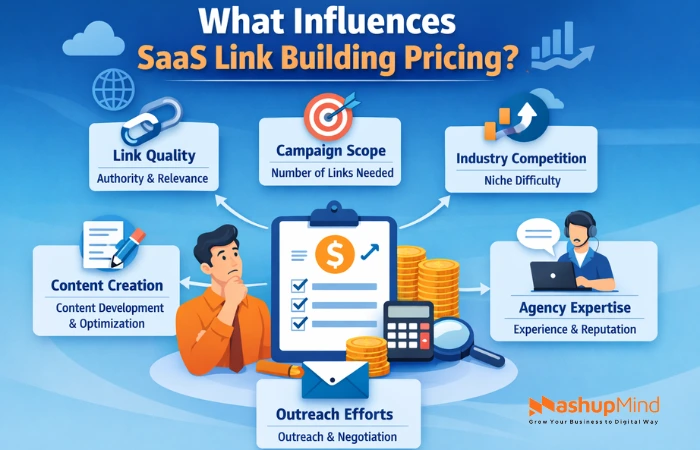
What Affects the Price of Saas Link Building?
Link building can cost SaaS companies a wide range of amounts. In contrast to many other fields, SaaS companies work in digital settings that are very competitive and where authority, relevance, and strategy are very important. It’s not usually enough to just get a lot of links. Instead, how much a SaaS company may need to spend on building high-quality backlinks depends on a number of deeper factors.
Here are the main things that affect how much it costs to build links to a SaaS service.
Competition in the SaaS Market
Fintech, CRM platforms, and marketing automation are just a few of the very competitive SaaS niches. These types of businesses all want the same high-value keywords and customers. So, to build a strong domain authority, you need to do more strategic outreach, get higher-quality placements, and keep up with your SEO work, all of which can add to the overall cost.
Keyword Difficulty and SERP Competition
Backlinks from trustworthy and related websites are often needed to rank for keywords with a lot of searches. When well-known brands and publications take up most of the search engine results pages (SERPs), it costs more to get links that can compete with them. Link building takes more time and money when there is a lot of competition for a keyword.
Type of Link Placement
There are different amounts of work and resources needed for each method of building links. There are different ways to go about guest posts, digital PR placements, and niche edits. For instance, content based on research or contributions from experts usually takes more time and editorial coordination than simple content additions, which has an effect on the price.
Outreach and Relationship Building
Building quality links often requires reaching out to publishers by hand and having real relationships with them. It takes time and skill to look for relevant websites, get in touch with editors, coordinate content, and get placements. Keeping a “white-hat” approach that puts long-term value and credibility first usually makes operations more expensive.
Link Quality and Relevance
There is a range of value in backlinks. Links from websites that are very relevant to the SaaS industry, get a lot of real traffic, and are naturally placed in good content tend to have a bigger effect on SEO. It’s harder to get these kinds of placements, which is why high-quality links usually cost more but perform better in the long run.
Monthly Retainers vs Cost-Per-Link Models
A monthly retainer or a cost-per-link agreement are the two most common ways for companies to pay for a SaaS link-building strategy. Each model is different when it comes to pricing, the depth of the strategy, and the long-term effects.
Monthly Retainer Model
You pay a set amount every month for a full link-building service with a monthly retainer. This could be $2,000 to $10,000 or even more a month, based on the size of the campaign and how competitive the niche is.
Usually, this model includes the whole process of building SEO links, such as making a plan, finding people to reach out to, writing content, putting links in it, and reporting on how well it worked. So that agencies can plan anchor text strategies, keep the number of links the same, and build domain authority over time, the work is still going on.
Most of the time, monthly retainers work best for startups that have already raised money, SaaS companies that are still growing, or companies that need to build their authority on a regular basis and work in very competitive niches.
Advantages
- A long-term plan for SEO and a well-organized road map
- Regularly getting links and building authority
- Campaigns that can be scaled up and still meet business goals
Limitations
- Needs a bigger monthly commitment up front
- It might take longer to see results that can be measured than with quick link purchases.
Cost-Per-Link Model
Cost-per-link means that you pay a set amount for every backlink. Each link costs around $150 to $1,500 or more, depending on how important and trustworthy the website is that is putting the link up.
This model is mostly just about putting in single links, and strategic planning might not be as in-depth as with retainer-based services. If you buy links without a bigger SEO plan, it can sometimes turn into a business deal.
They work well for SaaS companies that are just starting out or for teams that already have an SEO plan and just need more links to back it up.
Advantages
- Clear prices for each backlink
- Flexible budget control
- It’s easier to slowly increase link purchases.
Limitations
- There may be little or no strategy.
- Link quality and reliability can change from one provider to the next.
- Authorities may not grow as quickly if they don’t have a clear long-term plan.
The prices of each SaaS link-building service vary based on how it is set up and which plan fits your SEO goals and growth level the best.
SaaS Backlinks Cost by Company Stage
The best way to spend money on building links will change based on how fast your business grows. You need to think about how much money you want to make, how good you are at SEO, and how many other people are in the same niche as you.
Bootstrapped / Early-Stage SaaS
A lot of people spend between $800 and $2000 a month.
The goal now is to get a lot of power without spending more money. When they first start out, they should pay more attention.
- Guest posts that are useful in a niche
- Backlinks to important pages that are essential
- Content that is focused on products and helps SEO
- Being the first person to speak on the subject
Don’t pay for or go after high-traffic spots. Instead, focus on useful links that stay up.
Seed to Series A SaaS
A lot of people spend every month between $2,500 and $6,000.
When there is a lot of money and competition, people need stronger signs of power more.
These things are important to businesses right now:
- Plans for the campaign to get in touch with people
- Jobs that have a moderate to high level of power
- Keywords that are useful and have a clear purpose that make people want to buy
- Trusting business magazines more
Growth-Stage / Enterprise SaaS
Budget: $7,000 to $20,000 or more a month
These days, SEO is a big part of how you grow.
The big names in SaaS spend cash on:
- How to get your work published in well-known magazines
- Strategies for online public relations
- How popular competing keywords are
Being a leader is more important than building links if you want to stay ahead of the competition in SERPs.
How to Figure Out the Net Return on Building SaaS Links?
Find out quickly how much money you’ll make (ROI) by adding links to your SaaS site:
- Pay attention to both keywords that are there for a good reason and keywords that are there to make you money. See how the rank of your keywords has changed over time. Your backlink will still work even if your business or items change.
- A list of all the people who visit each page: Please be careful of people who visit pages with words like “feature,” “product,” “comparison,” and more. If more people show up out of the blue, the plan is working out well.
- How much do leads or demos cost? How many free leads, demo requests, and trial signups did those links bring you? Divide the cost of building links by the number of those leads. This is how much it costs for each lead or demo. When the cost of getting a new customer drops, ROI goes up.
- Don’t forget to check out reputation trends and domains. A site gets stronger and ranks higher when more good sites link to it.
- Keep an eye out for changes in both quality and quantity: If people visit your site for free, see if they buy something or just come back more often.
- Think about the long-term effects: having good relationships will help you in the long run. We can easily rank new things now. Fees aren’t needed as much.
Conclusion
What changes the price of SaaS link building is not just the number of links you get. These include plans, growth steps, and competitors. Each link is only valuable if it works well and lasts a long time, not how much you pay for it each month or per link.
In the long run, learning how to get links will help your business grow. More people will visit your site, and it will cost you less to get new customers.

I’m Kishan Rana, an SEO professional and digital marketing specialist with over 8 years of hands-on experience in search engine optimization, organic growth strategies, and online visibility enhancement. I’m passionate about analyzing search algorithms, exploring ranking strategies, and helping businesses build sustainable traffic through data-driven SEO practices. Through Mashupmind, I share practical insights, industry trends, and actionable techniques designed to help brands grow smarter in the digital landscape.