
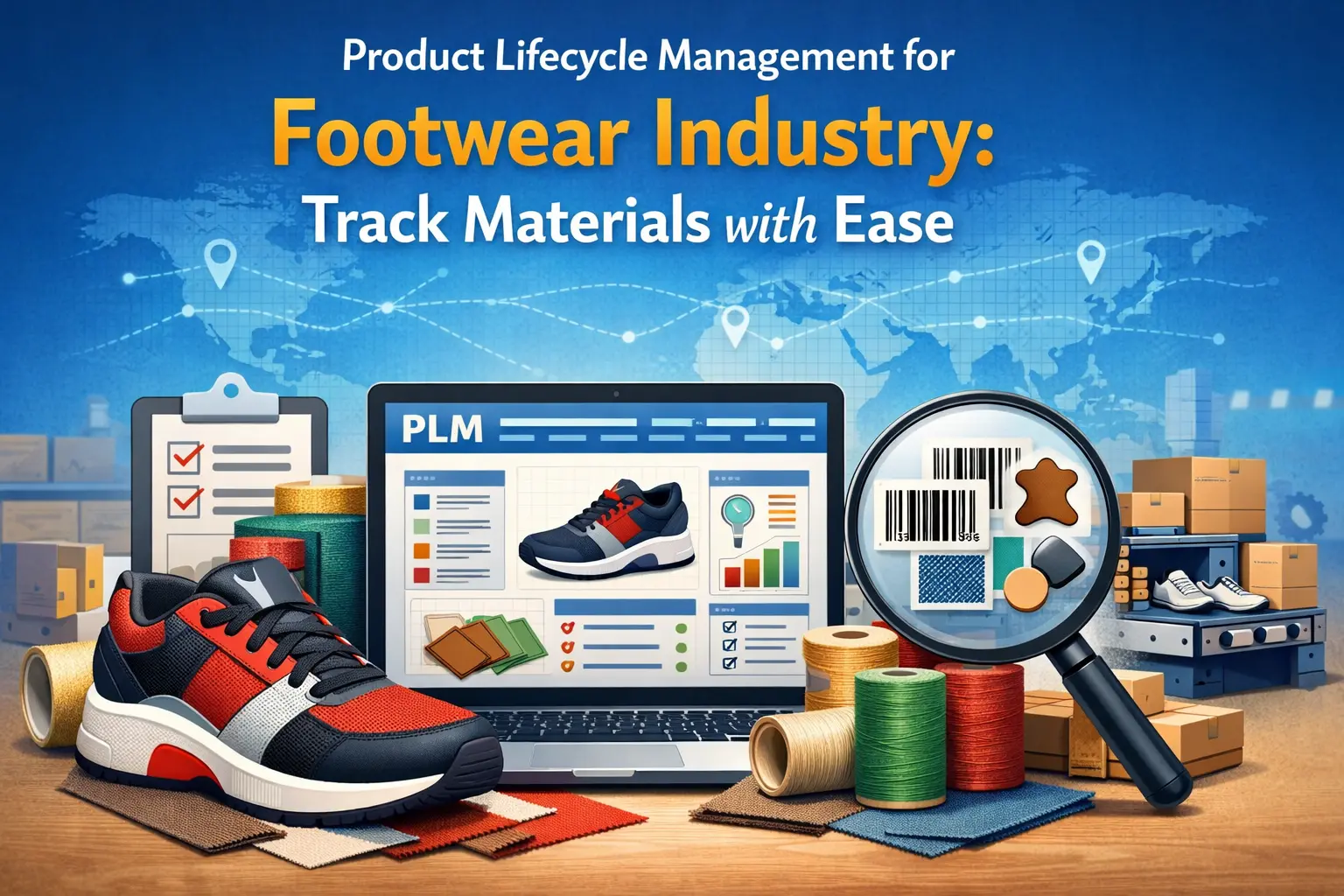
You need a wide range of raw materials to make shoes and other footwear products. If you are still relying on spreadsheets to manage them, it’s a huge mistake. Maintaining spreadsheets can be time-consuming. One minor error can quickly spiral into costly problems, creating ripple effects across other stages of product development. Your listings can be affected. By the time you realize the error, a considerable amount of time may have already passed. It can be difficult to fix the issue.
You also cannot expand your product portfolio without resolving it. To avoid this, it’s better to move to modern product lifecycle management (PLM) platforms. Their streamlined methodologies make your data management smoother. You don’t have to deal with redundancy, which improves the visibility of important data and makes the whole process more quality-driven.
To be precise, a reliable PLM for footwear industry may have all the components that make product data management highly efficient. Let’s explore them.
-
A hierarchy of material libraries
With modern tools, you can create a list of standard materials that can be identified by their special attributes and combinations. These should come at the top of the material hierarchy. This helps define which materials are inherited from a particular material type.
Suppose you need to change a shared attribute of a specific material. When it is updated, the same should be automatically updated across the connected materials. In the material library, you can specify the primary source, a suitable measurement unit, and the base price. What does this mean? As you know, EVA foam is a common material used in midsoles. So, this can be included among the top materials in the hierarchy due to its reusability.
When you consider EVA foam, you refer to its density, color, hardness, base cost per unit (in cubic centimeters or kilograms), and primary supplier as its attributes. This specific material can be used in casual sneakers, sandals, and running shoes. If the cost per unit of this material changes due to increased supplier rates, that should be reflected across all footwear styles that use EVA foam. If you handle this manually, it can affect your productivity. Some material categories may be missed.
-
Material assembly
Advanced PLMs can also help you build a BOM, or Bill of Materials, for every product. It can include details such as material structure, material quantities, and more. There should be a BOM for every material assembly, which can be used as a structural component across various products. You can also develop multi-level assembly structures as needed.
-
Material usage
Tracking this information is also crucial. It will give you a clear idea of where all the materials are used, including material assemblies and products. With this data, you can easily identify which suppliers provide the same material in a specific season or throughout the year. This knowledge allows you to reduce your purchase costs by securing larger quantities from fewer suppliers that offer more suitable pricing and greater sourcing efficiency. This type of adaptability enables you to navigate changing market conditions smoothly. You can also easily meet new material requirements.
Because of features like an AI-generated tech pack, you can work with confidence in your product development. You won’t have to worry about the risk of data-related errors as before.

I’m Kishan Rana, an SEO professional and digital marketing specialist with over 8 years of hands-on experience in search engine optimization, organic growth strategies, and online visibility enhancement. I’m passionate about analyzing search algorithms, exploring ranking strategies, and helping businesses build sustainable traffic through data-driven SEO practices. Through Mashupmind, I share practical insights, industry trends, and actionable techniques designed to help brands grow smarter in the digital landscape.