Publishing Is Half the Job
Most B2B SaaS teams spend a week writing a blog post and ten minutes distributing it. Then they wonder why a good post gets forty views. The arithmetic is simple: a post nobody finds cannot generate trials, demos or links. Distribution is not an afterthought to content — it is the other half of the work, and it deserves its own plan before the post goes live.
This guide is a practical distribution plan for B2B SaaS blogs: the channels that actually reach buyers, the order to use them in, and how to tell whether distribution is working.
First, Make the Post Worth Distributing
Distribution amplifies whatever the post already is. A generic post distributed widely still performs like a generic post. Before you promote anything, check three things:
- One clear reader. “SaaS founders” is not a reader. “A founder of a 10-person SaaS who is choosing their first CRM” is.
- One useful answer. The post should leave the reader able to do something — compare two tools, fix a workflow, brief an agency. If the takeaway is “SEO is important”, the post is not ready.
- One reason to share it. People share posts that make them look informed to their peers. A post with a real number, a clear framework or an honest “what did not work” earns shares; a post that says nothing new does not.
If the post fails this check, fix the post. Distribution cannot rescue it. Good content writing services start from this test, not from a word count.
Search: The Channel That Keeps Working
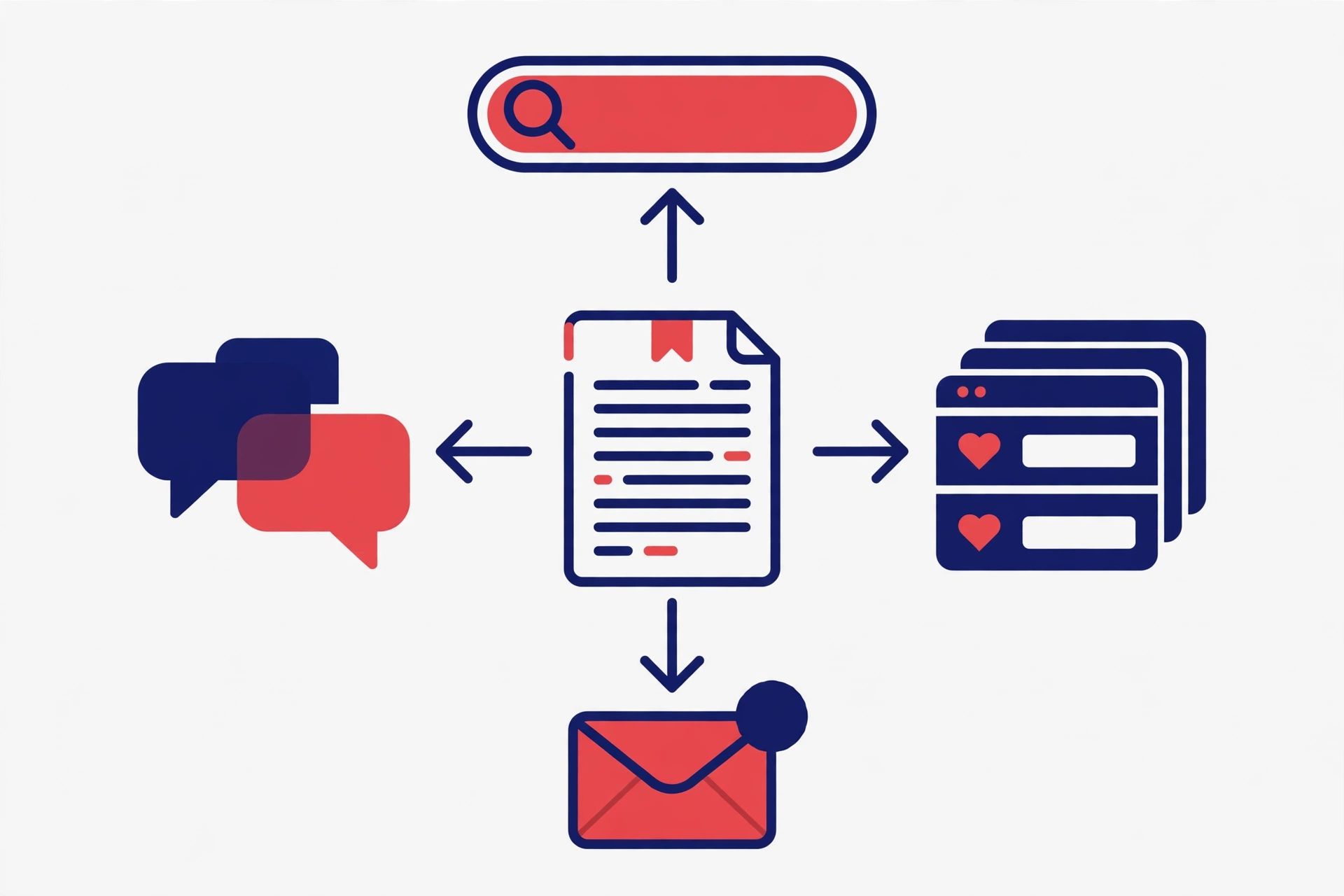
Search is the only distribution channel that compounds. A LinkedIn post is dead in two days; a post that ranks keeps sending readers for months. That is why the first distribution step happens before publishing: the post targets one keyword its buyers actually search, the title and headings carry that keyword, and it links to the product or service pages it supports.
After publishing, the work is internal linking — link the new post from older related posts, and link out from the new post to the pages that matter. Over time, those links are also how AI search finds and cites your content; the difference between links vs mentions matters here, because a mention in an AI answer is now a real distribution outcome, not just a backlink.
LinkedIn: Where B2B Buyers Actually Are
For B2B SaaS, LinkedIn is the highest-value social channel, and the founder’s personal profile usually outperforms the company page. The pattern that works:
- Founder post on publish day: two or three lines on the one idea from the post that surprised you, plus the link. No “we are thrilled to announce” and no link in the first line.
- Company page repost the next day with a different angle — a quote, a stat from the post, or the checklist version.
- One team member shares it with their own take, not a copy-paste of the company post.
- Reply to every comment in the first 24 hours. Early replies are what push a post to a second wave of readers.
One honest note: LinkedIn reach for link posts is limited. The post still earns its readers through the discussion around it, not through the link itself. Write the LinkedIn post to be worth reading even if nobody clicks.
Email: The Channel You Own
Social reach is rented; your email list is the one audience you can reach on demand. A short weekly or fortnightly newsletter that sends the new post to subscribers — with a one-paragraph summary, not the whole article — outperforms every social post for a B2B SaaS blog over a quarter. Two rules: send on a fixed day so readers expect it, and never send a post to people who did not ask for email. A small engaged list beats a large ignored one, and inbox placement is easier to keep than to recover.
Communities: Go Where the Question Is Asked
B2B buyers ask questions in Slack groups, Discord servers, subreddits and niche forums long before they search Google. Distribution here means answering the question and linking the post only when it genuinely answers it. The rule is strict: if the post does not answer the exact question asked, do not link it. One useful answer with a relevant link earns readers and credibility; five drive-by links earn a ban. Pick two or three communities where your buyers actually spend time, and be a regular there — distribution works when people recognise the name, not when a stranger drops a link.
Digital PR and Link Building: Distribution That Builds Authority
Some distribution also builds the site’s authority. A journalist quote, a data point picked up by an industry newsletter, or a guest contribution that links back to the post — these reach new readers and leave a link behind. That is the overlap between distribution and Digital PR for SaaS: the same outreach that gets a post mentioned also gets it read. The practical version for a small team is modest — one HARO-style query answered well per week, one genuine expert comment offered to a writer covering your topic — and it compounds the same way search does. Our SaaS link building services exist because this channel is slow to start and hard to fake, which is exactly why it works.
Repurpose: One Post, Five Formats
A good post contains five smaller pieces of content. Repurposing is not reposting — it is reshaping the same idea for a different place:
- The core framework becomes a short LinkedIn carousel or an X thread.
- The comparison table becomes a standalone image for social.
- The checklist becomes a downloadable one-pager for email subscribers.
- The strongest example becomes a 60-second video.
- The FAQ becomes three separate short answers for community replies.
Each format links back to the full post. The point is not to be everywhere; it is to meet the same buyer in the format they prefer, and let each format do the job the long post cannot.
A Weekly Distribution Routine That Fits a Small Team
Distribution fails when it depends on enthusiasm. Make it a routine:
- Publish day: founder LinkedIn post, newsletter send, internal links added from two older posts.
- Day 2: company page repost, one community answer where the post fits.
- Day 3–4: one repurposed format (thread or carousel), one outreach email offering the post as a resource to a writer or newsletter in your niche.
- Week 2: check Search Console — is the post getting impressions? If a query is close to page one, strengthen that section and add one more internal link.
That is roughly two hours a week per post. A team that does this for every post will outperform a team that writes twice as much and distributes nothing.
How to Tell Whether Distribution Is Working
Track four numbers, weekly, per post:
- Search impressions and clicks (Search Console) — is the post being found?
- Referral visits (analytics) — which channels actually send readers, not just likes?
- Assisted conversions — did readers of the post later start a trial or book a demo? A post that never assists a conversion is a branding exercise, and should be judged as one.
- Links and mentions earned — is anyone citing the post unprompted? That is the strongest signal the content was worth distributing.
If a post gets traffic but no conversions, the distribution worked and the post’s offer is weak. If it gets neither, the distribution failed first. Fix the right problem.
Content distribution is not a trick. It is the discipline of putting a useful post in front of the people it was written for, in the places they already are, every week, without fail. Do that, and the blog stops being a cost centre and starts being the channel that brings buyers in while you sleep. If you want a team to run the whole loop — writing, distribution and links — that is what we do; start with the services pages linked above, or ask us for a distribution plan for your next post.
Frequently Asked Questions
How many channels should a small SaaS team use?
Three, done well: search, LinkedIn and email. Add communities once those three are routine. Adding five channels at once guarantees none of them gets done properly.
Should every blog post get the same distribution effort?
No. Give the full routine to posts that target a buying decision or a high-value keyword. Short news or opinion posts get the publish-day LinkedIn post and the newsletter mention, and nothing more.
How soon should distribution start after publishing?
Same day. Search takes weeks to respond, but social, email and communities respond within hours — and early traffic and engagement are useful signals while search catches up.
Is paid promotion worth it for blog posts?
Only to boost a post that already converts organically. Paying to promote a post nobody reads for free is paying to confirm the post is weak. Fix the post first, then boost the winner.

I’m Kishan Rana, an SEO professional and digital marketing specialist with over 8 years of hands-on experience in search engine optimization, organic growth strategies, and online visibility enhancement. I’m passionate about analyzing search algorithms, exploring ranking strategies, and helping businesses build sustainable traffic through data-driven SEO practices. Through Mashupmind, I share practical insights, industry trends, and actionable techniques designed to help brands grow smarter in the digital landscape.