Creating high-quality content takes time, research, and effort. However, publishing a blog post and waiting for visitors to discover it is not enough to maximize its potential. Businesses need a smarter approach to reach audiences across multiple digital channels without constantly creating content from scratch.
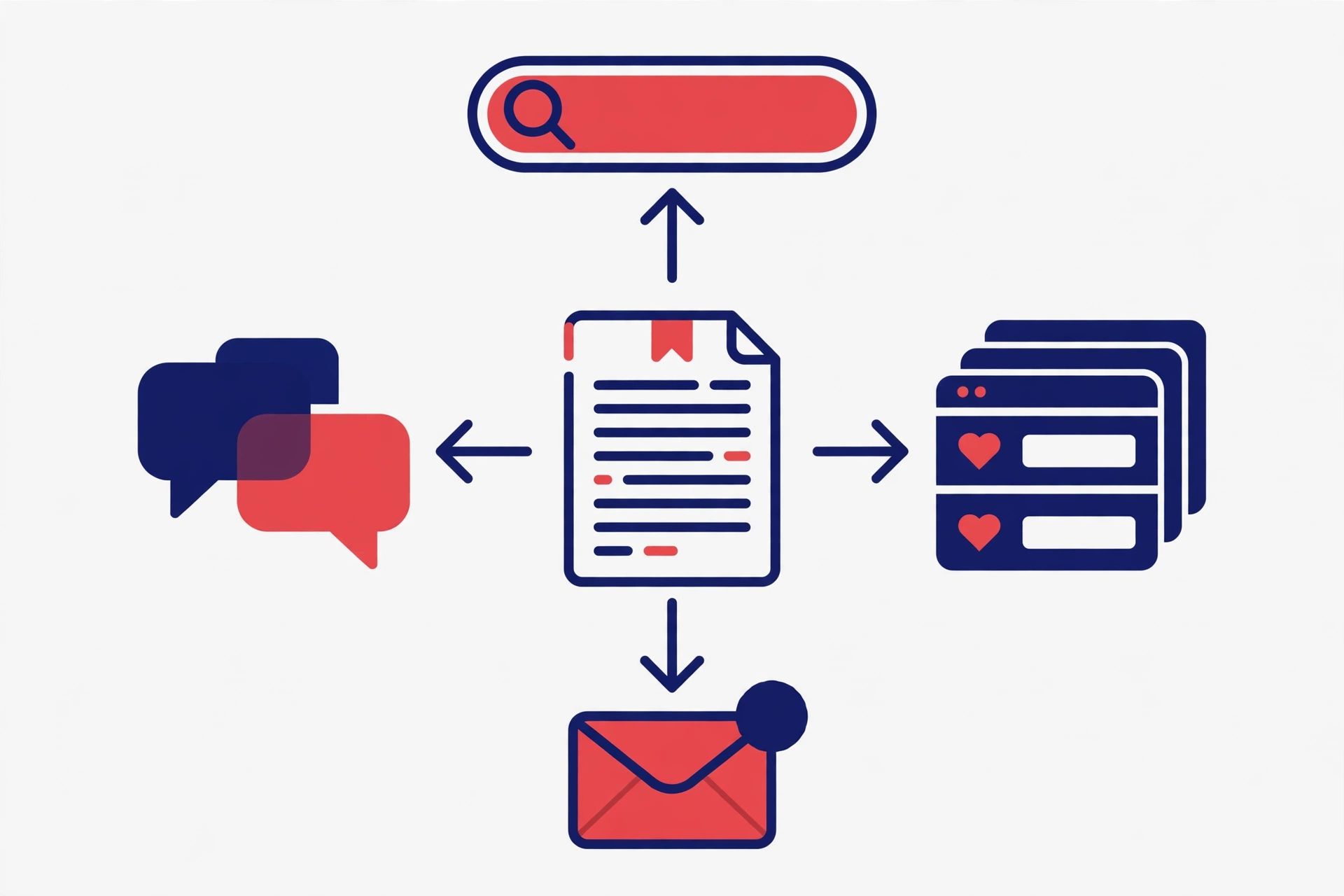
This is where a content repurposing strategy becomes valuable. Instead of using a blog post only once, you can transform it into several marketing assets, including social media posts, videos, infographics, email newsletters, and more.
Content repurposing helps businesses increase content visibility, strengthen brand awareness, and get more value from their existing content. In this guide, we will explore how to turn one blog post into 10 different marketing assets and build a more effective content distribution process.
What Is Content Repurposing?
Content repurposing is the process of converting existing content into different formats to reach audiences across multiple platforms. For example, a detailed blog post about digital marketing can become a LinkedIn carousel, Instagram infographic, short-form video, email newsletter, or podcast discussion.
The main purpose is not simply to repost the same content everywhere. It is to adapt the information to match the preferences, expectations, and consumption habits of different audiences.
A well-planned content repurposing strategy allows businesses to extend the lifespan of their content while maintaining consistent messaging across marketing channels.
Why Is a Content Repurposing Strategy Important?
Publishing fresh content regularly can be challenging, especially for small businesses and marketing teams with limited resources. Repurposing makes content production more efficient.
Here are some important benefits:
✓ Saves time and resources: You can generate multiple assets from one researched and approved blog post.
✓ Expands audience reach: Different people prefer different content formats, such as videos, articles, or visual posts.
✓ Improves content distribution: Repurposed assets help you share useful information across social media, email, and other channels.
✓ Strengthens brand consistency: Reusing core messages helps maintain a recognizable brand voice.
✓ Extends content lifespan: A blog post can continue generating engagement long after its original publication date.
For businesses investing in SEO and digital marketing, repurposing also creates more opportunities to distribute useful content and bring visitors back to their websites.
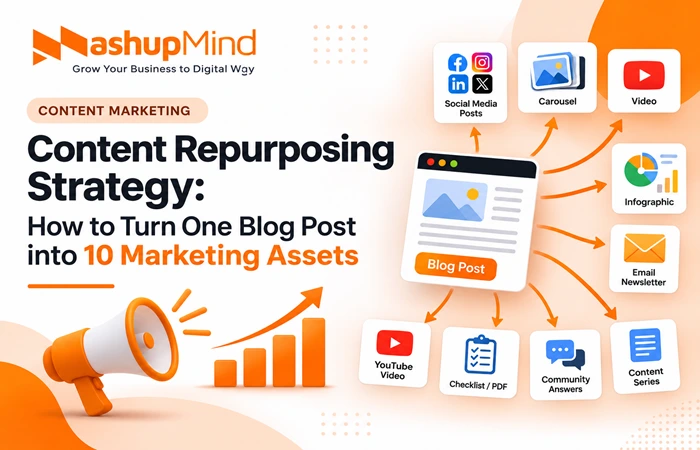
How to Turn One Blog Post into 10 Marketing Assets
Let’s assume you have published a detailed blog post on a topic relevant to your target audience. Instead of stopping at the blog, use the following approaches to create 10 additional marketing assets.
01Create Social Media Posts
Break your blog post into smaller, valuable insights and turn them into individual social media updates.
For example, a blog about SEO strategies could provide five separate posts covering keyword research, technical SEO, content optimization, link building, and performance tracking.
Publish these insights on platforms such as LinkedIn, Facebook, and X. Include a relevant call to action that directs interested readers to the complete article.
02Design an Instagram or LinkedIn Carousel
A carousel is an effective way to present educational information in a visual format.
Select five to eight important points from your blog and organize them into individual slides. Use a clear headline, concise explanations, and consistent branding.
For example, a blog titled “10 SEO Mistakes Businesses Should Avoid” can become a carousel featuring one mistake per slide.
03Turn the Blog into a Short-Form Video
Video content can help explain complicated ideas in a more engaging way.
Choose one important section of your article and convert it into a 30–60-second video. Use captions, simple visuals, and a strong opening hook to capture attention.
You can publish the video as an Instagram Reel, YouTube Short, or Facebook Reel.
04Create an Infographic
If your blog includes statistics, processes, comparisons, or step-by-step instructions, consider converting that information into an infographic.
For example, a blog about the digital marketing process could become a visual infographic showing the customer journey from awareness to conversion.
Infographics make information easier to understand and provide shareable visual content for social media.
05Write an Email Newsletter
Your existing blog post can become valuable email content for subscribers.
Instead of sending the entire article, summarize its most useful insights, explain why they matter, and include a link to read the complete post.
This approach helps maintain regular communication with your audience while bringing returning visitors to your website.
06Create a YouTube Video
A detailed blog post can provide the foundation for a longer educational YouTube video.
Convert the article into a simple script, expand important explanations, and include practical examples. Add the original blog link in the video description to connect both content formats.
This gives your business another opportunity to reach people who prefer watching videos rather than reading articles.
07Publish a LinkedIn Article or Thought Leadership Post
Identify an important insight from your blog and expand it into a professional LinkedIn post or article.
Focus on industry challenges, practical recommendations, or lessons learned. Avoid copying the entire blog word for word.
This can help businesses demonstrate expertise, build professional credibility, and engage with their target audience.
08Create a Downloadable Checklist or PDF
Transform actionable information from your article into a downloadable resource.
For example, a blog about website optimization can become a checklist covering page speed, mobile responsiveness, technical SEO, user experience, and conversion elements.
Useful downloadable resources can also support lead generation when offered through an appropriate landing page.
09Answer Relevant Questions on Online Communities
Identify questions related to your blog topic on relevant forums, professional communities, or Q&A platforms.
Provide genuinely useful answers based on your expertise. Where relevant and permitted, include a link to your original article for readers who want additional information.
The priority should always be helping the community rather than posting promotional links.
10Create a Short Content Series
A single blog post can provide enough material for a multi-part content series.
Divide the article into three to five smaller topics and publish them over several days. Each post should cover one specific insight and provide value independently.
For example, a comprehensive article about social media marketing could become a weekly series covering content planning, engagement, analytics, and advertising.
Best Practices for an Effective Blog Promotion Strategy
Creating multiple assets is only one part of successful content repurposing. You also need a consistent distribution plan.
Consider these practices:
✓ Choose relevant platforms: Focus on channels where your target audience actively consumes content.
✓ Adapt content formats: Do not publish identical content everywhere. Adjust the message, length, and presentation for each platform.
✓ Maintain consistent branding: Use recognizable colors, fonts, messaging, and visual styles.
✓ Include clear CTAs: Encourage readers to visit your website, read the full blog, subscribe, or explore your services.
✓ Track performance: Monitor clicks, impressions, engagement, website traffic, and conversions to understand which formats perform best.
A structured digital marketing strategy can help businesses connect content creation, distribution, and performance measurement.
How Often Should You Repurpose Blog Content?
There is no fixed schedule, but a practical approach is to distribute your repurposed assets over two to four weeks.
Start with the original blog post, then publish a social media update, carousel, short video, newsletter, and other formats gradually. This avoids overwhelming your audience with repetitive messages.
You can also revisit older articles that still provide useful information. Update outdated statistics, links, and examples before creating new assets from them.
Frequently Asked Questions (FAQs)
1. What is a content repurposing strategy?
A content repurposing strategy is a planned approach to converting existing content into different formats, such as videos, infographics, social media posts, and newsletters, to reach more people.
2. Can one blog post really generate 10 marketing assets?
Yes. A comprehensive blog post can provide enough information to create social media updates, carousels, videos, infographics, email newsletters, downloadable checklists, and other marketing materials.
3. Does content repurposing help SEO?
Content repurposing can indirectly support SEO by increasing content visibility, attracting referral traffic, and helping more people discover your website. However, repurposing alone does not guarantee higher search rankings.
4. Which platforms are best for content distribution?
The best platforms depend on your target audience and industry. LinkedIn is useful for B2B businesses, Instagram and Facebook support visual engagement, YouTube is effective for video content, and email newsletters help nurture existing audiences.
5. Should repurposed content be identical to the original blog?
No. The core information can remain consistent, but each asset should be adapted to its platform and audience. A short video, for example, needs a different presentation from a detailed blog article.
Conclusion
A successful content repurposing strategy helps businesses get more value from every piece of content they create. Instead of continuously starting from scratch, you can transform one well-researched blog post into multiple marketing assets that support brand visibility, audience engagement, and website traffic.
By combining social media posts, videos, infographics, newsletters, and other formats with a consistent content distribution plan, businesses can build a more efficient digital marketing approach.
The key is to focus on quality, platform relevance, and audience value. Start with one strong blog post, repurpose it strategically, and measure the results to improve your content marketing efforts over time.

I’m Kishan Rana, an SEO professional and digital marketing specialist with over 8 years of hands-on experience in search engine optimization, organic growth strategies, and online visibility enhancement. I’m passionate about analyzing search algorithms, exploring ranking strategies, and helping businesses build sustainable traffic through data-driven SEO practices. Through Mashupmind, I share practical insights, industry trends, and actionable techniques designed to help brands grow smarter in the digital landscape.