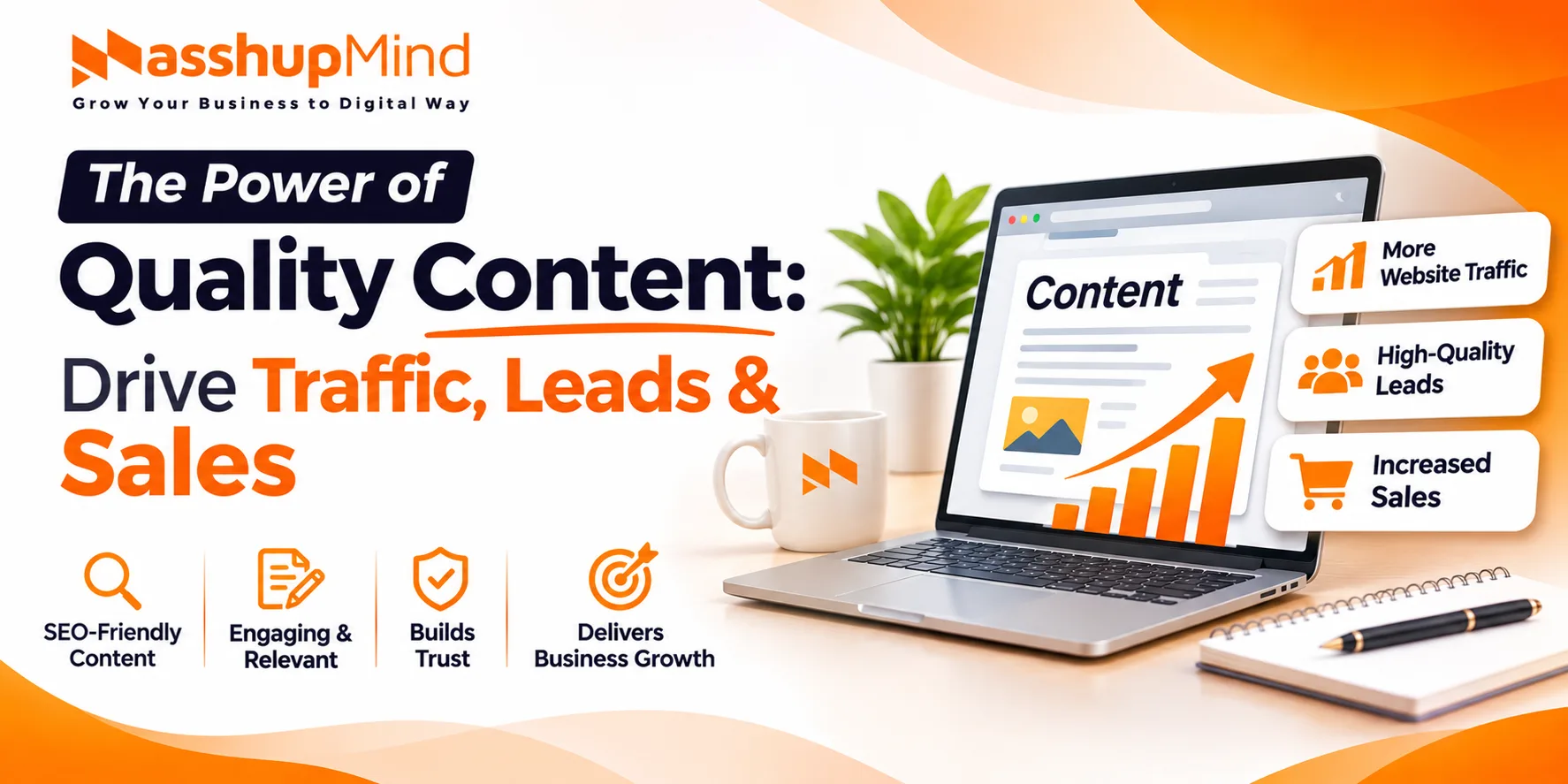
In today’s competitive digital landscape, simply having a website or posting regularly on social media is not enough to grow a business. Customers have more choices, search engines are becoming smarter, and brands need to provide meaningful information to stand out from the competition.
This is where quality content becomes a powerful business growth tool.
Whether it is an informative blog post, an SEO-optimized website page, an engaging social media post, or a compelling product description, quality content helps businesses communicate their value, attract potential customers, and build long-term relationships with their audiences.
In 2026, content marketing is no longer just about publishing articles to increase website traffic. It is about creating useful, relevant, original, and trustworthy content that answers customer questions, solves problems, builds brand authority, and encourages people to take action.
However, many businesses still focus on publishing more content instead of improving its quality. They create blogs without understanding search intent, use generic website descriptions, or publish promotional content that fails to connect with their target audience.
The result? Low engagement, limited organic visibility, fewer inquiries, and missed business opportunities.
A well-planned content strategy can change this.
In this guide, we will explore why quality content matters, how it helps businesses increase website traffic, generate qualified leads, and improve sales, along with practical content marketing strategies businesses should follow in 2026.
1. What Is Quality Content?
Quality content is information created to provide genuine value to a specific audience. It addresses their questions, solves their problems, explains relevant topics, and helps them make informed decisions.
It can take different forms depending on the business, platform, and marketing objectives. Examples include:
- SEO-optimized blog articles.
- Website landing pages.
- Service and product descriptions.
- Social media content.
- Informative guides and tutorials.
- Case studies and success stories.
- Email marketing campaigns.
- Industry reports and research.
- Video scripts and educational content.
- Frequently asked questions.
Quality content is not determined by word count alone. A 700-word article that answers a specific question accurately can be more valuable than a 3,000-word article filled with unnecessary information.
Key Characteristics of High-Quality Content
1. Relevant: It addresses topics that matter to your target audience.
2. Informative: It provides useful information, insights, or solutions.
3. Original: It offers unique perspectives, examples, experiences, or research.
4. Well-Structured: It uses clear headings, short paragraphs, and logical organization.
5. Search-Friendly: It follows SEO best practices without excessive keyword usage.
6. Engaging: It communicates information in a way that keeps readers interested.
7. Action-Oriented: It guides readers toward a relevant next step when appropriate.
The ultimate purpose of quality content is to help audiences while supporting business objectives.
2. Why Is Quality Content Important for Business Growth in 2026?
Content influences how customers discover, understand, evaluate, and interact with businesses. From the first Google search to the final purchasing decision, useful content can support customers throughout their buying journey. Here are the major reasons quality content matters.
Builds Strong Brand Awareness
Before customers purchase a product or hire a service provider, they often research different businesses. Publishing useful content helps introduce your brand to potential customers. For example, a digital marketing agency can publish articles about:
- SEO strategies for small businesses.
- How to improve Google rankings.
- Meta Ads campaign optimization.
- Social media marketing trends.
- Content marketing strategies.
When people discover these resources, they become familiar with the brand and its expertise. Over time, consistent, useful publishing can strengthen brand recognition.
Improves Organic Website Traffic
Search engines help users discover relevant information, products, and services. Businesses that create helpful, search-focused content can improve their opportunities to appear for relevant search queries. For example, a company offering content writing services may target keywords such as:
- Content Writing Services.
- SEO Content Writing Services.
- Website Content Writing.
- Professional Blog Writing Services.
- Content Marketing Agency.
Creating dedicated pages and informative articles around relevant search intent can help attract potential customers. However, publishing content does not guarantee rankings. Search visibility also depends on competition, website quality, technical SEO, authority, relevance, and other factors.
Generates Qualified Leads
Website traffic is valuable, but attracting visitors who are genuinely interested in your products or services is even more important. Quality content can help businesses attract relevant prospects by addressing their specific needs. For example: a business searching for ways to improve website rankings may discover an article about SEO content writing. After reading the article, the visitor may explore the agency’s content writing services and request a consultation. This creates a natural journey from information discovery to business inquiry.
Builds Trust and Brand Credibility
Customers are more likely to consider businesses that demonstrate knowledge of their industry and understand their problems. Publishing informative articles, detailed guides, practical tutorials, and original insights can help establish credibility. Trust-building content includes:
- Educational blog posts.
- Customer case studies.
- Industry insights.
- Expert opinions.
- Product comparisons.
- Frequently asked questions.
- Customer testimonials.
Content should be accurate, transparent, and supported by relevant evidence wherever necessary.
Supports Better Conversion Rates
Content plays an important role in helping potential customers make purchasing decisions. A well-written service page explains:
- What the business offers.
- Which problems it solves.
- Who can benefit from the service.
- Why customers should consider the business.
- What action visitors should take next.
Clear messaging, relevant examples, and compelling calls to action can help reduce uncertainty and encourage inquiries.
Strengthens Long-Term Marketing Performance
Unlike many temporary promotional campaigns, useful evergreen content can continue attracting visitors over time. For example, an article explaining how to optimize website content for SEO may remain relevant for an extended period when regularly reviewed and updated. Businesses can also repurpose existing content into social media posts, newsletters, videos, and other marketing materials. This helps maximize the value of content creation efforts.
3. How Quality Content Helps Drive More Website Traffic
Attracting relevant website traffic is one of the major benefits of content marketing. However, businesses need a structured strategy rather than publishing random articles.
Create SEO-Optimized Blog Articles
Blogging gives businesses opportunities to target informational and commercial search queries. For example, a company offering website development services can publish articles about:
- Website Development Cost in 2026.
- WordPress vs Shopify: Which Is Better?
- Website Design Mistakes Businesses Should Avoid.
- How to Choose the Right Website Development Company.
These topics help answer customer questions while creating opportunities to introduce relevant services.
Focus on Search Intent
Search intent refers to the reason behind a user’s search query. Understanding it helps businesses create content that matches what people actually want to find. The four common search intent categories are:
| Search Intent | Purpose | Example |
|---|---|---|
| Informational | Learn something | What is content marketing? |
| Navigational | Find a specific website | MashupMind |
| Commercial | Compare available options | Best content writing agency |
| Transactional | Take an action or purchase | Hire content writing services |
Creating content that matches search intent can improve its relevance and usefulness.
Use Relevant Keywords Naturally
Keyword research helps identify the phrases potential customers use when searching online. Businesses should use relevant keywords naturally in:
- Page titles.
- Main headings.
- Subheadings.
- Introductions.
- Body content.
- Image alt text.
- Meta descriptions.
- URL structures.
Avoid keyword stuffing. Search engines and readers benefit from clear, natural language.
Build Topic Clusters and Internal Links
A topic cluster is a group of related articles connected to a central pillar page. For example, a content writing service website can create a central content writing page supported by articles about:
- SEO Content Writing.
- Website Copywriting.
- Blog Writing Services.
- Product Description Writing.
- Content Marketing Strategy.
- Landing Page Copywriting.
Internal links connect related resources and help readers discover additional information. They also help search engines understand the relationships between pages.
Refresh Existing Content
Content optimization does not end after publication. Businesses should regularly review older articles to identify:
- Outdated statistics.
- Broken links.
- Missing information.
- Changes in search intent.
- Outdated screenshots.
- New industry developments.
- Opportunities to improve internal links.
Updating useful existing content can improve its relevance and maintain its value. Read our SEO Content Audit: The Complete Framework to Improve Rankings, Traffic & Conversions for the full process.
4. How Quality Content Helps Generate More Leads
Generating leads requires attracting the right audience and providing a clear reason to engage with your business. Content can support this process at every stage.
Create Valuable Lead Magnets
A lead magnet is a useful resource offered in exchange for contact information. Examples include:
- Free eBooks.
- Industry reports.
- Downloadable checklists.
- Marketing templates.
- Website audit reports.
- Free consultations.
- Educational guides.
For example, a digital marketing agency can offer a free website SEO audit to encourage interested businesses to submit an inquiry.
Develop Conversion-Focused Landing Pages
A landing page should communicate the value of an offer clearly. Important elements include:
- Strong headline.
- Clear service benefits.
- Relevant supporting content.
- Trust indicators.
- Simple contact form.
- Compelling CTA.
- Mobile-friendly design.
A landing page should focus on one primary conversion objective rather than overwhelming visitors with unrelated information.
Use Educational Content to Nurture Prospects
Not every website visitor is ready to purchase immediately. Some visitors need more information before making a decision. Educational content helps businesses maintain engagement with potential customers. For example: a person researching SEO services may first read an SEO guide, then explore a case study, and eventually request a consultation. This is why content should support different stages of the customer journey.
Include Clear Calls to Action
A call to action (CTA) encourages readers to take the next step. Examples include:
- Get a Free Consultation.
- Request a Quote.
- Explore Our Services.
- Download the Free Guide.
- Contact Our Team.
- Book a Strategy Call.
CTAs should match the reader’s needs and the purpose of the page.
5. How Quality Content Helps Increase Sales
Content can influence purchasing decisions by explaining product benefits, addressing customer objections, and communicating why a business is worth considering. Here are several ways businesses can use content to support sales.
Create Persuasive Product Descriptions
Product descriptions should explain more than basic specifications. They should communicate:
- Product features.
- Customer benefits.
- Important specifications.
- Usage instructions.
- Compatibility information.
- Differentiating advantages.
For example, an electronics accessories brand selling a fast-charging cable should explain compatibility, charging capabilities, durability, and practical usage. Clear product information helps customers make informed purchasing decisions.
Develop Service Pages That Convert
Service pages should focus on customer problems and explain how the business can help solve them. A strong service page typically includes:
- A clear headline.
- Customer challenges.
- Service overview.
- Key benefits.
- Process and deliverables.
- Relevant proof or examples.
- Frequently asked questions.
- Contact information and CTA.
Publish Case Studies
Case studies demonstrate how a business approaches challenges and delivers results. A useful case study includes:
- Client background.
- Business challenge.
- Strategy implemented.
- Work completed.
- Measurable results.
- Key learnings.
Always use genuine client information and verified results.
Address Customer Objections
Potential customers often have questions before purchasing. Content can address common concerns such as:
- How much does the service cost?
- What is included in the package?
- How long does the process take?
- What makes this business different?
- What results can customers reasonably expect?
Providing transparent answers can help customers feel more confident.
6. Different Types of Content Businesses Should Create in 2026
A successful content marketing strategy uses different formats to reach audiences across multiple channels.
Blog Articles
Blogs help businesses share industry knowledge, answer search queries, and attract organic traffic. They are especially useful for educational and informational topics.
Website Content
Website content communicates the brand’s value proposition, services, products, and business information. Important pages include:
- Homepage.
- About Us.
- Service Pages.
- Product Pages.
- Contact Page.
- Landing Pages.
Social Media Content
Social media content helps brands communicate regularly with their audiences. Common formats include:
- Educational posts.
- Carousels.
- Reels.
- Short videos.
- Infographics.
- Promotional posts.
- Customer testimonials.
Email Marketing Content
Email content helps businesses nurture subscribers, share updates, promote services, and maintain customer relationships. Examples include:
- Newsletters.
- Promotional emails.
- Product announcements.
- Educational email sequences.
- Customer onboarding emails.
Video Content
Video content can explain complex topics, demonstrate products, and communicate brand messages in an engaging format. Popular formats include tutorials, interviews, product demonstrations, and short educational videos.
Infographics and Visual Content
Infographics present information in a visual format that can make complex topics easier to understand. They are useful for statistics, processes, comparisons, and educational content.
7. Content Marketing Trends Businesses Should Follow in 2026
Content marketing continues to evolve as technology, search experiences, and customer expectations change. Businesses should pay attention to these developments.
AI-Assisted Content Creation
AI tools help marketers research topics, generate ideas, organize outlines, and improve content workflows. However, AI should support the creative process rather than replace original thinking, expertise, and editorial review.
Experience-Driven Content
Audiences value content that demonstrates real knowledge, practical experience, and original perspectives. Businesses should include genuine examples, expert insights, and relevant first-hand experiences wherever possible.
Content for AI Search and Answer Engines
Search experiences are expanding beyond traditional blue links. AI-powered search and answer platforms can summarize information and reference sources when responding to user questions. Businesses should create clear, accurate, well-structured content that directly answers relevant questions. There is no guaranteed formula for earning AI citations, but useful content, transparent sourcing, and strong subject relevance can support discoverability. Read our What Is GEO in 2026? guide for the full process.
Video-First Content Strategies
Brands are increasingly combining traditional articles with video content. For example, a blog explaining SEO basics can be repurposed into short educational videos, social media carousels, and email content.
Personalized Content Experiences
Audience segmentation and relevant messaging can help businesses deliver more useful content to different customer groups.
Original Research and Data-Driven Content
Businesses can differentiate their content by publishing original research, surveys, customer insights, and industry observations. Original information can provide additional value to readers and create opportunities for references and backlinks.
Content Distribution Across Multiple Channels
Publishing an article is only one part of content marketing. Businesses should distribute valuable content through relevant channels such as:
- Social media.
- Email newsletters.
- LinkedIn.
- YouTube.
- Industry communities.
- Relevant partner websites.
Content distribution should be relevant and avoid spammy promotion.
8. SEO Content Writing vs General Content Writing
Both SEO content writing and general content writing are important, but they serve different purposes.
| Factor | SEO Content Writing | General Content Writing |
|---|---|---|
| Primary Goal | Improve search visibility and relevance | Communicate information effectively |
| Keyword Research | Usually included | Not always required |
| Search Intent | Important consideration | May not be central |
| Structure | Search-friendly headings and organization | Depends on the format |
| Internal Linking | Often included | Optional |
| Content Formats | Blogs, service pages, guides | Emails, scripts, articles, social posts |
| Performance Focus | Organic visibility and engagement | Communication and audience response |
Which One Does Your Business Need?
Most businesses benefit from a combination. SEO content can attract people through search engines, while general content supports branding, communication, engagement, and conversion. The right mix depends on your marketing goals.
9. How to Build an Effective Content Marketing Strategy in 2026
Creating content without a strategy can lead to inconsistent publishing and limited results. Follow these steps to build a more structured approach.
Step 1: Define Your Business Objectives
Start by identifying what you want content to achieve. Possible objectives include:
- Increase organic website traffic.
- Improve keyword visibility.
- Generate qualified leads.
- Increase service inquiries.
- Build brand authority.
- Improve product sales.
- Support customer retention.
Step 2: Identify Your Target Audience
Understand who your potential customers are, what challenges they face, and what information they need before making purchasing decisions.
Step 3: Conduct Keyword and Topic Research
Use keyword research tools and customer questions to identify relevant topics. Look for opportunities based on:
- Search volume.
- Keyword difficulty.
- Search intent.
- Business relevance.
- Competitor coverage.
- Content gaps.
Step 4: Analyze Competitors
Review competing websites to understand which topics they cover, how they structure content, and where useful information is missing. Do not simply copy competitors. Identify ways to provide more relevant, accurate, and original information.
Step 5: Create a Content Calendar
Plan topics, publishing dates, target keywords, content formats, and distribution channels. A content calendar improves consistency and makes campaign management easier.
Step 6: Create Valuable Content
Focus on reader needs rather than writing solely to include keywords. Use clear language, relevant examples, original insights, and accurate information.
Step 7: Optimize for SEO
Improve titles, headings, meta descriptions, internal links, image alt text, and page structure. Also ensure that the website provides a good mobile experience and loads efficiently.
Step 8: Add Relevant CTAs
Guide readers toward useful next steps, such as exploring a service, requesting a quotation, or booking a consultation.
Step 9: Promote Your Content
Share articles and other content through relevant social media channels, email campaigns, and industry communities.
Step 10: Track and Improve Performance
Review organic traffic, search impressions, engagement, leads, and conversions. Use performance insights to improve existing content and plan future topics.
10. How to Measure the Performance of Your Content Marketing Strategy
Content marketing should be evaluated through measurable business outcomes. Here are important metrics to monitor.
| KPI | What It Measures |
|---|---|
| Organic Traffic | Visitors arriving through unpaid search results |
| Search Impressions | How often pages appear in search results |
| Keyword Rankings | Search visibility for target queries |
| Click-Through Rate | Percentage of impressions generating clicks |
| Engagement | How visitors interact with content |
| Average Engagement Time | Time users actively engage with a page |
| Leads Generated | Inquiries attributed to content |
| Conversion Rate | Percentage completing a desired action |
| Assisted Conversions | Conversions supported by content interactions |
| Revenue | Sales attributed to or influenced by content |
Example: Measuring Content Marketing Results
Suppose a business publishes 10 SEO-focused blog articles over three months. After publishing, it records:
- 5,000 organic visitors.
- 250 service-page visits from those readers.
- 30 inquiries.
- 6 new customers.
This gives the business a starting point for understanding how content contributes to lead generation and customer acquisition. The figures are illustrative. Actual results depend on industry competition, content quality, search demand, website performance, and conversion processes.
11. Common Content Marketing Mistakes Businesses Should Avoid
Even businesses that publish regularly can struggle to achieve meaningful results. Avoid these common mistakes.
1. Publishing Without Understanding Search Intent: Content should answer what the target audience actually wants to know.
2. Prioritizing Quantity Over Quality: Publishing many low-value articles does not automatically improve search visibility.
3. Keyword Stuffing: Excessive keyword usage can make content difficult to read and reduce its usefulness.
4. Using Generic AI Content Without Review: Unedited AI-generated content may contain inaccuracies, repetitive ideas, or unsupported statements.
5. Ignoring Internal Linking: Related pages should be connected to help readers discover useful information.
6. Writing Without a Clear Audience: Content should be created for a defined audience and its specific needs.
7. Forgetting Calls to Action: Readers should have a clear next step when a relevant business opportunity exists.
8. Not Updating Older Content: Outdated information can reduce the usefulness and accuracy of existing pages.
9. Ignoring Content Distribution: Publishing content without promoting it through appropriate channels may limit its reach.
10. Measuring Only Website Traffic: Traffic matters, but businesses should also monitor qualified leads, inquiries, conversions, and revenue.
12. Why Should You Hire a Professional Content Writing Agency?
Creating high-quality content consistently requires research, writing expertise, SEO knowledge, editing, and an understanding of customer behavior. A professional content writing agency helps businesses manage these activities through a structured process.
Benefits of Hiring a Content Writing Agency
Professional Writing Quality: Experienced writers create clear, engaging, and audience-focused content.
SEO-Friendly Content: Content is planned around relevant keywords, search intent, and website objectives.
Consistent Publishing: Businesses can maintain a regular content schedule.
Better Brand Communication: Professional content helps maintain consistent messaging across different platforms.
Time Savings: Business owners and internal teams can focus on other important responsibilities.
Content Strategy Support: An agency can help identify topics, content gaps, and opportunities aligned with business goals.
Conversion-Focused Writing: Content can be structured to encourage relevant actions such as inquiries, consultations, and purchases.
13. What Content Writing Services Does MashupMind Offer?
At MashupMind, we understand that every business needs content that communicates its value, connects with its audience, and supports its marketing objectives. Our content writing approach combines research, creativity, SEO best practices, and clear communication to help businesses strengthen their online presence.
Our Content Writing Services
1. SEO Blog Writing: Informative, keyword-focused blog articles designed around relevant search queries and audience needs.
2. Website Content Writing: Professional website copy for homepages, about pages, service pages, and other important website sections.
3. Landing Page Content Writing: Conversion-focused landing page copy that communicates your value proposition and encourages inquiries.
4. Service Page Content Writing: Clear descriptions of your services, benefits, processes, and business expertise.
5. Product Description Writing: Engaging product descriptions that explain features, benefits, and important specifications.
6. Social Media Content Writing: Creative captions, promotional posts, educational content, and social media copy.
7. Email Content Writing: Professional email campaigns, newsletters, promotional emails, and customer communication.
8. SEO Content Optimization: Improving existing website content through keyword optimization, readability improvements, content restructuring, and internal linking recommendations.
9. Article and Guest Post Writing: Well-researched articles and relevant editorial content to support brand visibility and digital marketing efforts.
Our Content Writing Process
We follow a structured approach to create content aligned with your business objectives.
- Understand Your Business: Learn about your brand, products, services, and target audience.
- Research Keywords: Identify relevant search terms and customer questions.
- Plan Content: Develop outlines, headings, and content direction.
- Create Content: Write informative, engaging, and original copy.
- Optimize for SEO: Improve content structure, keyword placement, and readability.
- Review and Edit: Check accuracy, clarity, grammar, and consistency.
- Deliver and Improve: Share the completed content and incorporate agreed feedback.
Whether you need regular blog articles, website copy, SEO content, or complete content marketing support, MashupMind can help you communicate your brand more effectively.
14. Frequently Asked Questions About Quality Content and Content Marketing
Q1. Why is quality content important for business growth?
Quality content helps businesses attract relevant audiences, improve search visibility, build brand trust, generate leads, and support customer purchasing decisions.
Q2. How does content marketing generate leads?
Content marketing attracts potential customers through useful information, educational articles, landing pages, and other resources. Relevant CTAs encourage visitors to contact the business or explore its services.
Q3. What is the difference between content writing and content marketing?
Content writing is the process of creating written material such as blogs, website pages, and articles. Content marketing is a broader strategy involving content planning, creation, distribution, promotion, and performance measurement.
Q4. How often should businesses publish blog articles?
Publishing frequency depends on the business, industry, available resources, and content strategy. Consistently publishing valuable articles is generally more useful than publishing frequently without proper research.
Q5. Does quality content improve SEO rankings?
High-quality, relevant content can support SEO by helping search engines understand a page and providing useful information to readers. However, rankings also depend on competition, technical SEO, website authority, and other factors.
Q6. What is SEO content writing?
SEO content writing involves creating useful content with relevant keywords, search intent, clear structure, and appropriate optimization to improve organic search visibility.
Q7. Can AI-generated content rank on Google?
AI-assisted content can appear in search results when it is helpful, accurate, original, and created to provide value. Search performance is not determined simply by whether AI was used.
Q8. How long does content marketing take to show results?
Content marketing is generally a long-term strategy. Results vary depending on competition, publishing consistency, website authority, content quality, and distribution.
Q9. What types of content are best for small businesses?
Small businesses can benefit from educational blogs, service pages, product descriptions, local SEO content, social media posts, customer testimonials, and informative videos.
Q10. How much do professional content writing services cost?
Pricing depends on content type, word count, research requirements, complexity, expertise, and the number of deliverables. Businesses should request a customized quotation based on their requirements.
Q11. What is the difference between SEO content and regular website content?
SEO content is planned with search intent and organic visibility in mind. Regular website content may focus more broadly on communication, branding, customer education, or conversion.
Q12. Why should I choose MashupMind for content writing services?
MashupMind provides content writing and digital marketing solutions focused on audience relevance, SEO best practices, clear communication, and business objectives.
Conclusion: Make Quality Content Your Business Growth Advantage in 2026
Quality content is more than a marketing asset. It is an important part of how businesses attract customers, communicate their value, establish credibility, and support long-term growth.
From SEO blog articles and website pages to social media posts, product descriptions, and landing pages, every piece of content creates an opportunity to connect with your audience.
However, publishing content alone is not enough. Businesses need a clear strategy, relevant topics, original information, effective optimization, and consistent performance analysis.
In 2026, businesses that focus on creating useful, trustworthy, and customer-focused content will be better positioned to strengthen their digital presence and build meaningful customer relationships.
Ready to Turn Your Content into Business Growth?
Your website deserves more than generic words. It needs strategic content that communicates your value, reaches the right audience, and encourages customers to take action.
At MashupMind, we create SEO-friendly, engaging, and conversion-focused content tailored to your business goals. Whether you need blog writing, website content, landing pages, product descriptions, or complete content writing support, our team is ready to help.

I’m Kishan Rana, an SEO professional and digital marketing specialist with over 8 years of hands-on experience in search engine optimization, organic growth strategies, and online visibility enhancement. I’m passionate about analyzing search algorithms, exploring ranking strategies, and helping businesses build sustainable traffic through data-driven SEO practices. Through Mashupmind, I share practical insights, industry trends, and actionable techniques designed to help brands grow smarter in the digital landscape.